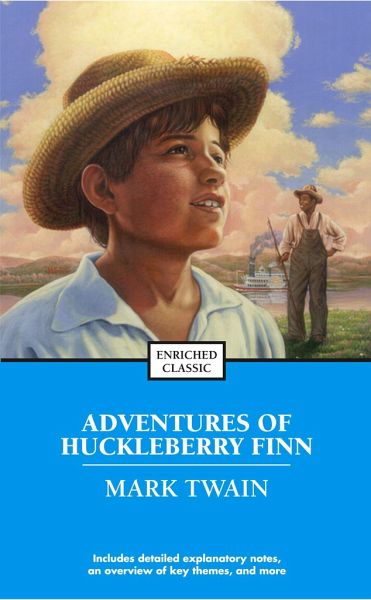
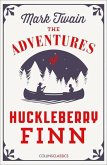
"All modern American literature comes from one book by Mark Twain called Huckleberry Finn," Ernest Hemingway wrote, "It's the best book we've had." A complex masterpiece that has spawned volumes of scholarly exegesis and interpretative theories, it is at heart a compelling adventure story. Huck, in flight from his murderous father, and Nigger Jim, in flight from slavery, pilot their raft thrillingly through treacherous waters, surviving a crash with a steamboat, betrayal by rogues, and the final threat from the bourgeoisie. Informing all this is the presence of the River, described in palpable…mehr
"All modern American literature comes from one book by Mark Twain called Huckleberry Finn," Ernest Hemingway wrote, "It's the best book we've had." A complex masterpiece that has spawned volumes of scholarly exegesis and interpretative theories, it is at heart a compelling adventure story. Huck, in flight from his murderous father, and Nigger Jim, in flight from slavery, pilot their raft thrillingly through treacherous waters, surviving a crash with a steamboat, betrayal by rogues, and the final threat from the bourgeoisie. Informing all this is the presence of the River, described in palpable detail by Mark Twain, the former steamboat pilot, who transforms it into a richly metaphoric entity. Twain's other great innovation was the language of the book itself, which is expressive in a completely original way. "The invention of this language, with all its implications, gave a new dimension to our literature," Robert Penn Warren noted. "It is a language capable of poetry."
Mark Twain, born Samuel Langhorne Clemens in 1835, left school at age 12. His career encompassed such varied occupations as printer, Mississippi riverboat pilot, journalist, travel writer, and publisher, which furnished him with a wide knowledge of humanity and the perfect grasp of local customs and speech manifested in his writing. It wasn't until The Adventures of Huckleberry Finn (1885), that he was recognized by the literary establishment as one of the greatest writers America would ever produce. Toward the end of his life, plagued by personal tragedy and financial failure, Twain grew more and more cynical and pessimistic. Though his fame continued to widen--Yale and Oxford awarded him honorary degrees--he spent his last years in gloom and desperation, but he lives on in American letters as "the Lincoln of our literature."
Es gelten unsere Allgemeinen Geschäftsbedingungen: www.buecher.de/agb
Impressum
www.buecher.de ist ein Internetauftritt der buecher.de internetstores GmbH
Geschäftsführung: Monica Sawhney | Roland Kölbl | Günter Hilger
Sitz der Gesellschaft: Batheyer Straße 115 - 117, 58099 Hagen
Postanschrift: Bürgermeister-Wegele-Str. 12, 86167 Augsburg
Amtsgericht Hagen HRB 13257
Steuernummer: 321/5800/1497
USt-IdNr: DE450055826