
Andere Kunden interessierten sich auch für
 Advice to a Young Skydiver15,99 €
 Friendly Advice To My Poor Neighbors27,99 €
 Notes to Self18,99 €
 Mother's Advice23,99 €
 An Introduction to Poetry27,99 €
 Advice To Julia28,99 €
 Advice for Travelers & other poems10,99 €
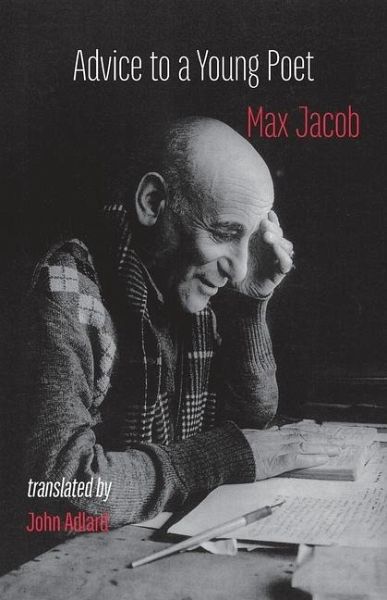
Advice to a Young Poet is an English translation, first published on the centenary of the author's birth in 1967, of Max Jacob's posthumous Conseils à un jeune poète. This was Jacob's last major statement on poetry, the culmination of a lifetime's reflection on and practice of the art. This book makes his great personal as well as literary influence on many poets and writers easier to understand. The translator, John Adlard, supplies an introduction which is a valuable contribution to the understanding of Jacob. The book is completed by a deeply personal preface from the pen of Edmond Jabès, and a historically important afterword by the "young poet" himself, Jacques Evrard, the first time he had expressed himself on the subject. "In Advice to a Young Poet Max sets out to answer a question posed by the young man's father: 'What is a lyrical line?' It is his last major statement on poetry, the final development of the thinking of twenty-five years. 'Men used to believe, ' he wrote in the 1916 preface to Le Cornet à Dés, 'that artists are inspired by angels and that there are different categories of angels.' By 1941, after the years of prayer and contemplation at Saint-Benoît-sur-Loire, this is no longer what 'men used to believe', but a fact in the interior life of a poet, the interior life without which a poet cannot be permeable. Only in a mind that is permeable is that conflagration possible ('the conflagration, ' he called it in his Art Poétique of 1922, 'after the encounter of a harmonious man with himself') which produces the lyrical line, the 'consecrated line' identified by its euphoria and its euphony."-from John Adlard's introduction