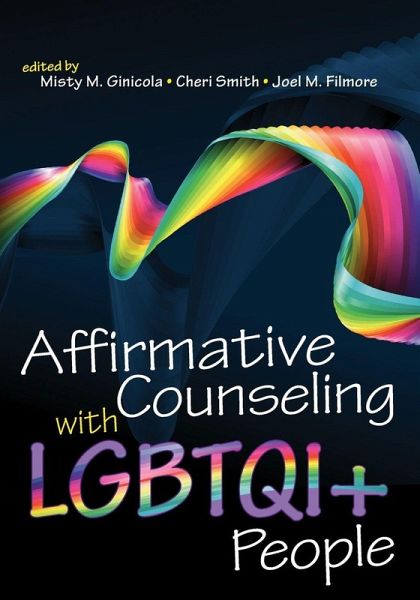
This current and comprehensive handbook will guide educators, students, and clinicians in developing the awareness, knowledge, and skills necessary to work effectively with LGBTQI+ populations. Twenty-five chapters written by experts in the field provide direction for working with clients in an authentic, ethical, and affirmative manner that is tailored to their individual strengths, needs, and identity. The book is divided into four sections, which explore the science behind gender and affectional orientation; developmental issues across the life span and treatment issues; the specialized…mehr
This current and comprehensive handbook will guide educators, students, and clinicians in developing the awareness, knowledge, and skills necessary to work effectively with LGBTQI+ populations. Twenty-five chapters written by experts in the field provide direction for working with clients in an authentic, ethical, and affirmative manner that is tailored to their individual strengths, needs, and identity. The book is divided into four sections, which explore the science behind gender and affectional orientation; developmental issues across the life span and treatment issues; the specialized needs of nine distinct populations; and the intersectionality of ethnicity and overlapping identities, the role of religion, and counselor advocacy. To further a deeper understanding of the content, each chapter contains an "Awareness of Attitudes and Beliefs Self-Check," a case narrative relating to the material covered, questions for discussion, and a list of online resources. The book concludes with an extensive glossary of terms, both preferred and problematic, which counselors working with these communities should understand and use appropriately.
Preface About the Editors About the Contributors Acknowledgments Section I: Foundations Developing Competence in Working With LGBTQI+ Communities: Awareness, Knowledge, Skills, and Action The Science of Gender and Affectional Orientation Section II: Counseling Considerations and Counseling Strategies Developmental Issues for LGBTQI+ People Growing Up LGBTQI+: The Importance of Developmental Conceptualizations LGBTQI+ Youth Development LGBTQI+ Persons in Adulthood Identity Development, Coming Out, and Family Adjustment Physical and Mental Health Challenges Found in the LGBTQI+ Population Counseling Treatment Issues With LGBTQI+ Clients Disaffirming Therapy: The Ascent and Descent of Sexual Orientation Change Efforts Evidence-Based Practice for Counseling the LGBTQI+ Population Affirmative, Strengths-Based Counseling With LGBTQI+ People Section III: Specialized Populations Counseling Lesbian Clients Counseling Gay Male Clients Counseling Bisexual/Pansexual/Polysexual Clients Counseling Transgender Clients Counseling Queer and Genderqueer Clients Counseling Clients Questioning Their Affectional Orientation Counseling Intersex Clients Counseling Asexual Clients Counseling Two-Spirit Clients Section IV: Emerging Issues The Role of Ethnicity Counseling an LGBTQI+ Person of Color Counseling LGBTQI+ Immigrants The Role of Religion The Role of Religion and Spirituality in Counseling the LGBTQI+ Client The GRACE Model of Counseling: Navigating Intersections of Affectional Orientation and Christian Spirituality Working With LGBTQI+ Clients Who Have Experienced Religious and Spiritual Abuse Using a Trauma-Informed Approach Counselor Advocacy Becoming an Ally: Personal, Clinical, and School-Based Social Justice Interventions Glossary of Terms
Preface About the Editors About the Contributors Acknowledgments Section I: Foundations Developing Competence in Working With LGBTQI+ Communities: Awareness, Knowledge, Skills, and Action The Science of Gender and Affectional Orientation Section II: Counseling Considerations and Counseling Strategies Developmental Issues for LGBTQI+ People Growing Up LGBTQI+: The Importance of Developmental Conceptualizations LGBTQI+ Youth Development LGBTQI+ Persons in Adulthood Identity Development, Coming Out, and Family Adjustment Physical and Mental Health Challenges Found in the LGBTQI+ Population Counseling Treatment Issues With LGBTQI+ Clients Disaffirming Therapy: The Ascent and Descent of Sexual Orientation Change Efforts Evidence-Based Practice for Counseling the LGBTQI+ Population Affirmative, Strengths-Based Counseling With LGBTQI+ People Section III: Specialized Populations Counseling Lesbian Clients Counseling Gay Male Clients Counseling Bisexual/Pansexual/Polysexual Clients Counseling Transgender Clients Counseling Queer and Genderqueer Clients Counseling Clients Questioning Their Affectional Orientation Counseling Intersex Clients Counseling Asexual Clients Counseling Two-Spirit Clients Section IV: Emerging Issues The Role of Ethnicity Counseling an LGBTQI+ Person of Color Counseling LGBTQI+ Immigrants The Role of Religion The Role of Religion and Spirituality in Counseling the LGBTQI+ Client The GRACE Model of Counseling: Navigating Intersections of Affectional Orientation and Christian Spirituality Working With LGBTQI+ Clients Who Have Experienced Religious and Spiritual Abuse Using a Trauma-Informed Approach Counselor Advocacy Becoming an Ally: Personal, Clinical, and School-Based Social Justice Interventions Glossary of Terms
Es gelten unsere Allgemeinen Geschäftsbedingungen: www.buecher.de/agb
Impressum
www.buecher.de ist ein Internetauftritt der buecher.de internetstores GmbH
Geschäftsführung: Monica Sawhney | Roland Kölbl | Günter Hilger
Sitz der Gesellschaft: Batheyer Straße 115 - 117, 58099 Hagen
Postanschrift: Bürgermeister-Wegele-Str. 12, 86167 Augsburg
Amtsgericht Hagen HRB 13257
Steuernummer: 321/5800/1497
USt-IdNr: DE450055826