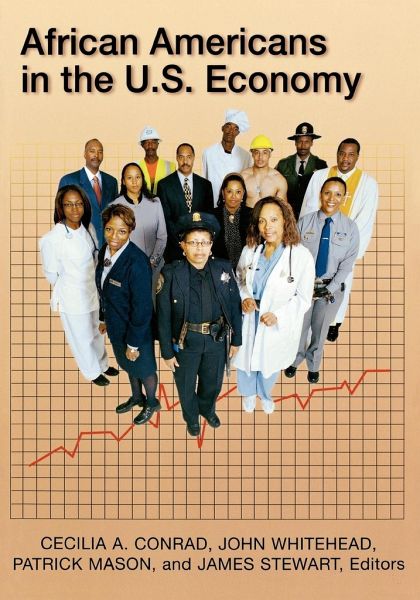
Over the last several decades, academic discourse on racial inequality has focused primarily on political and social issues with significantly less attention on the complex interplay between race and economics. African Americans in the U.S. Economy represents a contribution to recent scholarship that seeks to lessen this imbalance. This book builds upon, and significantly extends, the principles, terminology, and methods of standard economics and black political economy. Influenced by path-breaking studies presented in several scholarly economic journals, this volume is designed to provide a…mehr
Over the last several decades, academic discourse on racial inequality has focused primarily on political and social issues with significantly less attention on the complex interplay between race and economics. African Americans in the U.S. Economy represents a contribution to recent scholarship that seeks to lessen this imbalance. This book builds upon, and significantly extends, the principles, terminology, and methods of standard economics and black political economy. Influenced by path-breaking studies presented in several scholarly economic journals, this volume is designed to provide a political-economic analysis of the past and present economic status of African Americans. The chapters in this volume represent the work of some of the nation's most distinguished scholars on the various topics presented. The individual chapters cover several well-defined areas, including black employment and unemployment, labor market discrimination, black entrepreneurship, racial economic inequality, urban revitalization, and black economic development. The book is written in a style free of the technical jargon that characterizes most economics textbooks. While the book is methodologically sophisticated, it is accessible to a wide range of students and the general public and will appeal to academicians and practitioners alike.
Cecilia A. Conrad is the Stedman-Sumner Professor of Economics at Pomona College. She has authored or edited several monographs, including Building Skills for Black Workers: Preparing for Future Labor Markets; is the current editor of The Review of Black Political Economy; and is an associate editor of Feminist Economics. She is a recipient of the 2002 California Professor of the Year Award, an honor presented by the Carnegie Foundation for the Advancement of Teaching. John Whitehead is professor of economics and African American studies at City College of San Francisco. He has written extensively on racial economic inequality and community economic development and is the coeditor, with Cobie Kwasi Harris, of Readings in Black Political Economy. He is the founder and chairperson of the Committee on the Impact of Globalization on U.S. Minorities. Patrick Mason is associate professor of economics and director of the African American Studies Program at the Florida State University. He has authored or edited over forty journal articles, book chapters, and professional studies, including The International Encyclopedia of the Social Sciences. He is currently chair of the Committee of the Status of Minorities in the Economics Profession and is the past president of the National Economics Association. James B. Stewart is professor of labor studies and industrial relations, African and African American studies, and management and organization at Penn State University. He has authored or edited numerous books including Black Families: Interdisciplinary Perspectives, served as editor of The Review of Black Political Economy, and served as president of the National Economics Association. Dr. Stewart recently completed two terms as president of the National Council for Black Studies (1997-2001).
Inhaltsangabe
Chapter 1 Black Political Economy: An Introduction Part 2 Part I: Slavery and the Early Formation of Black Labor Chapter 3 The Critical Role of African Americans in the Development of the Pre-Civil War U.S. Economy Chapter 3 The International Slave Trade Chapter 4 Africa, Europe, and the Origins of Uneven Development: The Role of Slavery Chapter 6 The Black Sharecropping System and Its Decline Chapter 7 The Rise of the Black Industrial Working Class 1915-1918 Part 8 Part II: Organized Labor and African Americans Chapter 8 Civil Rights and Organized Labor: The Case of the United Steelworkers of America, 1948-1970 Chapter 9 Racial Economic Inequality and Discrimination: Conservative and Liberal Paradigms Revisited Chapter 9 An Uncertain Tradition: Blacks and Unions 1865-1925 Chapter 10 The Brotherhood of Sleeping Car Porters Part 12 Part III: Theories of Racial Discrimination, Inequality, and Economic Progress Chapter 13 The Black Political Economy Paradigm and the Dynamics of Racial Economic Inequality Chapter 14 Marxist Theory of Racism and Racial Inequality Chapter 14 Race and Gender Differences in the U.S. Labor Market: The Impact of Educational Attainment Chapter 15 The Crowding Hypothesis Chapter 16 Racial Inequality and African Americans' Disadvantage in the Credit and Capital Markets Chapter 16 "Keeping People in Their Place:" The Economics of Racial Violence Chapter 20 Persistent Racial Discrimination in the Labor Market Chapter 20 Globalization, the Transformation of Capital, and the Erosion of Black and Latino Living Standards Chapter 22 Changes in the Labor Market Status of Black Women, 1960-2000 Chapter 23 Single-Mother Families in the Black Community: Economic Context and Policies Chapter 24 The Racial Wealth Gap Chapter 27 Globalization and African Americans: A Focus on Public Employment Chapter 28 Immigration and African Americans Chapter 29 African American Intragroup Inequality and Corporate Globalization Chapter 30 Globalization, Racism, and the Expansion of the American Penal System Part 31 Part VI: Black Capitalism: Entrepreneurs and Consumers Chapter 32 History of Black Capitalism Chapter 33 Black-Owned Businesses: Trends and Prospects Chapter 34 Black-Owned Banks: Past and Present Chapter 35 "Bling-Bling" and Other Recent Trends in African American Consumerism Chapter 36 A Critical Examination of the Political Economy of the Hip-Hop Industry Chapter 37 Black Capitalism: Self-Help or Self-Delusion? Chapter 39 Inner-City Economic Development and Revitalization: A Community-Building Approach Chapter 39 Black Power: The Struggle for Parental Choice in Education Chapter 40 School Choice: A Desperate Gamble Chapter 41 The Black Youth Employment Problem Revisited Chapter 42 Employment and Training Solutions for the Economically Disadvantaged Chapter 43 Racism in the U.S. Welfare Policy: A Human Rights Issue Chapter 43 African American Athletes and Urban Revitalization: African American Athletes as a Funding Source for Inner-City Investments Part 44 Part VIII: Understanding Black Reparations Chapter 45 Past Due: The African American Quest fort Reparations Chapter 46 The Theory of Restitution Chapter 47 The Economics of Reparations Part 48 Part IV: Current Economic Status of African Americans: Hard Evidence of Economic Discrimination and Inequality Part 49 Part V: Globalization and Its Impact on the Economic Well-Being of African Americans and Latinos Chapter 50 Combating Gentrification through Equitable Development Part 51 Part VII: Education, Employment, Training, and Social Welfare: Alternative Public Policy Approaches in the Struggle to Achieve Racial Equality Chapter 51 The Black Church and Community Economic Development Chapter 52 Black Patronage of Black-Owned Businesses and Black Employment Part 53 Part IX: African American Economic Development and Urban Revitalization Strategies
Chapter 1 Black Political Economy: An Introduction Part 2 Part I: Slavery and the Early Formation of Black Labor Chapter 3 The Critical Role of African Americans in the Development of the Pre-Civil War U.S. Economy Chapter 3 The International Slave Trade Chapter 4 Africa, Europe, and the Origins of Uneven Development: The Role of Slavery Chapter 6 The Black Sharecropping System and Its Decline Chapter 7 The Rise of the Black Industrial Working Class 1915-1918 Part 8 Part II: Organized Labor and African Americans Chapter 8 Civil Rights and Organized Labor: The Case of the United Steelworkers of America, 1948-1970 Chapter 9 Racial Economic Inequality and Discrimination: Conservative and Liberal Paradigms Revisited Chapter 9 An Uncertain Tradition: Blacks and Unions 1865-1925 Chapter 10 The Brotherhood of Sleeping Car Porters Part 12 Part III: Theories of Racial Discrimination, Inequality, and Economic Progress Chapter 13 The Black Political Economy Paradigm and the Dynamics of Racial Economic Inequality Chapter 14 Marxist Theory of Racism and Racial Inequality Chapter 14 Race and Gender Differences in the U.S. Labor Market: The Impact of Educational Attainment Chapter 15 The Crowding Hypothesis Chapter 16 Racial Inequality and African Americans' Disadvantage in the Credit and Capital Markets Chapter 16 "Keeping People in Their Place:" The Economics of Racial Violence Chapter 20 Persistent Racial Discrimination in the Labor Market Chapter 20 Globalization, the Transformation of Capital, and the Erosion of Black and Latino Living Standards Chapter 22 Changes in the Labor Market Status of Black Women, 1960-2000 Chapter 23 Single-Mother Families in the Black Community: Economic Context and Policies Chapter 24 The Racial Wealth Gap Chapter 27 Globalization and African Americans: A Focus on Public Employment Chapter 28 Immigration and African Americans Chapter 29 African American Intragroup Inequality and Corporate Globalization Chapter 30 Globalization, Racism, and the Expansion of the American Penal System Part 31 Part VI: Black Capitalism: Entrepreneurs and Consumers Chapter 32 History of Black Capitalism Chapter 33 Black-Owned Businesses: Trends and Prospects Chapter 34 Black-Owned Banks: Past and Present Chapter 35 "Bling-Bling" and Other Recent Trends in African American Consumerism Chapter 36 A Critical Examination of the Political Economy of the Hip-Hop Industry Chapter 37 Black Capitalism: Self-Help or Self-Delusion? Chapter 39 Inner-City Economic Development and Revitalization: A Community-Building Approach Chapter 39 Black Power: The Struggle for Parental Choice in Education Chapter 40 School Choice: A Desperate Gamble Chapter 41 The Black Youth Employment Problem Revisited Chapter 42 Employment and Training Solutions for the Economically Disadvantaged Chapter 43 Racism in the U.S. Welfare Policy: A Human Rights Issue Chapter 43 African American Athletes and Urban Revitalization: African American Athletes as a Funding Source for Inner-City Investments Part 44 Part VIII: Understanding Black Reparations Chapter 45 Past Due: The African American Quest fort Reparations Chapter 46 The Theory of Restitution Chapter 47 The Economics of Reparations Part 48 Part IV: Current Economic Status of African Americans: Hard Evidence of Economic Discrimination and Inequality Part 49 Part V: Globalization and Its Impact on the Economic Well-Being of African Americans and Latinos Chapter 50 Combating Gentrification through Equitable Development Part 51 Part VII: Education, Employment, Training, and Social Welfare: Alternative Public Policy Approaches in the Struggle to Achieve Racial Equality Chapter 51 The Black Church and Community Economic Development Chapter 52 Black Patronage of Black-Owned Businesses and Black Employment Part 53 Part IX: African American Economic Development and Urban Revitalization Strategies
Es gelten unsere Allgemeinen Geschäftsbedingungen: www.buecher.de/agb
Impressum
www.buecher.de ist ein Internetauftritt der buecher.de internetstores GmbH
Geschäftsführung: Monica Sawhney | Roland Kölbl | Günter Hilger
Sitz der Gesellschaft: Batheyer Straße 115 - 117, 58099 Hagen
Postanschrift: Bürgermeister-Wegele-Str. 12, 86167 Augsburg
Amtsgericht Hagen HRB 13257
Steuernummer: 321/5800/1497
USt-IdNr: DE450055826