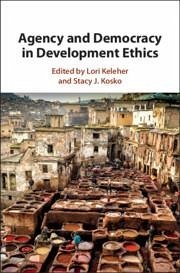
Agency and Democracy in Development Ethics
Herausgeber: Keleher, Lori; Kosko, Stacy J
Agency and Democracy in Development Ethics
Herausgeber: Keleher, Lori; Kosko, Stacy J
- Gebundenes Buch
- Merkliste
- Auf die Merkliste
- Bewerten Bewerten
- Teilen
- Produkt teilen
- Produkterinnerung
- Produkterinnerung
Economists, philosophers, and policy experts from the Global North and South advance the conversation on the ethical dimensions of agency and democracy in development.
Andere Kunden interessierten sich auch für
Philosophy and the Problems of Work171,99 €
Complexity, Difference and Identity76,99 €
Global Financial Crisis: The Ethical Issues38,99 €
Paul B. Thompson (ed.)Food Biotechnology in Ethical Perspective76,99 €
Philosophy and Design83,99 €
Dennis R. CooleyTechnology, Transgenics and a Practical Moral Code76,99 €
The Ethics Rupture100,99 €-
-
-
Economists, philosophers, and policy experts from the Global North and South advance the conversation on the ethical dimensions of agency and democracy in development.
Produktdetails
- Produktdetails
- Verlag: Cambridge University Press
- Seitenzahl: 486
- Erscheinungstermin: 14. März 2019
- Englisch
- Abmessung: 236mm x 159mm x 30mm
- Gewicht: 905g
- ISBN-13: 9781107195004
- ISBN-10: 1107195004
- Artikelnr.: 53690452
- Herstellerkennzeichnung
- Libri GmbH
- Europaallee 1
- 36244 Bad Hersfeld
- gpsr@libri.de
- Verlag: Cambridge University Press
- Seitenzahl: 486
- Erscheinungstermin: 14. März 2019
- Englisch
- Abmessung: 236mm x 159mm x 30mm
- Gewicht: 905g
- ISBN-13: 9781107195004
- ISBN-10: 1107195004
- Artikelnr.: 53690452
- Herstellerkennzeichnung
- Libri GmbH
- Europaallee 1
- 36244 Bad Hersfeld
- gpsr@libri.de
Introduction Lori Keleher and Stacy J. Kosko; Part I. Development Ethics:
1. Why development needs philosophy Lori Keleher; 2. What is development?
Eric Palmer; 3. Public goods and public spirit: reflections on and beyond
Nussbaum's political emotions Des Gasper and Flavio Comim; 4. Expanding a
constricted moral lens: LGBTI persons, human rights, and the capabilities
approach Chloe Schwenke; 5. Peacebuilding, development assistance, ethics
and agency Nigel Dower; Part II. Agency: 6. Expanding agency: conceptual,
explanatory, and normative implications Christine M. Koggel; 7. 'Reason to
value': process, opportunity, and perfectionism in the capability approach
Serene J. Khader and Stacy J. Kosko; 8. The multidimensionality of
empowerment: conceptual and empirical considerations Alejandra Boni, Jay
Drydyk, Alexandre Apsan Frediani, Aurora López-Fogués and Melanie Walker;
9. Agency, income inequality, and subjective well-being: the case of
Uruguay Andrea Vigorito and Gonzalo Salas; 10. The legal status of whales
and dolphins: from Bentham to the capabilities approach Rachel Nussbaum
Wichert and Martha C. Nussbaum; Part III. Democracy: 11. On some limits and
conflicts in participatory democracy Luis Camacho; 12. An agency-focused
version of capability ethics and ethics of cordial reason: the search for a
philosophical foundation for deliberative democracy Adela Cortina; 13. The
double democratic deficit: global governance and future generations Frances
Stewart; 14. Deliberative democracy and agency: linking transitional
justice and development Colleen Murphy; 15. Consensus-building and its
impact on policy: the National Agreement Forum in Peru Javier M. Iguíñiz
Echeverría; Part IV. Development Ethics, Agency, and Democracy: New
Challenges and New Directions: 16. From agency to perfectionist liberalism
David A. Crocker; 17. Perfectionist liberalism and democracy David A.
Crocker.
1. Why development needs philosophy Lori Keleher; 2. What is development?
Eric Palmer; 3. Public goods and public spirit: reflections on and beyond
Nussbaum's political emotions Des Gasper and Flavio Comim; 4. Expanding a
constricted moral lens: LGBTI persons, human rights, and the capabilities
approach Chloe Schwenke; 5. Peacebuilding, development assistance, ethics
and agency Nigel Dower; Part II. Agency: 6. Expanding agency: conceptual,
explanatory, and normative implications Christine M. Koggel; 7. 'Reason to
value': process, opportunity, and perfectionism in the capability approach
Serene J. Khader and Stacy J. Kosko; 8. The multidimensionality of
empowerment: conceptual and empirical considerations Alejandra Boni, Jay
Drydyk, Alexandre Apsan Frediani, Aurora López-Fogués and Melanie Walker;
9. Agency, income inequality, and subjective well-being: the case of
Uruguay Andrea Vigorito and Gonzalo Salas; 10. The legal status of whales
and dolphins: from Bentham to the capabilities approach Rachel Nussbaum
Wichert and Martha C. Nussbaum; Part III. Democracy: 11. On some limits and
conflicts in participatory democracy Luis Camacho; 12. An agency-focused
version of capability ethics and ethics of cordial reason: the search for a
philosophical foundation for deliberative democracy Adela Cortina; 13. The
double democratic deficit: global governance and future generations Frances
Stewart; 14. Deliberative democracy and agency: linking transitional
justice and development Colleen Murphy; 15. Consensus-building and its
impact on policy: the National Agreement Forum in Peru Javier M. Iguíñiz
Echeverría; Part IV. Development Ethics, Agency, and Democracy: New
Challenges and New Directions: 16. From agency to perfectionist liberalism
David A. Crocker; 17. Perfectionist liberalism and democracy David A.
Crocker.
Introduction Lori Keleher and Stacy J. Kosko; Part I. Development Ethics:
1. Why development needs philosophy Lori Keleher; 2. What is development?
Eric Palmer; 3. Public goods and public spirit: reflections on and beyond
Nussbaum's political emotions Des Gasper and Flavio Comim; 4. Expanding a
constricted moral lens: LGBTI persons, human rights, and the capabilities
approach Chloe Schwenke; 5. Peacebuilding, development assistance, ethics
and agency Nigel Dower; Part II. Agency: 6. Expanding agency: conceptual,
explanatory, and normative implications Christine M. Koggel; 7. 'Reason to
value': process, opportunity, and perfectionism in the capability approach
Serene J. Khader and Stacy J. Kosko; 8. The multidimensionality of
empowerment: conceptual and empirical considerations Alejandra Boni, Jay
Drydyk, Alexandre Apsan Frediani, Aurora López-Fogués and Melanie Walker;
9. Agency, income inequality, and subjective well-being: the case of
Uruguay Andrea Vigorito and Gonzalo Salas; 10. The legal status of whales
and dolphins: from Bentham to the capabilities approach Rachel Nussbaum
Wichert and Martha C. Nussbaum; Part III. Democracy: 11. On some limits and
conflicts in participatory democracy Luis Camacho; 12. An agency-focused
version of capability ethics and ethics of cordial reason: the search for a
philosophical foundation for deliberative democracy Adela Cortina; 13. The
double democratic deficit: global governance and future generations Frances
Stewart; 14. Deliberative democracy and agency: linking transitional
justice and development Colleen Murphy; 15. Consensus-building and its
impact on policy: the National Agreement Forum in Peru Javier M. Iguíñiz
Echeverría; Part IV. Development Ethics, Agency, and Democracy: New
Challenges and New Directions: 16. From agency to perfectionist liberalism
David A. Crocker; 17. Perfectionist liberalism and democracy David A.
Crocker.
1. Why development needs philosophy Lori Keleher; 2. What is development?
Eric Palmer; 3. Public goods and public spirit: reflections on and beyond
Nussbaum's political emotions Des Gasper and Flavio Comim; 4. Expanding a
constricted moral lens: LGBTI persons, human rights, and the capabilities
approach Chloe Schwenke; 5. Peacebuilding, development assistance, ethics
and agency Nigel Dower; Part II. Agency: 6. Expanding agency: conceptual,
explanatory, and normative implications Christine M. Koggel; 7. 'Reason to
value': process, opportunity, and perfectionism in the capability approach
Serene J. Khader and Stacy J. Kosko; 8. The multidimensionality of
empowerment: conceptual and empirical considerations Alejandra Boni, Jay
Drydyk, Alexandre Apsan Frediani, Aurora López-Fogués and Melanie Walker;
9. Agency, income inequality, and subjective well-being: the case of
Uruguay Andrea Vigorito and Gonzalo Salas; 10. The legal status of whales
and dolphins: from Bentham to the capabilities approach Rachel Nussbaum
Wichert and Martha C. Nussbaum; Part III. Democracy: 11. On some limits and
conflicts in participatory democracy Luis Camacho; 12. An agency-focused
version of capability ethics and ethics of cordial reason: the search for a
philosophical foundation for deliberative democracy Adela Cortina; 13. The
double democratic deficit: global governance and future generations Frances
Stewart; 14. Deliberative democracy and agency: linking transitional
justice and development Colleen Murphy; 15. Consensus-building and its
impact on policy: the National Agreement Forum in Peru Javier M. Iguíñiz
Echeverría; Part IV. Development Ethics, Agency, and Democracy: New
Challenges and New Directions: 16. From agency to perfectionist liberalism
David A. Crocker; 17. Perfectionist liberalism and democracy David A.
Crocker.