38,99 €
inkl. MwSt.
Versandkostenfrei*Erscheint vorauss. April 2026
Melden Sie sich
hier
hier
für den Produktalarm an, um über die Verfügbarkeit des Produkts informiert zu werden.

19 °P sammeln
Andere Kunden interessierten sich auch für
 Agile Prozesse - Agile Teams32,99 €
 Peopleware: Productive Projects and Teams27,99 €
 Agile Testing: A Practical Guide for Testers and Agile Teams37,99 €
 Adapting Configuration Management for Agile Teams36,99 €
 Troubleshooting Microsoft Teams46,99 €
 Introducing Microsoft Copilot for Managers43,99 €
 Leadership in a Zoom Economy with Microsoft Teams39,99 €




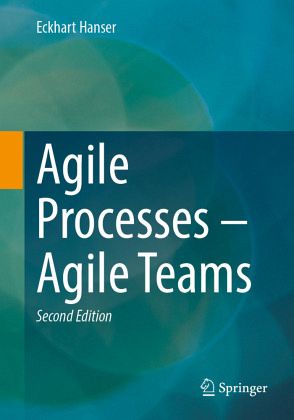
The book briefly and concisely describes the current agile process models in software development. After a short introduction to the historical development, it explores, starting from the Agile Manifesto and the first agile models Extreme Programming (XP) and Crystal, current representatives such as Scrum, Kanban, and DevOps in more detail. The focus is on the process flow, team roles, and artifacts.
In the student laboratory of the Competence Center for Agile IT Processes at the Baden-Württemberg Cooperative State University Lörrach, the discussed process models are tested for their "practical suitability." Which agile practices work smoothly, and which meet resistance from team members? Based on these experiences, the team process is examined, especially the formation of "mini-teams," the smallest productive unit within the development team.
Essential team roles for the success of a project are identified and formulated in the "Meta Agile Process Model" (MAP).Based on the "map of behaviors" within the team, a method for optimal team formation is proposed.
In the student laboratory of the Competence Center for Agile IT Processes at the Baden-Württemberg Cooperative State University Lörrach, the discussed process models are tested for their "practical suitability." Which agile practices work smoothly, and which meet resistance from team members? Based on these experiences, the team process is examined, especially the formation of "mini-teams," the smallest productive unit within the development team.
Essential team roles for the success of a project are identified and formulated in the "Meta Agile Process Model" (MAP).Based on the "map of behaviors" within the team, a method for optimal team formation is proposed.