
Emmanuel Richaud
Aging of Industrial Polymers, Volume 1
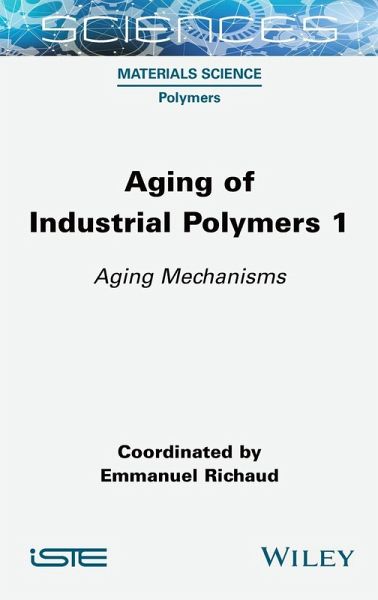
Emmanuel Richaud
Aging of Industrial Polymers, Volume 1
- Gebundenes Buch
- Merkliste
- Auf die Merkliste
- Bewerten Bewerten
- Teilen
- Produkt teilen
- Produkterinnerung
- Produkterinnerung
Polymers and composites are omnipresent in our daily lives, enabling the lightening of structural materials and food packaging. Their performance not only depends on their chemical structure, synthesis, architecture and forming process, but also evolves over time under the effect of processes that modify - sometimes slowly but irreversibly - the structure of the material. As a result, users need to consider the maximum duration of use during which these materials will retain acceptable levels of properties. This questioning is even more crucial as it responds to societal requirements linked to…mehr
Andere Kunden interessierten sich auch für
 S. M. SapuanComposite Materials109,99 €
 Foam Extrusion363,99 €
 Nanotechnology140,99 €
 George WypychAtlas of Material Damage216,99 €
 Advanced Textile Testing Techniques242,99 €
 Odour in Textiles280,99 €
 A Chronicle of Textile Machinery, 1824-192428,99 €
-
-
-







Polymers and composites are omnipresent in our daily lives, enabling the lightening of structural materials and food packaging. Their performance not only depends on their chemical structure, synthesis, architecture and forming process, but also evolves over time under the effect of processes that modify - sometimes slowly but irreversibly - the structure of the material. As a result, users need to consider the maximum duration of use during which these materials will retain acceptable levels of properties. This questioning is even more crucial as it responds to societal requirements linked to limiting end-of-life waste flows and preserving the resources necessary for their production.
Produktdetails
- Produktdetails
- Verlag: John Wiley & Sons
- Seitenzahl: 332
- Erscheinungstermin: 24. Oktober 2025
- Englisch
- Abmessung: 234mm x 156mm x 19mm
- Gewicht: 644g
- ISBN-13: 9781789451894
- ISBN-10: 1789451892
- Artikelnr.: 75578715
- Herstellerkennzeichnung
- Libri GmbH
- Europaallee 1
- 36244 Bad Hersfeld
- gpsr@libri.de
- Verlag: John Wiley & Sons
- Seitenzahl: 332
- Erscheinungstermin: 24. Oktober 2025
- Englisch
- Abmessung: 234mm x 156mm x 19mm
- Gewicht: 644g
- ISBN-13: 9781789451894
- ISBN-10: 1789451892
- Artikelnr.: 75578715
- Herstellerkennzeichnung
- Libri GmbH
- Europaallee 1
- 36244 Bad Hersfeld
- gpsr@libri.de
Emmanuel Richaud is Professor in Arts et Métiers Sciences and Technologies, and Researcher in the Process and Engineering in Mechanics and Materials lab (PIMM), France. His research focuses on predicting the service life of polymer materials and composites.
Foreword xi
Samuel FOREST
Introduction xv
Emmanuel RICHAUD
Chapter 1 Mechanistic and Kinetic Aspects of Oxidative Aging 1
Emmanuel RICHAUD
1.1 Introduction 1
1.2 Oxidation mechanisms 2
1.2.1 General mechanism 2
1.2.2 Kinetic aspects 8
1.2.3 Control by oxygen diffusion 10
1.3 Kinetic modeling 13
1.3.1 Introduction 13
1.3.2 Standard scheme 13
1.3.3 Strategy for estimating rate constants and orders of magnitude 19
1.4 Conclusion 21
1.5 References 21
Chapter 2 Polymer Aging in the Presence of Water 25
Emmanuel RICHAUD
2.1 Introduction 25
2.2 Physical aging of polymers in the presence of water 25
2.2.1 Water solubility in the polymers 26
2.2.2 Diffusivity of water into polymers 30
2.2.3 The consequences of physical aging by water absorption on the
mechanical properties of polymers 32
2.3 Chemical aging in the presence of water (hydrolysis) 34
2.3.1 General case 35
2.3.2 Some practical cases of hydrolysis 36
2.3.3 Consequences for mechanical properties 40
2.3.4 Stabilization against hydrolytic aging 41
2.4 Conclusion 42
2.5 References 43
Chapter 3 Polymers Under Ionizing Radiations: Introduction and Basic
Principles 47
Yvette NGONO
3.1 Introduction 47
3.2 Overview of ionizing radiation 53
3.2.1 Definition 53
3.2.2 Sources of ionizing radiations 55
3.2.3 Quantifying energy deposition and radiation effects on matter 56
3.3 Interactions between ionizing radiation and polymers: initial processes
58
3.3.1 Photon¿polymer interactions 58
3.3.2 Interactions between particles and polymers 60
3.3.3 Differences and similarities between various types of ionizing
radiation 67
3.4 Evolution of polymers under ionizing radiation 68
3.4.1 Primary species 69
3.4.2 Evolution of primary species 69
3.4.3 Evolution of radicals: defect formation 72
3.4.4 Parameters influencing the stability of polymers under radiation 76
3.4.5 Specificity of swift heavy ions 88
3.5 Conclusion 91
3.6 Acknowledgments 93
3.7 References 94
Chapter 4 Stabilization 99
Emmanuel RICHAUD
4.1 Introduction 99
4.2 Chemical reactions of stabilization against thermo-oxidative aging 99
4.2.1 Strategy of stabilization against oxidative aging 99
4.2.2 Kinetic aspects 105
4.3 Stabilization against photochemical aging 108
4.3.1 UV absorbers 108
4.3.2 Quencher 109
4.3.3 Pigments 110
4.4 Synergies/antagonism 110
4.5 Example of specific stabilizations 111
4.5.1 PVC stabilization against dehydrochlorination 111
4.5.2 Stabilization against depolymerization 113
4.6 Physical phenomena involved in the external stabilization of polymers
114
4.6.1 Solubility of stabilizers 114
4.6.2 Volatility/surface loss of stabilizers 115
4.6.3 Diffusivity of stabilizers 117
4.6.4 Kinetic analysis of migration phenomena 119
4.7 Methods for antioxidant detection and evaluation 119
4.8 Conclusion 121
4.9 References 122
Chapter 5 Effect of Chemical Aging on Mechanical Properties 125
Emmanuel RICHAUD
5.1 Introduction 125
5.2 Thermoplastics 126
5.2.1 Change in the average molar mass 126
5.2.2 Glass transition temperature 127
5.2.3 Viscosity of the molten state 128
5.2.4 Fracture properties 129
5.3 Networks 132
5.3.1 Networks in the rubbery state: elastomers 132
5.3.2 Networks in the glassy state: thermosets 134
5.4 Conclusion 138
5.5 References 138
Chapter 6 Physical Aging by Structural Relaxation in Polymers 141
Blandine QUÉLENNEC, Nicolas DELPOUVE and Laurent DELBREILH
6.1 Introduction: glass transition and the glassy state 141
6.1.1 Glass transition 142
6.1.2 Characteristics of the glassy state 154
6.2 Historical landmarks in the study of physical aging 155
6.2.1 Tool's observations and the concept of fictive temperature 155
6.2.2 The limits stated by Ritland 155
6.2.3 Kovacs' experiments 156
6.2.4 Theoretical contributions 159
6.2.5 Monitoring the mechanical properties 169
6.3 Experimental methods for studying physical aging 171
6.3.1 Differential scanning calorimetry 171
6.3.2 Fast scanning calorimetry 176
6.3.3 Broadband dielectric spectroscopy 177
6.3.4 Thermally stimulated depolarization currents 179
6.3.5 Dynamic mechanical analysis 182
6.3.6 Nuclear magnetic resonance spectroscopy 183
6.3.7 Positron annihilation lifetime spectroscopy 185
6.3.8 Ellipsometry 185
6.3.9 Raman spectroscopy 187
6.4 Physical aging in glassy systems 188
6.4.1 Thermosetting polymers 188
6.4.2 Amorphous thermoplastic polymers 188
6.4.3 Semicrystalline polymers 192
6.4.4 Copolymers 194
6.4.5 Composites and nanocomposites 195
6.4.6 Polymers and model systems: chalcogenide glasses 196
6.5 For a better comprehension of physical aging 198
6.5.1 Nature of relaxation dynamics in the glassy state 198
6.5.2 An equilibration kinetics in several stages 200
6.5.3 Sensitivity of aging by structural relaxation to scale effects and
the behavior of a confined polymer 202
6.5.4 Possibility of crystallization following aging by structural
relaxation 203
6.5.5 Predicting the influence of environmental factors on physical aging
204
6.6 Conclusion 206
6.7 References 208
Chapter 7 Several Aspects of Elastomer Fatigue 229
Stéphane MÉO, Alexis DELATTRE, Jean-Louis POISSON, Florian LACROIX and
Stéphane LEJEUNES
7.1 Introduction 229
7.2 Problem formulation 231
7.2.1 Fatigue in general terms 231
7.2.2 Elastomer fatigue 231
7.2.3 An example of a crack initiation study 241
7.3 Conclusion 254
7.4 References 254
Chapter 8 Influence of Polyamide 6,6 Molecular Mobility on Mechanical
Behavior 261
Agustín RIOS DE ANDA, Louise-Anne FILLOT and Paul SOTTA
8.1 Introduction 261
8.2 Materials and techniques 265
8.3 Sorption and plasticizing effect of pure polar and apolar solvents and
of mixtures of solvents on pure PA6,6 270
8.4 Properties of additivated or chemically modified PA6,6 280
8.5 Conclusion 288
8.6 References 290
Chapter 9. Statistic Approach to Polymer Network Degradation .. 295
Pierre GILORMINI
9.1 Introduction 295
9.2 Numerical simulation 297
9.3 Probabilistic approach to degradation 298
9.4 First example: trifunctional network with one or two reactive groups
per chain 300
9.5 Second example: trifunctional network with more than two reactive
groups per chain 302
9.6 Third example: a tetrafunctional network 305
9.7 Conclusion 307
9.8 References 308
List of Authors 309
Index 311
Samuel FOREST
Introduction xv
Emmanuel RICHAUD
Chapter 1 Mechanistic and Kinetic Aspects of Oxidative Aging 1
Emmanuel RICHAUD
1.1 Introduction 1
1.2 Oxidation mechanisms 2
1.2.1 General mechanism 2
1.2.2 Kinetic aspects 8
1.2.3 Control by oxygen diffusion 10
1.3 Kinetic modeling 13
1.3.1 Introduction 13
1.3.2 Standard scheme 13
1.3.3 Strategy for estimating rate constants and orders of magnitude 19
1.4 Conclusion 21
1.5 References 21
Chapter 2 Polymer Aging in the Presence of Water 25
Emmanuel RICHAUD
2.1 Introduction 25
2.2 Physical aging of polymers in the presence of water 25
2.2.1 Water solubility in the polymers 26
2.2.2 Diffusivity of water into polymers 30
2.2.3 The consequences of physical aging by water absorption on the
mechanical properties of polymers 32
2.3 Chemical aging in the presence of water (hydrolysis) 34
2.3.1 General case 35
2.3.2 Some practical cases of hydrolysis 36
2.3.3 Consequences for mechanical properties 40
2.3.4 Stabilization against hydrolytic aging 41
2.4 Conclusion 42
2.5 References 43
Chapter 3 Polymers Under Ionizing Radiations: Introduction and Basic
Principles 47
Yvette NGONO
3.1 Introduction 47
3.2 Overview of ionizing radiation 53
3.2.1 Definition 53
3.2.2 Sources of ionizing radiations 55
3.2.3 Quantifying energy deposition and radiation effects on matter 56
3.3 Interactions between ionizing radiation and polymers: initial processes
58
3.3.1 Photon¿polymer interactions 58
3.3.2 Interactions between particles and polymers 60
3.3.3 Differences and similarities between various types of ionizing
radiation 67
3.4 Evolution of polymers under ionizing radiation 68
3.4.1 Primary species 69
3.4.2 Evolution of primary species 69
3.4.3 Evolution of radicals: defect formation 72
3.4.4 Parameters influencing the stability of polymers under radiation 76
3.4.5 Specificity of swift heavy ions 88
3.5 Conclusion 91
3.6 Acknowledgments 93
3.7 References 94
Chapter 4 Stabilization 99
Emmanuel RICHAUD
4.1 Introduction 99
4.2 Chemical reactions of stabilization against thermo-oxidative aging 99
4.2.1 Strategy of stabilization against oxidative aging 99
4.2.2 Kinetic aspects 105
4.3 Stabilization against photochemical aging 108
4.3.1 UV absorbers 108
4.3.2 Quencher 109
4.3.3 Pigments 110
4.4 Synergies/antagonism 110
4.5 Example of specific stabilizations 111
4.5.1 PVC stabilization against dehydrochlorination 111
4.5.2 Stabilization against depolymerization 113
4.6 Physical phenomena involved in the external stabilization of polymers
114
4.6.1 Solubility of stabilizers 114
4.6.2 Volatility/surface loss of stabilizers 115
4.6.3 Diffusivity of stabilizers 117
4.6.4 Kinetic analysis of migration phenomena 119
4.7 Methods for antioxidant detection and evaluation 119
4.8 Conclusion 121
4.9 References 122
Chapter 5 Effect of Chemical Aging on Mechanical Properties 125
Emmanuel RICHAUD
5.1 Introduction 125
5.2 Thermoplastics 126
5.2.1 Change in the average molar mass 126
5.2.2 Glass transition temperature 127
5.2.3 Viscosity of the molten state 128
5.2.4 Fracture properties 129
5.3 Networks 132
5.3.1 Networks in the rubbery state: elastomers 132
5.3.2 Networks in the glassy state: thermosets 134
5.4 Conclusion 138
5.5 References 138
Chapter 6 Physical Aging by Structural Relaxation in Polymers 141
Blandine QUÉLENNEC, Nicolas DELPOUVE and Laurent DELBREILH
6.1 Introduction: glass transition and the glassy state 141
6.1.1 Glass transition 142
6.1.2 Characteristics of the glassy state 154
6.2 Historical landmarks in the study of physical aging 155
6.2.1 Tool's observations and the concept of fictive temperature 155
6.2.2 The limits stated by Ritland 155
6.2.3 Kovacs' experiments 156
6.2.4 Theoretical contributions 159
6.2.5 Monitoring the mechanical properties 169
6.3 Experimental methods for studying physical aging 171
6.3.1 Differential scanning calorimetry 171
6.3.2 Fast scanning calorimetry 176
6.3.3 Broadband dielectric spectroscopy 177
6.3.4 Thermally stimulated depolarization currents 179
6.3.5 Dynamic mechanical analysis 182
6.3.6 Nuclear magnetic resonance spectroscopy 183
6.3.7 Positron annihilation lifetime spectroscopy 185
6.3.8 Ellipsometry 185
6.3.9 Raman spectroscopy 187
6.4 Physical aging in glassy systems 188
6.4.1 Thermosetting polymers 188
6.4.2 Amorphous thermoplastic polymers 188
6.4.3 Semicrystalline polymers 192
6.4.4 Copolymers 194
6.4.5 Composites and nanocomposites 195
6.4.6 Polymers and model systems: chalcogenide glasses 196
6.5 For a better comprehension of physical aging 198
6.5.1 Nature of relaxation dynamics in the glassy state 198
6.5.2 An equilibration kinetics in several stages 200
6.5.3 Sensitivity of aging by structural relaxation to scale effects and
the behavior of a confined polymer 202
6.5.4 Possibility of crystallization following aging by structural
relaxation 203
6.5.5 Predicting the influence of environmental factors on physical aging
204
6.6 Conclusion 206
6.7 References 208
Chapter 7 Several Aspects of Elastomer Fatigue 229
Stéphane MÉO, Alexis DELATTRE, Jean-Louis POISSON, Florian LACROIX and
Stéphane LEJEUNES
7.1 Introduction 229
7.2 Problem formulation 231
7.2.1 Fatigue in general terms 231
7.2.2 Elastomer fatigue 231
7.2.3 An example of a crack initiation study 241
7.3 Conclusion 254
7.4 References 254
Chapter 8 Influence of Polyamide 6,6 Molecular Mobility on Mechanical
Behavior 261
Agustín RIOS DE ANDA, Louise-Anne FILLOT and Paul SOTTA
8.1 Introduction 261
8.2 Materials and techniques 265
8.3 Sorption and plasticizing effect of pure polar and apolar solvents and
of mixtures of solvents on pure PA6,6 270
8.4 Properties of additivated or chemically modified PA6,6 280
8.5 Conclusion 288
8.6 References 290
Chapter 9. Statistic Approach to Polymer Network Degradation .. 295
Pierre GILORMINI
9.1 Introduction 295
9.2 Numerical simulation 297
9.3 Probabilistic approach to degradation 298
9.4 First example: trifunctional network with one or two reactive groups
per chain 300
9.5 Second example: trifunctional network with more than two reactive
groups per chain 302
9.6 Third example: a tetrafunctional network 305
9.7 Conclusion 307
9.8 References 308
List of Authors 309
Index 311
Foreword xi
Samuel FOREST
Introduction xv
Emmanuel RICHAUD
Chapter 1 Mechanistic and Kinetic Aspects of Oxidative Aging 1
Emmanuel RICHAUD
1.1 Introduction 1
1.2 Oxidation mechanisms 2
1.2.1 General mechanism 2
1.2.2 Kinetic aspects 8
1.2.3 Control by oxygen diffusion 10
1.3 Kinetic modeling 13
1.3.1 Introduction 13
1.3.2 Standard scheme 13
1.3.3 Strategy for estimating rate constants and orders of magnitude 19
1.4 Conclusion 21
1.5 References 21
Chapter 2 Polymer Aging in the Presence of Water 25
Emmanuel RICHAUD
2.1 Introduction 25
2.2 Physical aging of polymers in the presence of water 25
2.2.1 Water solubility in the polymers 26
2.2.2 Diffusivity of water into polymers 30
2.2.3 The consequences of physical aging by water absorption on the
mechanical properties of polymers 32
2.3 Chemical aging in the presence of water (hydrolysis) 34
2.3.1 General case 35
2.3.2 Some practical cases of hydrolysis 36
2.3.3 Consequences for mechanical properties 40
2.3.4 Stabilization against hydrolytic aging 41
2.4 Conclusion 42
2.5 References 43
Chapter 3 Polymers Under Ionizing Radiations: Introduction and Basic
Principles 47
Yvette NGONO
3.1 Introduction 47
3.2 Overview of ionizing radiation 53
3.2.1 Definition 53
3.2.2 Sources of ionizing radiations 55
3.2.3 Quantifying energy deposition and radiation effects on matter 56
3.3 Interactions between ionizing radiation and polymers: initial processes
58
3.3.1 Photon¿polymer interactions 58
3.3.2 Interactions between particles and polymers 60
3.3.3 Differences and similarities between various types of ionizing
radiation 67
3.4 Evolution of polymers under ionizing radiation 68
3.4.1 Primary species 69
3.4.2 Evolution of primary species 69
3.4.3 Evolution of radicals: defect formation 72
3.4.4 Parameters influencing the stability of polymers under radiation 76
3.4.5 Specificity of swift heavy ions 88
3.5 Conclusion 91
3.6 Acknowledgments 93
3.7 References 94
Chapter 4 Stabilization 99
Emmanuel RICHAUD
4.1 Introduction 99
4.2 Chemical reactions of stabilization against thermo-oxidative aging 99
4.2.1 Strategy of stabilization against oxidative aging 99
4.2.2 Kinetic aspects 105
4.3 Stabilization against photochemical aging 108
4.3.1 UV absorbers 108
4.3.2 Quencher 109
4.3.3 Pigments 110
4.4 Synergies/antagonism 110
4.5 Example of specific stabilizations 111
4.5.1 PVC stabilization against dehydrochlorination 111
4.5.2 Stabilization against depolymerization 113
4.6 Physical phenomena involved in the external stabilization of polymers
114
4.6.1 Solubility of stabilizers 114
4.6.2 Volatility/surface loss of stabilizers 115
4.6.3 Diffusivity of stabilizers 117
4.6.4 Kinetic analysis of migration phenomena 119
4.7 Methods for antioxidant detection and evaluation 119
4.8 Conclusion 121
4.9 References 122
Chapter 5 Effect of Chemical Aging on Mechanical Properties 125
Emmanuel RICHAUD
5.1 Introduction 125
5.2 Thermoplastics 126
5.2.1 Change in the average molar mass 126
5.2.2 Glass transition temperature 127
5.2.3 Viscosity of the molten state 128
5.2.4 Fracture properties 129
5.3 Networks 132
5.3.1 Networks in the rubbery state: elastomers 132
5.3.2 Networks in the glassy state: thermosets 134
5.4 Conclusion 138
5.5 References 138
Chapter 6 Physical Aging by Structural Relaxation in Polymers 141
Blandine QUÉLENNEC, Nicolas DELPOUVE and Laurent DELBREILH
6.1 Introduction: glass transition and the glassy state 141
6.1.1 Glass transition 142
6.1.2 Characteristics of the glassy state 154
6.2 Historical landmarks in the study of physical aging 155
6.2.1 Tool's observations and the concept of fictive temperature 155
6.2.2 The limits stated by Ritland 155
6.2.3 Kovacs' experiments 156
6.2.4 Theoretical contributions 159
6.2.5 Monitoring the mechanical properties 169
6.3 Experimental methods for studying physical aging 171
6.3.1 Differential scanning calorimetry 171
6.3.2 Fast scanning calorimetry 176
6.3.3 Broadband dielectric spectroscopy 177
6.3.4 Thermally stimulated depolarization currents 179
6.3.5 Dynamic mechanical analysis 182
6.3.6 Nuclear magnetic resonance spectroscopy 183
6.3.7 Positron annihilation lifetime spectroscopy 185
6.3.8 Ellipsometry 185
6.3.9 Raman spectroscopy 187
6.4 Physical aging in glassy systems 188
6.4.1 Thermosetting polymers 188
6.4.2 Amorphous thermoplastic polymers 188
6.4.3 Semicrystalline polymers 192
6.4.4 Copolymers 194
6.4.5 Composites and nanocomposites 195
6.4.6 Polymers and model systems: chalcogenide glasses 196
6.5 For a better comprehension of physical aging 198
6.5.1 Nature of relaxation dynamics in the glassy state 198
6.5.2 An equilibration kinetics in several stages 200
6.5.3 Sensitivity of aging by structural relaxation to scale effects and
the behavior of a confined polymer 202
6.5.4 Possibility of crystallization following aging by structural
relaxation 203
6.5.5 Predicting the influence of environmental factors on physical aging
204
6.6 Conclusion 206
6.7 References 208
Chapter 7 Several Aspects of Elastomer Fatigue 229
Stéphane MÉO, Alexis DELATTRE, Jean-Louis POISSON, Florian LACROIX and
Stéphane LEJEUNES
7.1 Introduction 229
7.2 Problem formulation 231
7.2.1 Fatigue in general terms 231
7.2.2 Elastomer fatigue 231
7.2.3 An example of a crack initiation study 241
7.3 Conclusion 254
7.4 References 254
Chapter 8 Influence of Polyamide 6,6 Molecular Mobility on Mechanical
Behavior 261
Agustín RIOS DE ANDA, Louise-Anne FILLOT and Paul SOTTA
8.1 Introduction 261
8.2 Materials and techniques 265
8.3 Sorption and plasticizing effect of pure polar and apolar solvents and
of mixtures of solvents on pure PA6,6 270
8.4 Properties of additivated or chemically modified PA6,6 280
8.5 Conclusion 288
8.6 References 290
Chapter 9. Statistic Approach to Polymer Network Degradation .. 295
Pierre GILORMINI
9.1 Introduction 295
9.2 Numerical simulation 297
9.3 Probabilistic approach to degradation 298
9.4 First example: trifunctional network with one or two reactive groups
per chain 300
9.5 Second example: trifunctional network with more than two reactive
groups per chain 302
9.6 Third example: a tetrafunctional network 305
9.7 Conclusion 307
9.8 References 308
List of Authors 309
Index 311
Samuel FOREST
Introduction xv
Emmanuel RICHAUD
Chapter 1 Mechanistic and Kinetic Aspects of Oxidative Aging 1
Emmanuel RICHAUD
1.1 Introduction 1
1.2 Oxidation mechanisms 2
1.2.1 General mechanism 2
1.2.2 Kinetic aspects 8
1.2.3 Control by oxygen diffusion 10
1.3 Kinetic modeling 13
1.3.1 Introduction 13
1.3.2 Standard scheme 13
1.3.3 Strategy for estimating rate constants and orders of magnitude 19
1.4 Conclusion 21
1.5 References 21
Chapter 2 Polymer Aging in the Presence of Water 25
Emmanuel RICHAUD
2.1 Introduction 25
2.2 Physical aging of polymers in the presence of water 25
2.2.1 Water solubility in the polymers 26
2.2.2 Diffusivity of water into polymers 30
2.2.3 The consequences of physical aging by water absorption on the
mechanical properties of polymers 32
2.3 Chemical aging in the presence of water (hydrolysis) 34
2.3.1 General case 35
2.3.2 Some practical cases of hydrolysis 36
2.3.3 Consequences for mechanical properties 40
2.3.4 Stabilization against hydrolytic aging 41
2.4 Conclusion 42
2.5 References 43
Chapter 3 Polymers Under Ionizing Radiations: Introduction and Basic
Principles 47
Yvette NGONO
3.1 Introduction 47
3.2 Overview of ionizing radiation 53
3.2.1 Definition 53
3.2.2 Sources of ionizing radiations 55
3.2.3 Quantifying energy deposition and radiation effects on matter 56
3.3 Interactions between ionizing radiation and polymers: initial processes
58
3.3.1 Photon¿polymer interactions 58
3.3.2 Interactions between particles and polymers 60
3.3.3 Differences and similarities between various types of ionizing
radiation 67
3.4 Evolution of polymers under ionizing radiation 68
3.4.1 Primary species 69
3.4.2 Evolution of primary species 69
3.4.3 Evolution of radicals: defect formation 72
3.4.4 Parameters influencing the stability of polymers under radiation 76
3.4.5 Specificity of swift heavy ions 88
3.5 Conclusion 91
3.6 Acknowledgments 93
3.7 References 94
Chapter 4 Stabilization 99
Emmanuel RICHAUD
4.1 Introduction 99
4.2 Chemical reactions of stabilization against thermo-oxidative aging 99
4.2.1 Strategy of stabilization against oxidative aging 99
4.2.2 Kinetic aspects 105
4.3 Stabilization against photochemical aging 108
4.3.1 UV absorbers 108
4.3.2 Quencher 109
4.3.3 Pigments 110
4.4 Synergies/antagonism 110
4.5 Example of specific stabilizations 111
4.5.1 PVC stabilization against dehydrochlorination 111
4.5.2 Stabilization against depolymerization 113
4.6 Physical phenomena involved in the external stabilization of polymers
114
4.6.1 Solubility of stabilizers 114
4.6.2 Volatility/surface loss of stabilizers 115
4.6.3 Diffusivity of stabilizers 117
4.6.4 Kinetic analysis of migration phenomena 119
4.7 Methods for antioxidant detection and evaluation 119
4.8 Conclusion 121
4.9 References 122
Chapter 5 Effect of Chemical Aging on Mechanical Properties 125
Emmanuel RICHAUD
5.1 Introduction 125
5.2 Thermoplastics 126
5.2.1 Change in the average molar mass 126
5.2.2 Glass transition temperature 127
5.2.3 Viscosity of the molten state 128
5.2.4 Fracture properties 129
5.3 Networks 132
5.3.1 Networks in the rubbery state: elastomers 132
5.3.2 Networks in the glassy state: thermosets 134
5.4 Conclusion 138
5.5 References 138
Chapter 6 Physical Aging by Structural Relaxation in Polymers 141
Blandine QUÉLENNEC, Nicolas DELPOUVE and Laurent DELBREILH
6.1 Introduction: glass transition and the glassy state 141
6.1.1 Glass transition 142
6.1.2 Characteristics of the glassy state 154
6.2 Historical landmarks in the study of physical aging 155
6.2.1 Tool's observations and the concept of fictive temperature 155
6.2.2 The limits stated by Ritland 155
6.2.3 Kovacs' experiments 156
6.2.4 Theoretical contributions 159
6.2.5 Monitoring the mechanical properties 169
6.3 Experimental methods for studying physical aging 171
6.3.1 Differential scanning calorimetry 171
6.3.2 Fast scanning calorimetry 176
6.3.3 Broadband dielectric spectroscopy 177
6.3.4 Thermally stimulated depolarization currents 179
6.3.5 Dynamic mechanical analysis 182
6.3.6 Nuclear magnetic resonance spectroscopy 183
6.3.7 Positron annihilation lifetime spectroscopy 185
6.3.8 Ellipsometry 185
6.3.9 Raman spectroscopy 187
6.4 Physical aging in glassy systems 188
6.4.1 Thermosetting polymers 188
6.4.2 Amorphous thermoplastic polymers 188
6.4.3 Semicrystalline polymers 192
6.4.4 Copolymers 194
6.4.5 Composites and nanocomposites 195
6.4.6 Polymers and model systems: chalcogenide glasses 196
6.5 For a better comprehension of physical aging 198
6.5.1 Nature of relaxation dynamics in the glassy state 198
6.5.2 An equilibration kinetics in several stages 200
6.5.3 Sensitivity of aging by structural relaxation to scale effects and
the behavior of a confined polymer 202
6.5.4 Possibility of crystallization following aging by structural
relaxation 203
6.5.5 Predicting the influence of environmental factors on physical aging
204
6.6 Conclusion 206
6.7 References 208
Chapter 7 Several Aspects of Elastomer Fatigue 229
Stéphane MÉO, Alexis DELATTRE, Jean-Louis POISSON, Florian LACROIX and
Stéphane LEJEUNES
7.1 Introduction 229
7.2 Problem formulation 231
7.2.1 Fatigue in general terms 231
7.2.2 Elastomer fatigue 231
7.2.3 An example of a crack initiation study 241
7.3 Conclusion 254
7.4 References 254
Chapter 8 Influence of Polyamide 6,6 Molecular Mobility on Mechanical
Behavior 261
Agustín RIOS DE ANDA, Louise-Anne FILLOT and Paul SOTTA
8.1 Introduction 261
8.2 Materials and techniques 265
8.3 Sorption and plasticizing effect of pure polar and apolar solvents and
of mixtures of solvents on pure PA6,6 270
8.4 Properties of additivated or chemically modified PA6,6 280
8.5 Conclusion 288
8.6 References 290
Chapter 9. Statistic Approach to Polymer Network Degradation .. 295
Pierre GILORMINI
9.1 Introduction 295
9.2 Numerical simulation 297
9.3 Probabilistic approach to degradation 298
9.4 First example: trifunctional network with one or two reactive groups
per chain 300
9.5 Second example: trifunctional network with more than two reactive
groups per chain 302
9.6 Third example: a tetrafunctional network 305
9.7 Conclusion 307
9.8 References 308
List of Authors 309
Index 311