
- Broschiertes Buch
- Merkliste
- Auf die Merkliste
- Bewerten Bewerten
- Teilen
- Produkt teilen
- Produkterinnerung
- Produkterinnerung
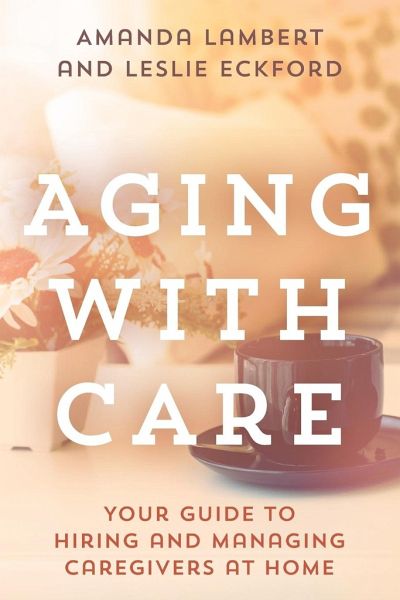
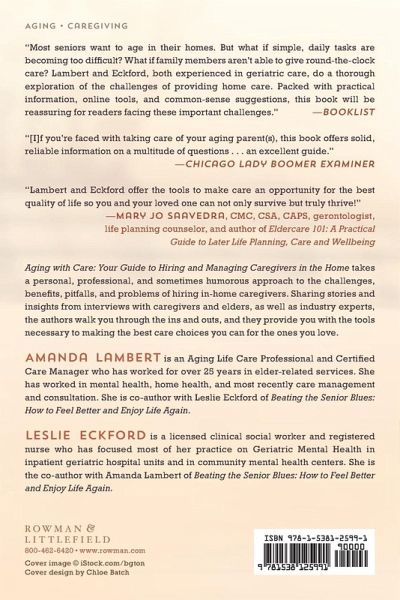
Finding the best and most appropriate in-home care for an aging loved one can be confusing and time consuming. This guide helps readers through the process of hiring a private caregiver, assessing needs and resources, and making difficult choices. Using real stories throughout, the authors reveal the benefits and pitfalls of in-home care.
Andere Kunden interessierten sich auch für
 Mary-Frances O'ConnorThe Grieving Body17,99 €
 Aroop MangalikDealing with Doctors, Denial, and Death32,99 €
 Debra KostiwForget Me Not22,99 €
 Ron SeigelEnlightened Caregiving for Men Who Care26,99 €
 Debra KostiwForget Me Not16,99 €
 Ron SeigelEnlightened Caregiving for Men Who Care27,99 €
 Deborah SeraniDepression and Your Child34,99 €
-
-
-




Finding the best and most appropriate in-home care for an aging loved one can be confusing and time consuming. This guide helps readers through the process of hiring a private caregiver, assessing needs and resources, and making difficult choices. Using real stories throughout, the authors reveal the benefits and pitfalls of in-home care.
Produktdetails
- Produktdetails
- Verlag: Rowman & Littlefield Publishers
- Seitenzahl: 270
- Erscheinungstermin: 8. Februar 2019
- Englisch
- Abmessung: 229mm x 152mm x 16mm
- Gewicht: 443g
- ISBN-13: 9781538125991
- ISBN-10: 1538125994
- Artikelnr.: 54612012
- Herstellerkennzeichnung
- Libri GmbH
- Europaallee 1
- 36244 Bad Hersfeld
- gpsr@libri.de
- Verlag: Rowman & Littlefield Publishers
- Seitenzahl: 270
- Erscheinungstermin: 8. Februar 2019
- Englisch
- Abmessung: 229mm x 152mm x 16mm
- Gewicht: 443g
- ISBN-13: 9781538125991
- ISBN-10: 1538125994
- Artikelnr.: 54612012
- Herstellerkennzeichnung
- Libri GmbH
- Europaallee 1
- 36244 Bad Hersfeld
- gpsr@libri.de
Amanda Lambert is an Aging Life Care Professional, and Certified Care Manager who has worked for over 25 years in elder related services. She has worked in mental health, home health, and most recently care management and consultation. She is co-author with Leslie Eckford of Beating the Senior Blues: How to Feel Better and Enjoy Life Again. She is certified as an Advanced Aging Life Care Specialist through the Aging Life Care Association (formerly the National Academy of Geriatric Care Managers); a nationally certified Master Guardian; and a Care Manager Certified issued by the National Academy of Certified Care Managers. Amanda and Leslie have a website, Mindfulaging.com, where they post observations and articles on caregiving and policy, aging research, assisted living, technology, healthy aging, and the global challenges associated with taking care of elders. Amanda has presented to numerous professional groups through the years on a wide variety of topics. Amanda has been the chairperson of the Utah Gerontological Society; on the board of trustees of the oldest non-profit assisted living community in Utah, The Sarah Daft Home, and served on numerous other committees that advocate for elders. Amanda received an Outstanding Achievement Award from the State of Utah Division of Aging and Adult Services for her work in protecting the rights and safety of vulnerable adults. Leslie Eckford is a licensed clinical social worker and registered nurse who has focused most of her practice on Geriatric Mental Health in inpatient geriatric hospital units and in community mental health centers. She is the co-author with Amanda Lambert of Beating the Senior Blues: How to Feel Better and Enjoy Life Again. Leslie has worked with geriatric mental health care teams including at the University of Arizona and the University of Virginia Medical Centers managing the treatment of psychiatric illnesses. Leslie has been a speaker in the community about topics affecting the lives of older adults including: Suicide in the Elderly, Resiliency and Aging, Issues of Intimacy in Older Years, and Hoarding.
Introduction
WAKING UP TO A NIGHTMARE
What would you do if you realized that the caregiver that you hired to take
care of your elderly parents in their house turned out to be stealing from
them and exploiting them? Leslie shares her horror story of realizing that
the hired caregiver that she knew, liked and trusted turned out to be
robbing her family blind. She describes her professional background as a
geriatric nurse and Licensed Clinical Social Worker and her dedication to
supporting her parents to age in their own home. She assumed that even
though she lives far away from her elderly parents, she would know enough
to make the right choices. But all of this was not enough to protect her
family from being taken advantage of. When she discussed her family's
plight with her friend, Amanda Lambert, also a geriatric professional as
well as a certified geriatric care manager, they realized that though they
agreed on many approaches to home care for the elderly, they diverged when
considering hiring privately or through a care agency. Thus, the idea for
this book was born: to share our professional and personal experience to
assist others to make educated choices about hiring employees to be elder
caregivers for their family.
Chapter 1
FINDING MORE THAN ONE WAY HOME: TWO APPROACHES TO HIRING CAREGIVERS
While Amanda and Leslie agree about the value of aging at home and
promoting safety and quality of life for all elders, they have some
different approaches on how to hire the right caregivers for home care.
Even after the criminal caregiver fiasco, Leslie still prefers hiring
privately. Amanda has a different perspective related to her experiences as
a geriatric care manager. Amanda describes her duties in this professional
role, its definition and how she helps elders and their families navigate
the challenges of staying in place to age.
The tremendous growth of people who are over 65 and the increase in life
expectancy is creating an Aging Tsunami. As more Americans grow older, more
can expect to eventually need some assistance with daily care such as
preparing meals, dressing and bathing and mobility. Where will they get
that care? In recent history, older adults have been encouraged to move
into assisted living or other retirement communities. However, in poll
after poll of older Americans, they clearly express their desire to stay at
home. Staying at home is one thing, but being on the receiving end of
personal care is another. Invasion of privacy, and loss of control are
considered in the context of real life experiences of elders.
Two different ways to hire a caregiver (private hire or through a care
agency) are presented with the Pros and Cons of each. Families are
encouraged to consider the needs of elders and their choice of hiring the
best caregiver on a continuum. Needs for assistance can change as one's
health does, thus impacting the type of caregiver that will be best. Leslie
describes the advantages of privately hiring a caregiver (more control over
who is chosen, less turnover and more consistency of care, reducing cost of
third party) and disadvantages (such as the need to vet individuals for
criminal backgrounds, time required for hiring process and management).
Amanda offers a contrasting perspective for hiring with a care agency: the
upside includes less hassle for the family, the agency will take care of
any sick calls and other unavoidable problems, and it saves time. She
acknowledges the downsides such as an increased hourly rate for the
consumer and higher rate of staff turnover which can be upsetting and
disruptive for seniors.
Each chapter ends with Take Away Points that emphasize the most important
concepts for the family to consider as they embark on increasing home
support.
(See Sample Chapter)
Chapter 2
GETTING STARTED: HOW MUCH HOME CARE DO YOU NEED?
Knowing if or when to begin considering care in the home can be
complicated. Typically an event, or trigger, can be the precipitating
factor for family members or even the elder themselves to realize that help
is needed. The cost is potentially staggering. Is it the right decision for
you or your family member?
Learn some basic terms and vocabulary about home care as it differs from
care in a setting like a nursing home. Doctors may refer to home care in
ways that may be confusing and lead you to believe that all home care is
covered by some insurances when it is not. Refer to a useful sidebar to
demystify the differences between Medicare and Medicaid. This chart will
answer your burning question: which home care expenses do they really
cover?
Use our Needs Scale to determine the type of home care that will assure
your successful stay at home. A Home Care Needs Scale will assist families
and elder persons to assess what care can be done by a family or friend
versus a professional caregiver. The best planning will figure out which
activities, such as medication management or bathing, are most important to
this individual. Emphasis is on flexibility. For example, it could be an
advantage in areas such as how and when to schedule caregivers. The Home
Care Needs Scale will help you determine if staying at home is a realistic
option for you. Instructive stories based on real elders' experiences are
incorporated throughout to learn how others initiated care in their home.
Having "the talk" with older family members will help everyone to reach
agreement about possible circumstances that trigger the need for care.
Talking openly with one's family about whether or not staying at home with
care is a viable option is a source of dread for many. With all the
parent-child dynamics in play, strategies for segueing into to and staying
on topic are critical. How to deal with elderly family who are resistant to
having any care at all. How to incorporate the Advance Directive as a tool
to ensure that a person's wishes are honored. Recognizing what each side
can be flexible about can further the process.
This is an expensive proposition. Individuals and families need to deal
with the real costs of home care. Talking about money between generations
can be perceived as an intrusion on one's privacy. Full access to varied
factors (savings, equity, net worth, overall health and prognosis) are
necessary to create a budget for the cost of home care. An unique plan of
care for each person is needed. While a certain amount of help for part of
the day can be manageable and less expensive than moving to assisted
living, the price soars with round the clock care. What to do if private
caregiving is something you and your family simply cannot afford. We
discuss options for care when finances are tight. Throughout, real life
stories of how different families have come to terms with the costs of
staying at home are shared.
Chapter 3
FINDING THE RIGHT HIRED CAREGIVER FOR YOU AND YOUR FAMILY
Most elders and families have only a vague familiarity with the world of
caregiving. In order to hire a caregiver, it helps to start with the
basics: who they are, what their training is and where to find them.
There are a variety of definitions forcertifications. Contributing to the
challenge in making a good choice of caregiver is the complicated lexicon
for home care workers. Caregivers can be CNAs, PCAs, medication techs and
more. The type of care that is needed may dictate the certification that is
most appropriate. There are significantdifferences in the typical training
caregivers receive in the United States. Skills level, oversight of
caregivers in the home, and background checks vary widely from agency to
agency and state to state. Knowing the typical training that caregivers in
the US receive for levels of certification will help in decision making.
There are more choices than ever before in looking for caregiverswith pros
and cons of each path. Recently, there has been an increase in the number
of online companies that match the caregiver to the consumer such as
Care.Com and Carelinx.com. Thousands of agencies across the country are
vying for the business of providing caregivers. Some families decide to go
it alone and rely on other family members or people recommended from the
community. Each of these options has potential and each has its dangers and
complications. Interviews with the online services such as the CEO of
Care.com provide insights about the changing terrain for private hiring and
how the process is becoming more accessible and streamlined.
Caregiver interviews tell the story from the trenches. Caregiver interviews
provide insight into their unique and personal perspectives on working at
agencies versus working privately. Caregivers share their frustrations as
well as their passion for doing this kind of work.
Chapter 4
BUILDING THE BEST CARE PARTNERSHIP
The hope of every family seeking a caregiver is to find "the one" that is a
good fit. It is a huge responsibility to be the family manager who must
have the time, the skills and motivation to be the supervisor of an
ongoing, at-home care program.
A skills list clarifies what individuals need to manage caregivers in the
home setting whether hiring privately or through an agency. Delegating and
contracting out when possible become essential tools.
It sounds obvious, but the plan will not succeed without the family elder
being on board. Tips are outlined to engage the elder family member in the
search and to deal openly with their desire and understanding of their need
for caregiving. Negotiate a list of the characteristics of the caregiver
that you want to hire and reach agreement on key expectations.
How to assess resistance and objections from the family about a caregiver.
Sometimes, it is simple complaining but other times it is more significant.
Having strategies for a successful fit for the elder and the caregiver
includes effective communication between you, your parent and the
caregiver.
Clear, direct and honest communication with a caregiver will help avoid
problems down the road. Have you really explained to the caregiver how much
your parent detests his or her constant chatting, or have you just hinted
at it? It is to everyone's advantage to discuss concerns in real time.
Chapter 5
KEEP YOUR EYE ON THE BALL
Security and legal protection are top priorities for families that choose
to hire caregivers. Families often set up home care quickly in response to
changing functional status of the elder. Reducing liability and increasing
household safety can be an afterthought.
Even if you hire through an agency, you are not guaranteed protection. From
the beginning, smart family managers require background checks, drug
screening before and after employment, and an employee contract.
Nobody wants to turn their family home into a police state, but there are
some high tech and low tech approaches that can lend added security and
peace of mind. Long distance family members are wise to consider camera
systems. Learn how to build a circle of protection with unplanned visits
and enlisting friends, neighbors and family to be on alert. Reviewing
homeowner's insurance policies and agency policies are a must.
If you see a red flag, don't ignore it. Denial is a powerful enemy to your
family's security. Recognize your denial thoughts ("I'll just wait and see
how this turns out; I don't have time to deal with this now; it's probably
not as bad as it seems.") That feeling of discomfort is sometimes your
bestindication that something is wrong. We outline a plan that will help
clue you into the bigger picture. Think ahead and take legal precautions to
prevent potential legal disasters.
Chapter 6
YOUR HOME, YOUR CARE
Independence is a uniquely American ideal that shapes our attitudes about
aging. Dependence is a consequence of aging that most everyone wants to
avoid.
As society adjusts to a more vibrant and vocal aging cohort, new ethical
dilemmas come into play. The "dignity of risk" concept suggests that people
have the right to make possibly unsafe decisions about the way they live
and assume responsibility for the consequences. For example, an elderly
person living at home wishes to forgo wearing oxygen at night even though
his doctor orders it for medical reasons. Does he have the right to do
this? Family members and caregivers can be stuck in the crossfire of
competing legal and ethical imperatives. Some care companies have policies
that place constraints on their employee caregivers so that they may not
allow the client to fail. We provide actual stories of these controversial
issues.
Few families are in complete agreement about how to respond to the question
of freedom of choice in their parents' extended lifespan. Families in this
situation may differ greatly in their viewpoint generationally. We provide
a series of questions for you and your elder to discuss if there is a
difference in point of view. We tie this into the use of the advance
directive as a tool to clarify your elder's wishes.[G6] .
Chapter 7
WHAT CAN POSSIBLY GO WRONG?
When families hire caregivers, it pays to take a good, hard look at some of
the pitfalls. Being forewarned is being forearmed.
Actual personal and professional stories provide an inside look at what can
and does happen. Hired caregivers can bring joy, and enhance the quality of
life of elders while relieving the burden on families. In contrast, there
are terrible caregiving outcomes - poor boundaries, lack of
confidentiality, bringing children and other relatives to work without
permission, and interesting explanations for failed drug tests, to name a
few. With careful planning most disasters can be avoided. Even the most
thorough pre-employment background checks do not discount the need for
ongoing attention and vigilance in knowing what goes on in the home when
you are not there. Identifying and embracing these responsibilities,
whether working with an agency or outside an agency, will make the journey
less stressful.
Chapter 8
PLAN B: THROWING IN THE TOWEL
One of the most difficult decisions families face is when it is time to
consider a higher level of care. Every member of the family team, including
the elder, the family, the medical professionals and the caregiver, needs
to have a voice in the discussion.
Knowing the circumstances under which it may be time to discuss a higher
level of care can make the conversation and transition easier. Be clear
with your elder family member and caregiver that you will assess the living
situation at regular intervals, such as a monthly or semi-annual check-up,
to make sure that the goals of care and health is intact. Learn what some
of the red flags are. Being vigilant about the effectiveness of caregiver
interventions may help to avoid difficulty later.
As challenging and time consuming as it may be, examine evidence of a slow
decline and what it may mean for the person's health. Family members can
assemble a team including a good geriatric physician who can provide their
opinion and possible options for continued support.
Consider that in-home, 24 hour care is expensive, complicated and
intrusive. Compile a list of triggers and conditions that may necessitate
taking this step and calculate the costs of 24 hour care compared with
assisted living.Issues of safety, risk, quality of life, and autonomy
should be considered in making decisions that are always in flux. Years of
professional and personal experience have taught ussuccessful and
unsuccessful approaches to care in the home and the complications that
arise from the day to day management of caregivers. The reality is that for
many families, the cost of in home care will drive decisions.
Chapter 9
THE MANY PLACES TO GO FROM HERE
The current state and future of caregiving is by necessity undergoing
tremendous change. For many, caregiving options as they exist today are
completely impractical and unaffordable.
Many aging advocates are exploring new ways of providing care in community
such as the co-housing movement, continuing care communities, and elder
villages. Some health care systems, such as the VA Medical system, have
already established a Community Residential Care model which provides
housing for elderly individuals in small apartment communities with regular
care included.
A look to the past finds models of care that kept elders in the community.
Older adults in the past transitioned to living with extended family or a
boarding house. With imagination and initiative, these models can be
updated and improved.
There are an array of new concepts, such as caregiver cooperatives that
provide a better quality of care. In all of the alternatives, the bottom
line is that elders should never be kept in isolation and benefit in
numerous ways from community contact, support and engagement in decisions
that affect their lives.
Chapter 10
HOME, SWEET HOME
In the final chapter, Leslie describes the aftermath of the legal
entanglement with the criminal caregiver. Living at home with caregivers,
even when circumstances are not so dramatic, requires a flexible outlook
and acceptance of change.
Leslie's worst nightmare comes to resolution. Learn how her family went
from picking up the pieces after having a deceitful caregiver, to building
a team of truly loyal and dedicated caregivers.
Finding and assembling the right caregiving team can have lasting positive
impacts on an elder's health and well being. Identifying not only the
caregivers, but other people and places in your parent's community
(physical therapist, taxi driver, barber shop, coffee shop) can enhance
their regular activity schedule and can have a positive impact on their
quality of life. Spread the net wide to find activities in unexpected
places that can be modified for elders to be involved.
WAKING UP TO A NIGHTMARE
What would you do if you realized that the caregiver that you hired to take
care of your elderly parents in their house turned out to be stealing from
them and exploiting them? Leslie shares her horror story of realizing that
the hired caregiver that she knew, liked and trusted turned out to be
robbing her family blind. She describes her professional background as a
geriatric nurse and Licensed Clinical Social Worker and her dedication to
supporting her parents to age in their own home. She assumed that even
though she lives far away from her elderly parents, she would know enough
to make the right choices. But all of this was not enough to protect her
family from being taken advantage of. When she discussed her family's
plight with her friend, Amanda Lambert, also a geriatric professional as
well as a certified geriatric care manager, they realized that though they
agreed on many approaches to home care for the elderly, they diverged when
considering hiring privately or through a care agency. Thus, the idea for
this book was born: to share our professional and personal experience to
assist others to make educated choices about hiring employees to be elder
caregivers for their family.
Chapter 1
FINDING MORE THAN ONE WAY HOME: TWO APPROACHES TO HIRING CAREGIVERS
While Amanda and Leslie agree about the value of aging at home and
promoting safety and quality of life for all elders, they have some
different approaches on how to hire the right caregivers for home care.
Even after the criminal caregiver fiasco, Leslie still prefers hiring
privately. Amanda has a different perspective related to her experiences as
a geriatric care manager. Amanda describes her duties in this professional
role, its definition and how she helps elders and their families navigate
the challenges of staying in place to age.
The tremendous growth of people who are over 65 and the increase in life
expectancy is creating an Aging Tsunami. As more Americans grow older, more
can expect to eventually need some assistance with daily care such as
preparing meals, dressing and bathing and mobility. Where will they get
that care? In recent history, older adults have been encouraged to move
into assisted living or other retirement communities. However, in poll
after poll of older Americans, they clearly express their desire to stay at
home. Staying at home is one thing, but being on the receiving end of
personal care is another. Invasion of privacy, and loss of control are
considered in the context of real life experiences of elders.
Two different ways to hire a caregiver (private hire or through a care
agency) are presented with the Pros and Cons of each. Families are
encouraged to consider the needs of elders and their choice of hiring the
best caregiver on a continuum. Needs for assistance can change as one's
health does, thus impacting the type of caregiver that will be best. Leslie
describes the advantages of privately hiring a caregiver (more control over
who is chosen, less turnover and more consistency of care, reducing cost of
third party) and disadvantages (such as the need to vet individuals for
criminal backgrounds, time required for hiring process and management).
Amanda offers a contrasting perspective for hiring with a care agency: the
upside includes less hassle for the family, the agency will take care of
any sick calls and other unavoidable problems, and it saves time. She
acknowledges the downsides such as an increased hourly rate for the
consumer and higher rate of staff turnover which can be upsetting and
disruptive for seniors.
Each chapter ends with Take Away Points that emphasize the most important
concepts for the family to consider as they embark on increasing home
support.
(See Sample Chapter)
Chapter 2
GETTING STARTED: HOW MUCH HOME CARE DO YOU NEED?
Knowing if or when to begin considering care in the home can be
complicated. Typically an event, or trigger, can be the precipitating
factor for family members or even the elder themselves to realize that help
is needed. The cost is potentially staggering. Is it the right decision for
you or your family member?
Learn some basic terms and vocabulary about home care as it differs from
care in a setting like a nursing home. Doctors may refer to home care in
ways that may be confusing and lead you to believe that all home care is
covered by some insurances when it is not. Refer to a useful sidebar to
demystify the differences between Medicare and Medicaid. This chart will
answer your burning question: which home care expenses do they really
cover?
Use our Needs Scale to determine the type of home care that will assure
your successful stay at home. A Home Care Needs Scale will assist families
and elder persons to assess what care can be done by a family or friend
versus a professional caregiver. The best planning will figure out which
activities, such as medication management or bathing, are most important to
this individual. Emphasis is on flexibility. For example, it could be an
advantage in areas such as how and when to schedule caregivers. The Home
Care Needs Scale will help you determine if staying at home is a realistic
option for you. Instructive stories based on real elders' experiences are
incorporated throughout to learn how others initiated care in their home.
Having "the talk" with older family members will help everyone to reach
agreement about possible circumstances that trigger the need for care.
Talking openly with one's family about whether or not staying at home with
care is a viable option is a source of dread for many. With all the
parent-child dynamics in play, strategies for segueing into to and staying
on topic are critical. How to deal with elderly family who are resistant to
having any care at all. How to incorporate the Advance Directive as a tool
to ensure that a person's wishes are honored. Recognizing what each side
can be flexible about can further the process.
This is an expensive proposition. Individuals and families need to deal
with the real costs of home care. Talking about money between generations
can be perceived as an intrusion on one's privacy. Full access to varied
factors (savings, equity, net worth, overall health and prognosis) are
necessary to create a budget for the cost of home care. An unique plan of
care for each person is needed. While a certain amount of help for part of
the day can be manageable and less expensive than moving to assisted
living, the price soars with round the clock care. What to do if private
caregiving is something you and your family simply cannot afford. We
discuss options for care when finances are tight. Throughout, real life
stories of how different families have come to terms with the costs of
staying at home are shared.
Chapter 3
FINDING THE RIGHT HIRED CAREGIVER FOR YOU AND YOUR FAMILY
Most elders and families have only a vague familiarity with the world of
caregiving. In order to hire a caregiver, it helps to start with the
basics: who they are, what their training is and where to find them.
There are a variety of definitions forcertifications. Contributing to the
challenge in making a good choice of caregiver is the complicated lexicon
for home care workers. Caregivers can be CNAs, PCAs, medication techs and
more. The type of care that is needed may dictate the certification that is
most appropriate. There are significantdifferences in the typical training
caregivers receive in the United States. Skills level, oversight of
caregivers in the home, and background checks vary widely from agency to
agency and state to state. Knowing the typical training that caregivers in
the US receive for levels of certification will help in decision making.
There are more choices than ever before in looking for caregiverswith pros
and cons of each path. Recently, there has been an increase in the number
of online companies that match the caregiver to the consumer such as
Care.Com and Carelinx.com. Thousands of agencies across the country are
vying for the business of providing caregivers. Some families decide to go
it alone and rely on other family members or people recommended from the
community. Each of these options has potential and each has its dangers and
complications. Interviews with the online services such as the CEO of
Care.com provide insights about the changing terrain for private hiring and
how the process is becoming more accessible and streamlined.
Caregiver interviews tell the story from the trenches. Caregiver interviews
provide insight into their unique and personal perspectives on working at
agencies versus working privately. Caregivers share their frustrations as
well as their passion for doing this kind of work.
Chapter 4
BUILDING THE BEST CARE PARTNERSHIP
The hope of every family seeking a caregiver is to find "the one" that is a
good fit. It is a huge responsibility to be the family manager who must
have the time, the skills and motivation to be the supervisor of an
ongoing, at-home care program.
A skills list clarifies what individuals need to manage caregivers in the
home setting whether hiring privately or through an agency. Delegating and
contracting out when possible become essential tools.
It sounds obvious, but the plan will not succeed without the family elder
being on board. Tips are outlined to engage the elder family member in the
search and to deal openly with their desire and understanding of their need
for caregiving. Negotiate a list of the characteristics of the caregiver
that you want to hire and reach agreement on key expectations.
How to assess resistance and objections from the family about a caregiver.
Sometimes, it is simple complaining but other times it is more significant.
Having strategies for a successful fit for the elder and the caregiver
includes effective communication between you, your parent and the
caregiver.
Clear, direct and honest communication with a caregiver will help avoid
problems down the road. Have you really explained to the caregiver how much
your parent detests his or her constant chatting, or have you just hinted
at it? It is to everyone's advantage to discuss concerns in real time.
Chapter 5
KEEP YOUR EYE ON THE BALL
Security and legal protection are top priorities for families that choose
to hire caregivers. Families often set up home care quickly in response to
changing functional status of the elder. Reducing liability and increasing
household safety can be an afterthought.
Even if you hire through an agency, you are not guaranteed protection. From
the beginning, smart family managers require background checks, drug
screening before and after employment, and an employee contract.
Nobody wants to turn their family home into a police state, but there are
some high tech and low tech approaches that can lend added security and
peace of mind. Long distance family members are wise to consider camera
systems. Learn how to build a circle of protection with unplanned visits
and enlisting friends, neighbors and family to be on alert. Reviewing
homeowner's insurance policies and agency policies are a must.
If you see a red flag, don't ignore it. Denial is a powerful enemy to your
family's security. Recognize your denial thoughts ("I'll just wait and see
how this turns out; I don't have time to deal with this now; it's probably
not as bad as it seems.") That feeling of discomfort is sometimes your
bestindication that something is wrong. We outline a plan that will help
clue you into the bigger picture. Think ahead and take legal precautions to
prevent potential legal disasters.
Chapter 6
YOUR HOME, YOUR CARE
Independence is a uniquely American ideal that shapes our attitudes about
aging. Dependence is a consequence of aging that most everyone wants to
avoid.
As society adjusts to a more vibrant and vocal aging cohort, new ethical
dilemmas come into play. The "dignity of risk" concept suggests that people
have the right to make possibly unsafe decisions about the way they live
and assume responsibility for the consequences. For example, an elderly
person living at home wishes to forgo wearing oxygen at night even though
his doctor orders it for medical reasons. Does he have the right to do
this? Family members and caregivers can be stuck in the crossfire of
competing legal and ethical imperatives. Some care companies have policies
that place constraints on their employee caregivers so that they may not
allow the client to fail. We provide actual stories of these controversial
issues.
Few families are in complete agreement about how to respond to the question
of freedom of choice in their parents' extended lifespan. Families in this
situation may differ greatly in their viewpoint generationally. We provide
a series of questions for you and your elder to discuss if there is a
difference in point of view. We tie this into the use of the advance
directive as a tool to clarify your elder's wishes.[G6] .
Chapter 7
WHAT CAN POSSIBLY GO WRONG?
When families hire caregivers, it pays to take a good, hard look at some of
the pitfalls. Being forewarned is being forearmed.
Actual personal and professional stories provide an inside look at what can
and does happen. Hired caregivers can bring joy, and enhance the quality of
life of elders while relieving the burden on families. In contrast, there
are terrible caregiving outcomes - poor boundaries, lack of
confidentiality, bringing children and other relatives to work without
permission, and interesting explanations for failed drug tests, to name a
few. With careful planning most disasters can be avoided. Even the most
thorough pre-employment background checks do not discount the need for
ongoing attention and vigilance in knowing what goes on in the home when
you are not there. Identifying and embracing these responsibilities,
whether working with an agency or outside an agency, will make the journey
less stressful.
Chapter 8
PLAN B: THROWING IN THE TOWEL
One of the most difficult decisions families face is when it is time to
consider a higher level of care. Every member of the family team, including
the elder, the family, the medical professionals and the caregiver, needs
to have a voice in the discussion.
Knowing the circumstances under which it may be time to discuss a higher
level of care can make the conversation and transition easier. Be clear
with your elder family member and caregiver that you will assess the living
situation at regular intervals, such as a monthly or semi-annual check-up,
to make sure that the goals of care and health is intact. Learn what some
of the red flags are. Being vigilant about the effectiveness of caregiver
interventions may help to avoid difficulty later.
As challenging and time consuming as it may be, examine evidence of a slow
decline and what it may mean for the person's health. Family members can
assemble a team including a good geriatric physician who can provide their
opinion and possible options for continued support.
Consider that in-home, 24 hour care is expensive, complicated and
intrusive. Compile a list of triggers and conditions that may necessitate
taking this step and calculate the costs of 24 hour care compared with
assisted living.Issues of safety, risk, quality of life, and autonomy
should be considered in making decisions that are always in flux. Years of
professional and personal experience have taught ussuccessful and
unsuccessful approaches to care in the home and the complications that
arise from the day to day management of caregivers. The reality is that for
many families, the cost of in home care will drive decisions.
Chapter 9
THE MANY PLACES TO GO FROM HERE
The current state and future of caregiving is by necessity undergoing
tremendous change. For many, caregiving options as they exist today are
completely impractical and unaffordable.
Many aging advocates are exploring new ways of providing care in community
such as the co-housing movement, continuing care communities, and elder
villages. Some health care systems, such as the VA Medical system, have
already established a Community Residential Care model which provides
housing for elderly individuals in small apartment communities with regular
care included.
A look to the past finds models of care that kept elders in the community.
Older adults in the past transitioned to living with extended family or a
boarding house. With imagination and initiative, these models can be
updated and improved.
There are an array of new concepts, such as caregiver cooperatives that
provide a better quality of care. In all of the alternatives, the bottom
line is that elders should never be kept in isolation and benefit in
numerous ways from community contact, support and engagement in decisions
that affect their lives.
Chapter 10
HOME, SWEET HOME
In the final chapter, Leslie describes the aftermath of the legal
entanglement with the criminal caregiver. Living at home with caregivers,
even when circumstances are not so dramatic, requires a flexible outlook
and acceptance of change.
Leslie's worst nightmare comes to resolution. Learn how her family went
from picking up the pieces after having a deceitful caregiver, to building
a team of truly loyal and dedicated caregivers.
Finding and assembling the right caregiving team can have lasting positive
impacts on an elder's health and well being. Identifying not only the
caregivers, but other people and places in your parent's community
(physical therapist, taxi driver, barber shop, coffee shop) can enhance
their regular activity schedule and can have a positive impact on their
quality of life. Spread the net wide to find activities in unexpected
places that can be modified for elders to be involved.
Introduction
WAKING UP TO A NIGHTMARE
What would you do if you realized that the caregiver that you hired to take
care of your elderly parents in their house turned out to be stealing from
them and exploiting them? Leslie shares her horror story of realizing that
the hired caregiver that she knew, liked and trusted turned out to be
robbing her family blind. She describes her professional background as a
geriatric nurse and Licensed Clinical Social Worker and her dedication to
supporting her parents to age in their own home. She assumed that even
though she lives far away from her elderly parents, she would know enough
to make the right choices. But all of this was not enough to protect her
family from being taken advantage of. When she discussed her family's
plight with her friend, Amanda Lambert, also a geriatric professional as
well as a certified geriatric care manager, they realized that though they
agreed on many approaches to home care for the elderly, they diverged when
considering hiring privately or through a care agency. Thus, the idea for
this book was born: to share our professional and personal experience to
assist others to make educated choices about hiring employees to be elder
caregivers for their family.
Chapter 1
FINDING MORE THAN ONE WAY HOME: TWO APPROACHES TO HIRING CAREGIVERS
While Amanda and Leslie agree about the value of aging at home and
promoting safety and quality of life for all elders, they have some
different approaches on how to hire the right caregivers for home care.
Even after the criminal caregiver fiasco, Leslie still prefers hiring
privately. Amanda has a different perspective related to her experiences as
a geriatric care manager. Amanda describes her duties in this professional
role, its definition and how she helps elders and their families navigate
the challenges of staying in place to age.
The tremendous growth of people who are over 65 and the increase in life
expectancy is creating an Aging Tsunami. As more Americans grow older, more
can expect to eventually need some assistance with daily care such as
preparing meals, dressing and bathing and mobility. Where will they get
that care? In recent history, older adults have been encouraged to move
into assisted living or other retirement communities. However, in poll
after poll of older Americans, they clearly express their desire to stay at
home. Staying at home is one thing, but being on the receiving end of
personal care is another. Invasion of privacy, and loss of control are
considered in the context of real life experiences of elders.
Two different ways to hire a caregiver (private hire or through a care
agency) are presented with the Pros and Cons of each. Families are
encouraged to consider the needs of elders and their choice of hiring the
best caregiver on a continuum. Needs for assistance can change as one's
health does, thus impacting the type of caregiver that will be best. Leslie
describes the advantages of privately hiring a caregiver (more control over
who is chosen, less turnover and more consistency of care, reducing cost of
third party) and disadvantages (such as the need to vet individuals for
criminal backgrounds, time required for hiring process and management).
Amanda offers a contrasting perspective for hiring with a care agency: the
upside includes less hassle for the family, the agency will take care of
any sick calls and other unavoidable problems, and it saves time. She
acknowledges the downsides such as an increased hourly rate for the
consumer and higher rate of staff turnover which can be upsetting and
disruptive for seniors.
Each chapter ends with Take Away Points that emphasize the most important
concepts for the family to consider as they embark on increasing home
support.
(See Sample Chapter)
Chapter 2
GETTING STARTED: HOW MUCH HOME CARE DO YOU NEED?
Knowing if or when to begin considering care in the home can be
complicated. Typically an event, or trigger, can be the precipitating
factor for family members or even the elder themselves to realize that help
is needed. The cost is potentially staggering. Is it the right decision for
you or your family member?
Learn some basic terms and vocabulary about home care as it differs from
care in a setting like a nursing home. Doctors may refer to home care in
ways that may be confusing and lead you to believe that all home care is
covered by some insurances when it is not. Refer to a useful sidebar to
demystify the differences between Medicare and Medicaid. This chart will
answer your burning question: which home care expenses do they really
cover?
Use our Needs Scale to determine the type of home care that will assure
your successful stay at home. A Home Care Needs Scale will assist families
and elder persons to assess what care can be done by a family or friend
versus a professional caregiver. The best planning will figure out which
activities, such as medication management or bathing, are most important to
this individual. Emphasis is on flexibility. For example, it could be an
advantage in areas such as how and when to schedule caregivers. The Home
Care Needs Scale will help you determine if staying at home is a realistic
option for you. Instructive stories based on real elders' experiences are
incorporated throughout to learn how others initiated care in their home.
Having "the talk" with older family members will help everyone to reach
agreement about possible circumstances that trigger the need for care.
Talking openly with one's family about whether or not staying at home with
care is a viable option is a source of dread for many. With all the
parent-child dynamics in play, strategies for segueing into to and staying
on topic are critical. How to deal with elderly family who are resistant to
having any care at all. How to incorporate the Advance Directive as a tool
to ensure that a person's wishes are honored. Recognizing what each side
can be flexible about can further the process.
This is an expensive proposition. Individuals and families need to deal
with the real costs of home care. Talking about money between generations
can be perceived as an intrusion on one's privacy. Full access to varied
factors (savings, equity, net worth, overall health and prognosis) are
necessary to create a budget for the cost of home care. An unique plan of
care for each person is needed. While a certain amount of help for part of
the day can be manageable and less expensive than moving to assisted
living, the price soars with round the clock care. What to do if private
caregiving is something you and your family simply cannot afford. We
discuss options for care when finances are tight. Throughout, real life
stories of how different families have come to terms with the costs of
staying at home are shared.
Chapter 3
FINDING THE RIGHT HIRED CAREGIVER FOR YOU AND YOUR FAMILY
Most elders and families have only a vague familiarity with the world of
caregiving. In order to hire a caregiver, it helps to start with the
basics: who they are, what their training is and where to find them.
There are a variety of definitions forcertifications. Contributing to the
challenge in making a good choice of caregiver is the complicated lexicon
for home care workers. Caregivers can be CNAs, PCAs, medication techs and
more. The type of care that is needed may dictate the certification that is
most appropriate. There are significantdifferences in the typical training
caregivers receive in the United States. Skills level, oversight of
caregivers in the home, and background checks vary widely from agency to
agency and state to state. Knowing the typical training that caregivers in
the US receive for levels of certification will help in decision making.
There are more choices than ever before in looking for caregiverswith pros
and cons of each path. Recently, there has been an increase in the number
of online companies that match the caregiver to the consumer such as
Care.Com and Carelinx.com. Thousands of agencies across the country are
vying for the business of providing caregivers. Some families decide to go
it alone and rely on other family members or people recommended from the
community. Each of these options has potential and each has its dangers and
complications. Interviews with the online services such as the CEO of
Care.com provide insights about the changing terrain for private hiring and
how the process is becoming more accessible and streamlined.
Caregiver interviews tell the story from the trenches. Caregiver interviews
provide insight into their unique and personal perspectives on working at
agencies versus working privately. Caregivers share their frustrations as
well as their passion for doing this kind of work.
Chapter 4
BUILDING THE BEST CARE PARTNERSHIP
The hope of every family seeking a caregiver is to find "the one" that is a
good fit. It is a huge responsibility to be the family manager who must
have the time, the skills and motivation to be the supervisor of an
ongoing, at-home care program.
A skills list clarifies what individuals need to manage caregivers in the
home setting whether hiring privately or through an agency. Delegating and
contracting out when possible become essential tools.
It sounds obvious, but the plan will not succeed without the family elder
being on board. Tips are outlined to engage the elder family member in the
search and to deal openly with their desire and understanding of their need
for caregiving. Negotiate a list of the characteristics of the caregiver
that you want to hire and reach agreement on key expectations.
How to assess resistance and objections from the family about a caregiver.
Sometimes, it is simple complaining but other times it is more significant.
Having strategies for a successful fit for the elder and the caregiver
includes effective communication between you, your parent and the
caregiver.
Clear, direct and honest communication with a caregiver will help avoid
problems down the road. Have you really explained to the caregiver how much
your parent detests his or her constant chatting, or have you just hinted
at it? It is to everyone's advantage to discuss concerns in real time.
Chapter 5
KEEP YOUR EYE ON THE BALL
Security and legal protection are top priorities for families that choose
to hire caregivers. Families often set up home care quickly in response to
changing functional status of the elder. Reducing liability and increasing
household safety can be an afterthought.
Even if you hire through an agency, you are not guaranteed protection. From
the beginning, smart family managers require background checks, drug
screening before and after employment, and an employee contract.
Nobody wants to turn their family home into a police state, but there are
some high tech and low tech approaches that can lend added security and
peace of mind. Long distance family members are wise to consider camera
systems. Learn how to build a circle of protection with unplanned visits
and enlisting friends, neighbors and family to be on alert. Reviewing
homeowner's insurance policies and agency policies are a must.
If you see a red flag, don't ignore it. Denial is a powerful enemy to your
family's security. Recognize your denial thoughts ("I'll just wait and see
how this turns out; I don't have time to deal with this now; it's probably
not as bad as it seems.") That feeling of discomfort is sometimes your
bestindication that something is wrong. We outline a plan that will help
clue you into the bigger picture. Think ahead and take legal precautions to
prevent potential legal disasters.
Chapter 6
YOUR HOME, YOUR CARE
Independence is a uniquely American ideal that shapes our attitudes about
aging. Dependence is a consequence of aging that most everyone wants to
avoid.
As society adjusts to a more vibrant and vocal aging cohort, new ethical
dilemmas come into play. The "dignity of risk" concept suggests that people
have the right to make possibly unsafe decisions about the way they live
and assume responsibility for the consequences. For example, an elderly
person living at home wishes to forgo wearing oxygen at night even though
his doctor orders it for medical reasons. Does he have the right to do
this? Family members and caregivers can be stuck in the crossfire of
competing legal and ethical imperatives. Some care companies have policies
that place constraints on their employee caregivers so that they may not
allow the client to fail. We provide actual stories of these controversial
issues.
Few families are in complete agreement about how to respond to the question
of freedom of choice in their parents' extended lifespan. Families in this
situation may differ greatly in their viewpoint generationally. We provide
a series of questions for you and your elder to discuss if there is a
difference in point of view. We tie this into the use of the advance
directive as a tool to clarify your elder's wishes.[G6] .
Chapter 7
WHAT CAN POSSIBLY GO WRONG?
When families hire caregivers, it pays to take a good, hard look at some of
the pitfalls. Being forewarned is being forearmed.
Actual personal and professional stories provide an inside look at what can
and does happen. Hired caregivers can bring joy, and enhance the quality of
life of elders while relieving the burden on families. In contrast, there
are terrible caregiving outcomes - poor boundaries, lack of
confidentiality, bringing children and other relatives to work without
permission, and interesting explanations for failed drug tests, to name a
few. With careful planning most disasters can be avoided. Even the most
thorough pre-employment background checks do not discount the need for
ongoing attention and vigilance in knowing what goes on in the home when
you are not there. Identifying and embracing these responsibilities,
whether working with an agency or outside an agency, will make the journey
less stressful.
Chapter 8
PLAN B: THROWING IN THE TOWEL
One of the most difficult decisions families face is when it is time to
consider a higher level of care. Every member of the family team, including
the elder, the family, the medical professionals and the caregiver, needs
to have a voice in the discussion.
Knowing the circumstances under which it may be time to discuss a higher
level of care can make the conversation and transition easier. Be clear
with your elder family member and caregiver that you will assess the living
situation at regular intervals, such as a monthly or semi-annual check-up,
to make sure that the goals of care and health is intact. Learn what some
of the red flags are. Being vigilant about the effectiveness of caregiver
interventions may help to avoid difficulty later.
As challenging and time consuming as it may be, examine evidence of a slow
decline and what it may mean for the person's health. Family members can
assemble a team including a good geriatric physician who can provide their
opinion and possible options for continued support.
Consider that in-home, 24 hour care is expensive, complicated and
intrusive. Compile a list of triggers and conditions that may necessitate
taking this step and calculate the costs of 24 hour care compared with
assisted living.Issues of safety, risk, quality of life, and autonomy
should be considered in making decisions that are always in flux. Years of
professional and personal experience have taught ussuccessful and
unsuccessful approaches to care in the home and the complications that
arise from the day to day management of caregivers. The reality is that for
many families, the cost of in home care will drive decisions.
Chapter 9
THE MANY PLACES TO GO FROM HERE
The current state and future of caregiving is by necessity undergoing
tremendous change. For many, caregiving options as they exist today are
completely impractical and unaffordable.
Many aging advocates are exploring new ways of providing care in community
such as the co-housing movement, continuing care communities, and elder
villages. Some health care systems, such as the VA Medical system, have
already established a Community Residential Care model which provides
housing for elderly individuals in small apartment communities with regular
care included.
A look to the past finds models of care that kept elders in the community.
Older adults in the past transitioned to living with extended family or a
boarding house. With imagination and initiative, these models can be
updated and improved.
There are an array of new concepts, such as caregiver cooperatives that
provide a better quality of care. In all of the alternatives, the bottom
line is that elders should never be kept in isolation and benefit in
numerous ways from community contact, support and engagement in decisions
that affect their lives.
Chapter 10
HOME, SWEET HOME
In the final chapter, Leslie describes the aftermath of the legal
entanglement with the criminal caregiver. Living at home with caregivers,
even when circumstances are not so dramatic, requires a flexible outlook
and acceptance of change.
Leslie's worst nightmare comes to resolution. Learn how her family went
from picking up the pieces after having a deceitful caregiver, to building
a team of truly loyal and dedicated caregivers.
Finding and assembling the right caregiving team can have lasting positive
impacts on an elder's health and well being. Identifying not only the
caregivers, but other people and places in your parent's community
(physical therapist, taxi driver, barber shop, coffee shop) can enhance
their regular activity schedule and can have a positive impact on their
quality of life. Spread the net wide to find activities in unexpected
places that can be modified for elders to be involved.
WAKING UP TO A NIGHTMARE
What would you do if you realized that the caregiver that you hired to take
care of your elderly parents in their house turned out to be stealing from
them and exploiting them? Leslie shares her horror story of realizing that
the hired caregiver that she knew, liked and trusted turned out to be
robbing her family blind. She describes her professional background as a
geriatric nurse and Licensed Clinical Social Worker and her dedication to
supporting her parents to age in their own home. She assumed that even
though she lives far away from her elderly parents, she would know enough
to make the right choices. But all of this was not enough to protect her
family from being taken advantage of. When she discussed her family's
plight with her friend, Amanda Lambert, also a geriatric professional as
well as a certified geriatric care manager, they realized that though they
agreed on many approaches to home care for the elderly, they diverged when
considering hiring privately or through a care agency. Thus, the idea for
this book was born: to share our professional and personal experience to
assist others to make educated choices about hiring employees to be elder
caregivers for their family.
Chapter 1
FINDING MORE THAN ONE WAY HOME: TWO APPROACHES TO HIRING CAREGIVERS
While Amanda and Leslie agree about the value of aging at home and
promoting safety and quality of life for all elders, they have some
different approaches on how to hire the right caregivers for home care.
Even after the criminal caregiver fiasco, Leslie still prefers hiring
privately. Amanda has a different perspective related to her experiences as
a geriatric care manager. Amanda describes her duties in this professional
role, its definition and how she helps elders and their families navigate
the challenges of staying in place to age.
The tremendous growth of people who are over 65 and the increase in life
expectancy is creating an Aging Tsunami. As more Americans grow older, more
can expect to eventually need some assistance with daily care such as
preparing meals, dressing and bathing and mobility. Where will they get
that care? In recent history, older adults have been encouraged to move
into assisted living or other retirement communities. However, in poll
after poll of older Americans, they clearly express their desire to stay at
home. Staying at home is one thing, but being on the receiving end of
personal care is another. Invasion of privacy, and loss of control are
considered in the context of real life experiences of elders.
Two different ways to hire a caregiver (private hire or through a care
agency) are presented with the Pros and Cons of each. Families are
encouraged to consider the needs of elders and their choice of hiring the
best caregiver on a continuum. Needs for assistance can change as one's
health does, thus impacting the type of caregiver that will be best. Leslie
describes the advantages of privately hiring a caregiver (more control over
who is chosen, less turnover and more consistency of care, reducing cost of
third party) and disadvantages (such as the need to vet individuals for
criminal backgrounds, time required for hiring process and management).
Amanda offers a contrasting perspective for hiring with a care agency: the
upside includes less hassle for the family, the agency will take care of
any sick calls and other unavoidable problems, and it saves time. She
acknowledges the downsides such as an increased hourly rate for the
consumer and higher rate of staff turnover which can be upsetting and
disruptive for seniors.
Each chapter ends with Take Away Points that emphasize the most important
concepts for the family to consider as they embark on increasing home
support.
(See Sample Chapter)
Chapter 2
GETTING STARTED: HOW MUCH HOME CARE DO YOU NEED?
Knowing if or when to begin considering care in the home can be
complicated. Typically an event, or trigger, can be the precipitating
factor for family members or even the elder themselves to realize that help
is needed. The cost is potentially staggering. Is it the right decision for
you or your family member?
Learn some basic terms and vocabulary about home care as it differs from
care in a setting like a nursing home. Doctors may refer to home care in
ways that may be confusing and lead you to believe that all home care is
covered by some insurances when it is not. Refer to a useful sidebar to
demystify the differences between Medicare and Medicaid. This chart will
answer your burning question: which home care expenses do they really
cover?
Use our Needs Scale to determine the type of home care that will assure
your successful stay at home. A Home Care Needs Scale will assist families
and elder persons to assess what care can be done by a family or friend
versus a professional caregiver. The best planning will figure out which
activities, such as medication management or bathing, are most important to
this individual. Emphasis is on flexibility. For example, it could be an
advantage in areas such as how and when to schedule caregivers. The Home
Care Needs Scale will help you determine if staying at home is a realistic
option for you. Instructive stories based on real elders' experiences are
incorporated throughout to learn how others initiated care in their home.
Having "the talk" with older family members will help everyone to reach
agreement about possible circumstances that trigger the need for care.
Talking openly with one's family about whether or not staying at home with
care is a viable option is a source of dread for many. With all the
parent-child dynamics in play, strategies for segueing into to and staying
on topic are critical. How to deal with elderly family who are resistant to
having any care at all. How to incorporate the Advance Directive as a tool
to ensure that a person's wishes are honored. Recognizing what each side
can be flexible about can further the process.
This is an expensive proposition. Individuals and families need to deal
with the real costs of home care. Talking about money between generations
can be perceived as an intrusion on one's privacy. Full access to varied
factors (savings, equity, net worth, overall health and prognosis) are
necessary to create a budget for the cost of home care. An unique plan of
care for each person is needed. While a certain amount of help for part of
the day can be manageable and less expensive than moving to assisted
living, the price soars with round the clock care. What to do if private
caregiving is something you and your family simply cannot afford. We
discuss options for care when finances are tight. Throughout, real life
stories of how different families have come to terms with the costs of
staying at home are shared.
Chapter 3
FINDING THE RIGHT HIRED CAREGIVER FOR YOU AND YOUR FAMILY
Most elders and families have only a vague familiarity with the world of
caregiving. In order to hire a caregiver, it helps to start with the
basics: who they are, what their training is and where to find them.
There are a variety of definitions forcertifications. Contributing to the
challenge in making a good choice of caregiver is the complicated lexicon
for home care workers. Caregivers can be CNAs, PCAs, medication techs and
more. The type of care that is needed may dictate the certification that is
most appropriate. There are significantdifferences in the typical training
caregivers receive in the United States. Skills level, oversight of
caregivers in the home, and background checks vary widely from agency to
agency and state to state. Knowing the typical training that caregivers in
the US receive for levels of certification will help in decision making.
There are more choices than ever before in looking for caregiverswith pros
and cons of each path. Recently, there has been an increase in the number
of online companies that match the caregiver to the consumer such as
Care.Com and Carelinx.com. Thousands of agencies across the country are
vying for the business of providing caregivers. Some families decide to go
it alone and rely on other family members or people recommended from the
community. Each of these options has potential and each has its dangers and
complications. Interviews with the online services such as the CEO of
Care.com provide insights about the changing terrain for private hiring and
how the process is becoming more accessible and streamlined.
Caregiver interviews tell the story from the trenches. Caregiver interviews
provide insight into their unique and personal perspectives on working at
agencies versus working privately. Caregivers share their frustrations as
well as their passion for doing this kind of work.
Chapter 4
BUILDING THE BEST CARE PARTNERSHIP
The hope of every family seeking a caregiver is to find "the one" that is a
good fit. It is a huge responsibility to be the family manager who must
have the time, the skills and motivation to be the supervisor of an
ongoing, at-home care program.
A skills list clarifies what individuals need to manage caregivers in the
home setting whether hiring privately or through an agency. Delegating and
contracting out when possible become essential tools.
It sounds obvious, but the plan will not succeed without the family elder
being on board. Tips are outlined to engage the elder family member in the
search and to deal openly with their desire and understanding of their need
for caregiving. Negotiate a list of the characteristics of the caregiver
that you want to hire and reach agreement on key expectations.
How to assess resistance and objections from the family about a caregiver.
Sometimes, it is simple complaining but other times it is more significant.
Having strategies for a successful fit for the elder and the caregiver
includes effective communication between you, your parent and the
caregiver.
Clear, direct and honest communication with a caregiver will help avoid
problems down the road. Have you really explained to the caregiver how much
your parent detests his or her constant chatting, or have you just hinted
at it? It is to everyone's advantage to discuss concerns in real time.
Chapter 5
KEEP YOUR EYE ON THE BALL
Security and legal protection are top priorities for families that choose
to hire caregivers. Families often set up home care quickly in response to
changing functional status of the elder. Reducing liability and increasing
household safety can be an afterthought.
Even if you hire through an agency, you are not guaranteed protection. From
the beginning, smart family managers require background checks, drug
screening before and after employment, and an employee contract.
Nobody wants to turn their family home into a police state, but there are
some high tech and low tech approaches that can lend added security and
peace of mind. Long distance family members are wise to consider camera
systems. Learn how to build a circle of protection with unplanned visits
and enlisting friends, neighbors and family to be on alert. Reviewing
homeowner's insurance policies and agency policies are a must.
If you see a red flag, don't ignore it. Denial is a powerful enemy to your
family's security. Recognize your denial thoughts ("I'll just wait and see
how this turns out; I don't have time to deal with this now; it's probably
not as bad as it seems.") That feeling of discomfort is sometimes your
bestindication that something is wrong. We outline a plan that will help
clue you into the bigger picture. Think ahead and take legal precautions to
prevent potential legal disasters.
Chapter 6
YOUR HOME, YOUR CARE
Independence is a uniquely American ideal that shapes our attitudes about
aging. Dependence is a consequence of aging that most everyone wants to
avoid.
As society adjusts to a more vibrant and vocal aging cohort, new ethical
dilemmas come into play. The "dignity of risk" concept suggests that people
have the right to make possibly unsafe decisions about the way they live
and assume responsibility for the consequences. For example, an elderly
person living at home wishes to forgo wearing oxygen at night even though
his doctor orders it for medical reasons. Does he have the right to do
this? Family members and caregivers can be stuck in the crossfire of
competing legal and ethical imperatives. Some care companies have policies
that place constraints on their employee caregivers so that they may not
allow the client to fail. We provide actual stories of these controversial
issues.
Few families are in complete agreement about how to respond to the question
of freedom of choice in their parents' extended lifespan. Families in this
situation may differ greatly in their viewpoint generationally. We provide
a series of questions for you and your elder to discuss if there is a
difference in point of view. We tie this into the use of the advance
directive as a tool to clarify your elder's wishes.[G6] .
Chapter 7
WHAT CAN POSSIBLY GO WRONG?
When families hire caregivers, it pays to take a good, hard look at some of
the pitfalls. Being forewarned is being forearmed.
Actual personal and professional stories provide an inside look at what can
and does happen. Hired caregivers can bring joy, and enhance the quality of
life of elders while relieving the burden on families. In contrast, there
are terrible caregiving outcomes - poor boundaries, lack of
confidentiality, bringing children and other relatives to work without
permission, and interesting explanations for failed drug tests, to name a
few. With careful planning most disasters can be avoided. Even the most
thorough pre-employment background checks do not discount the need for
ongoing attention and vigilance in knowing what goes on in the home when
you are not there. Identifying and embracing these responsibilities,
whether working with an agency or outside an agency, will make the journey
less stressful.
Chapter 8
PLAN B: THROWING IN THE TOWEL
One of the most difficult decisions families face is when it is time to
consider a higher level of care. Every member of the family team, including
the elder, the family, the medical professionals and the caregiver, needs
to have a voice in the discussion.
Knowing the circumstances under which it may be time to discuss a higher
level of care can make the conversation and transition easier. Be clear
with your elder family member and caregiver that you will assess the living
situation at regular intervals, such as a monthly or semi-annual check-up,
to make sure that the goals of care and health is intact. Learn what some
of the red flags are. Being vigilant about the effectiveness of caregiver
interventions may help to avoid difficulty later.
As challenging and time consuming as it may be, examine evidence of a slow
decline and what it may mean for the person's health. Family members can
assemble a team including a good geriatric physician who can provide their
opinion and possible options for continued support.
Consider that in-home, 24 hour care is expensive, complicated and
intrusive. Compile a list of triggers and conditions that may necessitate
taking this step and calculate the costs of 24 hour care compared with
assisted living.Issues of safety, risk, quality of life, and autonomy
should be considered in making decisions that are always in flux. Years of
professional and personal experience have taught ussuccessful and
unsuccessful approaches to care in the home and the complications that
arise from the day to day management of caregivers. The reality is that for
many families, the cost of in home care will drive decisions.
Chapter 9
THE MANY PLACES TO GO FROM HERE
The current state and future of caregiving is by necessity undergoing
tremendous change. For many, caregiving options as they exist today are
completely impractical and unaffordable.
Many aging advocates are exploring new ways of providing care in community
such as the co-housing movement, continuing care communities, and elder
villages. Some health care systems, such as the VA Medical system, have
already established a Community Residential Care model which provides
housing for elderly individuals in small apartment communities with regular
care included.
A look to the past finds models of care that kept elders in the community.
Older adults in the past transitioned to living with extended family or a
boarding house. With imagination and initiative, these models can be
updated and improved.
There are an array of new concepts, such as caregiver cooperatives that
provide a better quality of care. In all of the alternatives, the bottom
line is that elders should never be kept in isolation and benefit in
numerous ways from community contact, support and engagement in decisions
that affect their lives.
Chapter 10
HOME, SWEET HOME
In the final chapter, Leslie describes the aftermath of the legal
entanglement with the criminal caregiver. Living at home with caregivers,
even when circumstances are not so dramatic, requires a flexible outlook
and acceptance of change.
Leslie's worst nightmare comes to resolution. Learn how her family went
from picking up the pieces after having a deceitful caregiver, to building
a team of truly loyal and dedicated caregivers.
Finding and assembling the right caregiving team can have lasting positive
impacts on an elder's health and well being. Identifying not only the
caregivers, but other people and places in your parent's community
(physical therapist, taxi driver, barber shop, coffee shop) can enhance
their regular activity schedule and can have a positive impact on their
quality of life. Spread the net wide to find activities in unexpected
places that can be modified for elders to be involved.