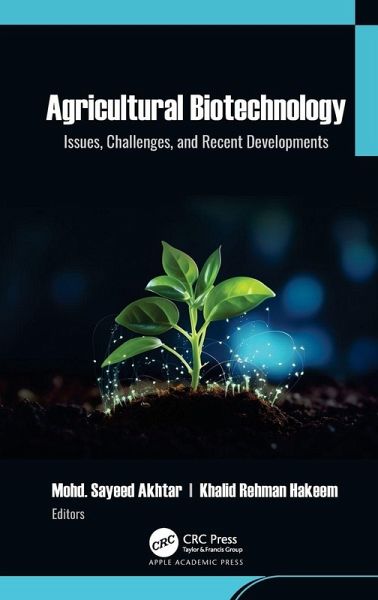
Covers uses of novel technologies for production, formulation, and synthesis of biological substances from the living organisms. Explores the practical uses of biopharmaceuticals, demonstrating their effectiveness in the treatment of various illnesses, such as cancer, autoimmune disorders, and infectious diseases.
Covers uses of novel technologies for production, formulation, and synthesis of biological substances from the living organisms. Explores the practical uses of biopharmaceuticals, demonstrating their effectiveness in the treatment of various illnesses, such as cancer, autoimmune disorders, and infectious diseases.
Mohd. Sayeed Akhtar, PhD, is a Senior Assistant Professor at Gandhi Faiz-e-Aam College, Shahjahanpur, U.P., India. He was formerly an Assistant Professor at Jimma University in Ethiopiaand a research fellow at the Universiti Putra Malaysia's Institute of Tropical Agriculture. He has been listed among the top 2% of scientists in the world consecutively for the past three years, according to Stanford University in the United States. Dr. Akhtar is the author and co-author of more than 150 articles in peer-reviewed journals, conference proceedings, and book chapters, and has edited 21 books with international publishers. He has received numerous awards and honors for his work. He is a member of several professional organizations and is an editorial board member and reviewer for several international journals. He received his PhD degree from Aligarh Muslim University, Aligarh, India, prior to conducting postdoctoral research at the Botanical Institute, University of Basel, Switzerland, and Chonbuk National University, Republic of Korea. Khalid Rehman Hakeem, PhD, is Professor at King Abdulaziz University, Jeddah, Saudi Arabia. He was formerly affiliated with the University of Kashmir, Srinagar, India; Universiti Putra Malaysia, Selangor, Malaysia; and Jinan University, Guangzhou, China. Dr. Hakeem has more than 15 years of teaching and research in plant ecophysiology, biotechnology and molecular biology, medicinal plant research, plant-microbe-soil interactions, as well as in environmental studies. Currently, he is involved with several international research projects with government organizations. To date, Dr. Hakeem has authored and edited more than 95 books with international publishers. He also has to his credit more than 200 research publications in peer-reviewed international journals and 55 book chapters in edited volumes. At present, Dr. Hakeem serves as an editorial board member and reviewer for several high-impact international scientific journals. He is an advisory board member of Cambridge Scholars Publishing, UK, and a fellow of the Plantae Group of the American Society of Plant Biologists, among other memberships.
Inhaltsangabe
1. Futuristic and Prospective Role of Agricultural Biotechnology in a Sustainable Environment 2. Improvement in Waterlogging Tolerance in Plants Via Melatonin 3. Abiotic Stress Tolerance: New Breeding Strategies to Improve Drought Tolerance in Canola 4. Mobility of Nutrients and Their Metabolism in Agriculture Crops 5. Proteomics Applications in Cereal Crops for Food Security under Increasing Abiotic Stresses 6. Signaling and Regulatory Pathways Between Plants and Microbial Communities Towards Environments 7. Agroecosystem Diversity and Maintenance of Soil and Environment Health 8. Recent Advances in the Use of Bionanotechnology for Bioremediation 9. Endophyte-Mediated Secondary Metabolites Synthesis in Plants: An Omics Approach 10. Nanobiosensors to Detect Environmental Pollution 11. Role of Medicinal Plants in Drug Delivery Systems in Sustainable Systems 12. Environmental Pollution and Technological Applications
1. Futuristic and Prospective Role of Agricultural Biotechnology in a Sustainable Environment 2. Improvement in Waterlogging Tolerance in Plants Via Melatonin 3. Abiotic Stress Tolerance: New Breeding Strategies to Improve Drought Tolerance in Canola 4. Mobility of Nutrients and Their Metabolism in Agriculture Crops 5. Proteomics Applications in Cereal Crops for Food Security under Increasing Abiotic Stresses 6. Signaling and Regulatory Pathways Between Plants and Microbial Communities Towards Environments 7. Agroecosystem Diversity and Maintenance of Soil and Environment Health 8. Recent Advances in the Use of Bionanotechnology for Bioremediation 9. Endophyte-Mediated Secondary Metabolites Synthesis in Plants: An Omics Approach 10. Nanobiosensors to Detect Environmental Pollution 11. Role of Medicinal Plants in Drug Delivery Systems in Sustainable Systems 12. Environmental Pollution and Technological Applications
Es gelten unsere Allgemeinen Geschäftsbedingungen: www.buecher.de/agb
Impressum
www.buecher.de ist ein Internetauftritt der buecher.de internetstores GmbH
Geschäftsführung: Monica Sawhney | Roland Kölbl | Günter Hilger
Sitz der Gesellschaft: Batheyer Straße 115 - 117, 58099 Hagen
Postanschrift: Bürgermeister-Wegele-Str. 12, 86167 Augsburg
Amtsgericht Hagen HRB 13257
Steuernummer: 321/5800/1497
USt-IdNr: DE450055826