
Andere Kunden interessierten sich auch für
") Agriculture et forêts à Sumidouro (RJ)40,99 €
Agriculture et forêts à Sumidouro (RJ)40,99 €") Agricultura e Florestas em Sumidouro (RJ)40,99 €
Agricultura e Florestas em Sumidouro (RJ)40,99 €") Agricoltura e foreste nel Sumidouro (RJ)40,99 €
Agricoltura e foreste nel Sumidouro (RJ)40,99 €") Agricultura y bosques en Sumidouro (RJ)41,99 €
Agricultura y bosques en Sumidouro (RJ)41,99 €") Landwirtschaft und Wälder in Sumidouro (RJ)61,90 €
Landwirtschaft und Wälder in Sumidouro (RJ)61,90 € The unsustainability of vegetable production in Crato-CE24,99 €
 Experiments in Agroecology: An Approach with Passion Fruit and Lettuce27,99 €

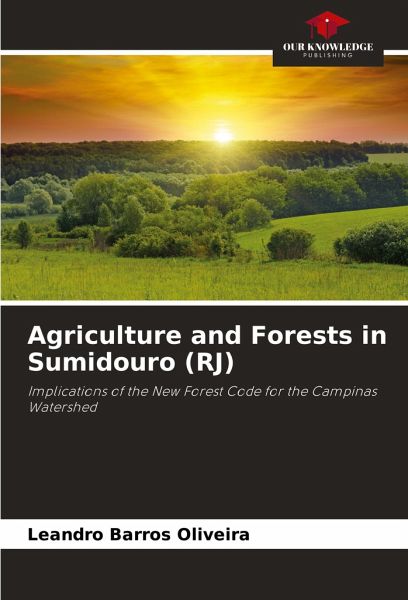
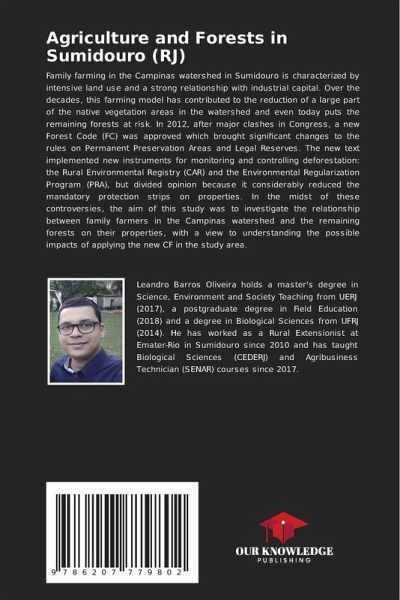
Family farming in the Campinas watershed in Sumidouro is characterized by intensive land use and a strong relationship with industrial capital. Over the decades, this farming model has contributed to the reduction of a large part of the native vegetation areas in the watershed and even today puts the remaining forests at risk. In 2012, after major clashes in Congress, a new Forest Code (FC) was approved which brought significant changes to the rules on Permanent Preservation Areas and Legal Reserves. The new text implemented new instruments for monitoring and controlling deforestation: the Rural Environmental Registry (CAR) and the Environmental Regularization Program (PRA), but divided opinion because it considerably reduced the mandatory protection strips on properties. In the midst of these controversies, the aim of this study was to investigate the relationship between family farmers in the Campinas watershed and the remaining forests on their properties, with a view to understanding the possible impacts of applying the new CF in the study area.