Hugo Cameron / Dominique Njinkeu (eds.)
Aid for Trade and Development
Herausgeber: Njinkeu, Dominique; Cameron, Hugo
Hugo Cameron / Dominique Njinkeu (eds.)
Aid for Trade and Development
Herausgeber: Njinkeu, Dominique; Cameron, Hugo
- Gebundenes Buch
- Merkliste
- Auf die Merkliste
- Bewerten Bewerten
- Teilen
- Produkt teilen
- Produkterinnerung
- Produkterinnerung
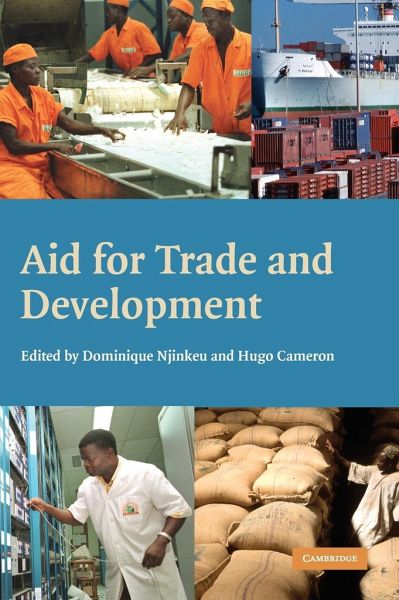
This book traces the evolution of Aid for Trade and examines the global architecture, modalities, and costs associated with its implementation.
Andere Kunden interessierten sich auch für
Ruth Elizabeth GordonDevelopment Disrupted98,99 €
Global Public Goods and Sustainable Development in the Practice of International Organizations197,99 €
Ruth BuchananThe Oxford Handbook of International Law and Development194,99 €
Faisal Z AhmedThe Perils of International Capital111,99 €
Luca RubiniThe Definition of Subsidy and State Aid174,99 €
Constitutionalism and the Economy in Africa217,99 €
Marius SchneiderProtecting Geographical Indications in Africa113,99 €-
-
-
This book traces the evolution of Aid for Trade and examines the global architecture, modalities, and costs associated with its implementation.
Produktdetails
- Produktdetails
- Verlag: Cambridge University Press
- Seitenzahl: 448
- Erscheinungstermin: 24. Dezember 2007
- Englisch
- Abmessung: 260mm x 183mm x 29mm
- Gewicht: 1048g
- ISBN-13: 9780521889513
- ISBN-10: 0521889510
- Artikelnr.: 26183560
- Herstellerkennzeichnung
- Libri GmbH
- Europaallee 1
- 36244 Bad Hersfeld
- gpsr@libri.de
- Verlag: Cambridge University Press
- Seitenzahl: 448
- Erscheinungstermin: 24. Dezember 2007
- Englisch
- Abmessung: 260mm x 183mm x 29mm
- Gewicht: 1048g
- ISBN-13: 9780521889513
- ISBN-10: 0521889510
- Artikelnr.: 26183560
- Herstellerkennzeichnung
- Libri GmbH
- Europaallee 1
- 36244 Bad Hersfeld
- gpsr@libri.de
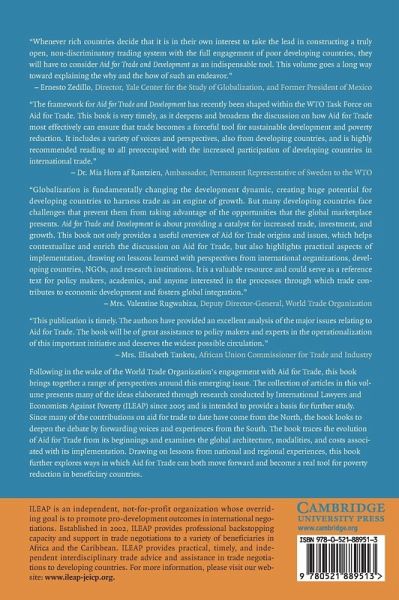
ILEAP is an independent, not-for-profit organization whose overriding goal is to promote pro-development outcomes in international negotiations. Established in 2002, ILEAP provides professional backstopping capacity and support in trade negotiations to a variety of beneficiaries in Africa and the Caribbean. ILEAP provides practical, timely, and independent inter-disciplinary trade advice and assistance in trade negotiations to developing countries.
Part I. Aid for Trade Genesis and Architecture: 1. Aid for Trade: helping
developing countries benefit from trade opportunities Bernard Hoekman; 2.
Aid for Trade: an essential component of the multilateral trading system
and the WTO Doha Development agenda Faizel Ismail; 3. Aid for Trade: how we
got here, where we might go Michael Finger; 4. Financing international
public goods: a framework to address Aid for Trade Dirk Willem te Velde; 5.
Aid for Trade: a new issue in the WTO Sheila Page; 6. Scale and types of
funds for Aid for Trade Massimiliano Calì; 7. An African perspective on Aid
for Trade Dominique Njinkeu et al.; Part II. Aid for Trade in Action: 8.
Lessons from the Tanzanian experience in trade capacity building Bede Lyimo
and Edward Sungula; 9. Lessons from the Cambodian experience in trade
capacity building Sok Siphana; 10. Lessons learned delivering Aid for Trade
in Latin America and the Caribbean: the role of the Inter-American
Development Bank Antoni Estevadeordal, Paolo Giordano, Anneke Jessen,
Jessica Luna and Kati Suominen; 11. Mainstreaming development in trade:
lessons from the Caribbean's experience with the FTAA Hemispheric
Cooperation Program Deryck Brown; 12. Aid for Trade and the European
Development Fund Amanda Sunassee; 13. Services-related projects in Aid for
Trade Pierre Sauvé; 14. Aid for Trade for services in small economies: some
considerations from the Caribbean Ramesh Chaitoo; 15. The role of local
researchers in delivery of Aid for Trade: the case of the African Economic
Research Consortium (AERC) William Lyakurwa, Olu Ajakaiye and Olawale
Ogunkola; 16. The role of international research institutions and networks
in supporting low-income countries in trade policy-making and negotiations
Ann Weston; 17. Civil society perspectives in the Aid for Trade debate Aldo
Caliari; Part III. Way Forward: 18. Aid for Trade and private sector
development Havelock Brewster and Dominique Njinkeu; 19. Regional Aid for
Trade Dirk Willem te Velde.
developing countries benefit from trade opportunities Bernard Hoekman; 2.
Aid for Trade: an essential component of the multilateral trading system
and the WTO Doha Development agenda Faizel Ismail; 3. Aid for Trade: how we
got here, where we might go Michael Finger; 4. Financing international
public goods: a framework to address Aid for Trade Dirk Willem te Velde; 5.
Aid for Trade: a new issue in the WTO Sheila Page; 6. Scale and types of
funds for Aid for Trade Massimiliano Calì; 7. An African perspective on Aid
for Trade Dominique Njinkeu et al.; Part II. Aid for Trade in Action: 8.
Lessons from the Tanzanian experience in trade capacity building Bede Lyimo
and Edward Sungula; 9. Lessons from the Cambodian experience in trade
capacity building Sok Siphana; 10. Lessons learned delivering Aid for Trade
in Latin America and the Caribbean: the role of the Inter-American
Development Bank Antoni Estevadeordal, Paolo Giordano, Anneke Jessen,
Jessica Luna and Kati Suominen; 11. Mainstreaming development in trade:
lessons from the Caribbean's experience with the FTAA Hemispheric
Cooperation Program Deryck Brown; 12. Aid for Trade and the European
Development Fund Amanda Sunassee; 13. Services-related projects in Aid for
Trade Pierre Sauvé; 14. Aid for Trade for services in small economies: some
considerations from the Caribbean Ramesh Chaitoo; 15. The role of local
researchers in delivery of Aid for Trade: the case of the African Economic
Research Consortium (AERC) William Lyakurwa, Olu Ajakaiye and Olawale
Ogunkola; 16. The role of international research institutions and networks
in supporting low-income countries in trade policy-making and negotiations
Ann Weston; 17. Civil society perspectives in the Aid for Trade debate Aldo
Caliari; Part III. Way Forward: 18. Aid for Trade and private sector
development Havelock Brewster and Dominique Njinkeu; 19. Regional Aid for
Trade Dirk Willem te Velde.
Part I. Aid for Trade Genesis and Architecture: 1. Aid for Trade: helping
developing countries benefit from trade opportunities Bernard Hoekman; 2.
Aid for Trade: an essential component of the multilateral trading system
and the WTO Doha Development agenda Faizel Ismail; 3. Aid for Trade: how we
got here, where we might go Michael Finger; 4. Financing international
public goods: a framework to address Aid for Trade Dirk Willem te Velde; 5.
Aid for Trade: a new issue in the WTO Sheila Page; 6. Scale and types of
funds for Aid for Trade Massimiliano Calì; 7. An African perspective on Aid
for Trade Dominique Njinkeu et al.; Part II. Aid for Trade in Action: 8.
Lessons from the Tanzanian experience in trade capacity building Bede Lyimo
and Edward Sungula; 9. Lessons from the Cambodian experience in trade
capacity building Sok Siphana; 10. Lessons learned delivering Aid for Trade
in Latin America and the Caribbean: the role of the Inter-American
Development Bank Antoni Estevadeordal, Paolo Giordano, Anneke Jessen,
Jessica Luna and Kati Suominen; 11. Mainstreaming development in trade:
lessons from the Caribbean's experience with the FTAA Hemispheric
Cooperation Program Deryck Brown; 12. Aid for Trade and the European
Development Fund Amanda Sunassee; 13. Services-related projects in Aid for
Trade Pierre Sauvé; 14. Aid for Trade for services in small economies: some
considerations from the Caribbean Ramesh Chaitoo; 15. The role of local
researchers in delivery of Aid for Trade: the case of the African Economic
Research Consortium (AERC) William Lyakurwa, Olu Ajakaiye and Olawale
Ogunkola; 16. The role of international research institutions and networks
in supporting low-income countries in trade policy-making and negotiations
Ann Weston; 17. Civil society perspectives in the Aid for Trade debate Aldo
Caliari; Part III. Way Forward: 18. Aid for Trade and private sector
development Havelock Brewster and Dominique Njinkeu; 19. Regional Aid for
Trade Dirk Willem te Velde.
developing countries benefit from trade opportunities Bernard Hoekman; 2.
Aid for Trade: an essential component of the multilateral trading system
and the WTO Doha Development agenda Faizel Ismail; 3. Aid for Trade: how we
got here, where we might go Michael Finger; 4. Financing international
public goods: a framework to address Aid for Trade Dirk Willem te Velde; 5.
Aid for Trade: a new issue in the WTO Sheila Page; 6. Scale and types of
funds for Aid for Trade Massimiliano Calì; 7. An African perspective on Aid
for Trade Dominique Njinkeu et al.; Part II. Aid for Trade in Action: 8.
Lessons from the Tanzanian experience in trade capacity building Bede Lyimo
and Edward Sungula; 9. Lessons from the Cambodian experience in trade
capacity building Sok Siphana; 10. Lessons learned delivering Aid for Trade
in Latin America and the Caribbean: the role of the Inter-American
Development Bank Antoni Estevadeordal, Paolo Giordano, Anneke Jessen,
Jessica Luna and Kati Suominen; 11. Mainstreaming development in trade:
lessons from the Caribbean's experience with the FTAA Hemispheric
Cooperation Program Deryck Brown; 12. Aid for Trade and the European
Development Fund Amanda Sunassee; 13. Services-related projects in Aid for
Trade Pierre Sauvé; 14. Aid for Trade for services in small economies: some
considerations from the Caribbean Ramesh Chaitoo; 15. The role of local
researchers in delivery of Aid for Trade: the case of the African Economic
Research Consortium (AERC) William Lyakurwa, Olu Ajakaiye and Olawale
Ogunkola; 16. The role of international research institutions and networks
in supporting low-income countries in trade policy-making and negotiations
Ann Weston; 17. Civil society perspectives in the Aid for Trade debate Aldo
Caliari; Part III. Way Forward: 18. Aid for Trade and private sector
development Havelock Brewster and Dominique Njinkeu; 19. Regional Aid for
Trade Dirk Willem te Velde.