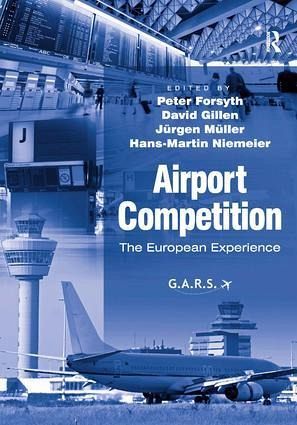
The break-up of BAA and the blocked takeover of Bratislava airport by the competing Vienna airport have brought the issue of airport competition to the top of the agenda for air transport policy in Europe. Airport Competition reviews the current state of the debate and asks whether airport competition is strong enough to effectively limit market power. It provides evidence on how travellers chose an airport, thereby altering its competitive position, and on how airports compete in different regions and markets. The book also discusses the main policy implications of mergers and subsidies.
The break-up of BAA and the blocked takeover of Bratislava airport by the competing Vienna airport have brought the issue of airport competition to the top of the agenda for air transport policy in Europe. Airport Competition reviews the current state of the debate and asks whether airport competition is strong enough to effectively limit market power. It provides evidence on how travellers chose an airport, thereby altering its competitive position, and on how airports compete in different regions and markets. The book also discusses the main policy implications of mergers and subsidies.
Peter Forsyth, Monash University, Australia; David Gillen, University of British Columbia, Canada; Jÿrgen Mÿller, Berlin School of Economics, Germany and Hans-Martin Niemeier, University of Applied Sciences, Germany
Inhaltsangabe
1: Introduction and Overview A: How Do Airports Compete and How Strong is Competition? 2: Airport Competition and Network Access: A European Perspective 3: Airport Entry and Exit: A European Analysis 4: Airport Pricing 5: Countervailing Power to Airport Monopolies 6: Competition Between Major and Secondary Airports: Implications for Pricing, Regulation and Welfare 7: Airport Strategies to Gain Competitive Advantage 8: An Empirical Analysis of Airport Operational Costs 9: Competition Between Airports: Occurrence and Strategy 10: Airport Competition for Freight B: Traveller Choice and Airport Competition 11: Modelling Air Travel Choice Behaviour 12: Airport Choice Behaviour: Findings from Three Separate Studies 13: Improved Modelling of Competition among Airports through Flexible Form and Non-Diagonal Demand Structures Explaining Flows Registered within a New Traffic Accounting Matrix C: Case Studies of Airport Competition 14: Competition in the German Airport Market: An Empirical Investigation 15: Competition among Airports and Overlapping Catchment Areas: An Application to the State of Baden-Württemberg 16: Airport Competition in Greece: Concentration and Structural Asymmetry 17: The Airport Industry in a Competitive Environment: A United Kingdom Perspective 1 18: The Effect of Low-Cost Carriers on Regional Airports' Revenue: Evidence from the UK D: Policy Issues 19: Competition and the London Airports: How Effective Will It Be? 20: Airport Alliances and Multi-Airport Companies: Implications for Airport Competition 21: Airport Competing Terminals: Recent Developments at Dublin Airport 22: Competition, State Aids and Low-Cost Carriers: A Legal Perspective 23: Subsidies and Competition: An Economic Perspective 24: Competition for Airport Services - Ground Handling Services in Europe: Case Studies on Six Major European Hubs 1 25: Airport Competition: Market Dominance and Abuse 26: Airport Competition: A Perspective and Synthesis
1: Introduction and Overview A: How Do Airports Compete and How Strong is Competition? 2: Airport Competition and Network Access: A European Perspective 3: Airport Entry and Exit: A European Analysis 4: Airport Pricing 5: Countervailing Power to Airport Monopolies 6: Competition Between Major and Secondary Airports: Implications for Pricing, Regulation and Welfare 7: Airport Strategies to Gain Competitive Advantage 8: An Empirical Analysis of Airport Operational Costs 9: Competition Between Airports: Occurrence and Strategy 10: Airport Competition for Freight B: Traveller Choice and Airport Competition 11: Modelling Air Travel Choice Behaviour 12: Airport Choice Behaviour: Findings from Three Separate Studies 13: Improved Modelling of Competition among Airports through Flexible Form and Non-Diagonal Demand Structures Explaining Flows Registered within a New Traffic Accounting Matrix C: Case Studies of Airport Competition 14: Competition in the German Airport Market: An Empirical Investigation 15: Competition among Airports and Overlapping Catchment Areas: An Application to the State of Baden-Württemberg 16: Airport Competition in Greece: Concentration and Structural Asymmetry 17: The Airport Industry in a Competitive Environment: A United Kingdom Perspective 1 18: The Effect of Low-Cost Carriers on Regional Airports' Revenue: Evidence from the UK D: Policy Issues 19: Competition and the London Airports: How Effective Will It Be? 20: Airport Alliances and Multi-Airport Companies: Implications for Airport Competition 21: Airport Competing Terminals: Recent Developments at Dublin Airport 22: Competition, State Aids and Low-Cost Carriers: A Legal Perspective 23: Subsidies and Competition: An Economic Perspective 24: Competition for Airport Services - Ground Handling Services in Europe: Case Studies on Six Major European Hubs 1 25: Airport Competition: Market Dominance and Abuse 26: Airport Competition: A Perspective and Synthesis
Es gelten unsere Allgemeinen Geschäftsbedingungen: www.buecher.de/agb
Impressum
www.buecher.de ist ein Internetauftritt der buecher.de internetstores GmbH
Geschäftsführung: Monica Sawhney | Roland Kölbl | Günter Hilger
Sitz der Gesellschaft: Batheyer Straße 115 - 117, 58099 Hagen
Postanschrift: Bürgermeister-Wegele-Str. 12, 86167 Augsburg
Amtsgericht Hagen HRB 13257
Steuernummer: 321/5800/1497
USt-IdNr: DE450055826