
Andere Kunden interessierten sich auch für
 Cultivating the Therapeutic Relationship in Cognitive Behavioral Therapy119,99 €
 who am I? how do others see me?29,99 €
 Feedback Informed Psychological Therapy83,99 €
 Therapeutic Alliance in Psychotherapy with Adolescents27,99 €
 Dynamic Semiosis38,99 €
 Stress in Psychosomatic Disorders: Mechanisms and Interventions43,99 €
 Culture and Reflexivity in Systemic Psychotherapy34,99 €







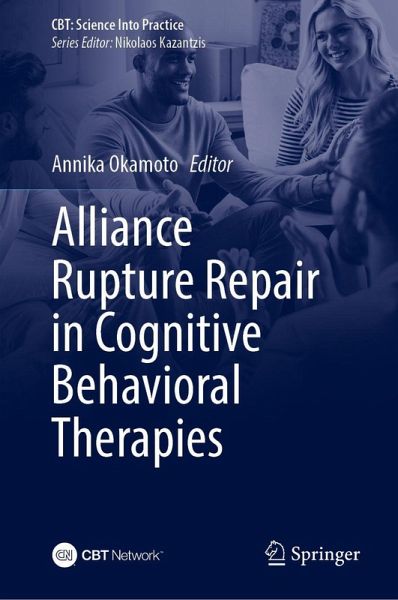
This practice-oriented volume helps clinicians recognize, address, and repair ruptures in the therapeutic alliance in CBT. Alliance breakdowns often prompt clients to drop out of treatment, while a strong alliance paves the way for improved outcomes. Although CBT is known for its structured, evidence-based methods, its collaborative nature and relational frame have received comparatively less attention. This book fills that gap by bridging research and practice. Each chapter focuses on a specific clinical population or challenge, weaving together the latest research findings with case examples, therapist-client dialogues, and practical tools in a clear, reader-friendly format.
"Who among us has not experienced an alliance rupture with our client? No one! If you would like to learn the essentials of repairing alliance ruptures in CBT, read this book. The skills described here are essential skills for any cognitive behavioral therapist treating any client of any age in individual or couple or family or group therapy for any problem or disorder."
Jacqueline B. Persons, Ph.D., Director, Oakland Cognitive Behavior Therapy Center; Clinical Professor, University of California, Berkeley
"This book tackles one of CBT s most important and often neglected challenges ruptures in the alliance with rare skill and nuance. The multiple authors weave research and clinical wisdom into a powerful, multidimensional guide for repair and clinical progress."
Lynn McFarr, Ph.D., Founder/Executive Director, CBT California
"This book provides clinicians and trainees with a comprehensive understanding of alliance ruptures how to recognize them, understand their impact on therapy, and use concrete repair strategies to prevent premature termination or treatment failure. As such, this book serves as an essential guide for CBT clinicians working with clients of different ages and diagnostic presentations, helping them to navigate challenging moments in therapy."
Lauren M. Lipner, Ph.D., Assistant Professor, Fairleigh Dickinson University
"Who among us has not experienced an alliance rupture with our client? No one! If you would like to learn the essentials of repairing alliance ruptures in CBT, read this book. The skills described here are essential skills for any cognitive behavioral therapist treating any client of any age in individual or couple or family or group therapy for any problem or disorder."
Jacqueline B. Persons, Ph.D., Director, Oakland Cognitive Behavior Therapy Center; Clinical Professor, University of California, Berkeley
"This book tackles one of CBT s most important and often neglected challenges ruptures in the alliance with rare skill and nuance. The multiple authors weave research and clinical wisdom into a powerful, multidimensional guide for repair and clinical progress."
Lynn McFarr, Ph.D., Founder/Executive Director, CBT California
"This book provides clinicians and trainees with a comprehensive understanding of alliance ruptures how to recognize them, understand their impact on therapy, and use concrete repair strategies to prevent premature termination or treatment failure. As such, this book serves as an essential guide for CBT clinicians working with clients of different ages and diagnostic presentations, helping them to navigate challenging moments in therapy."
Lauren M. Lipner, Ph.D., Assistant Professor, Fairleigh Dickinson University