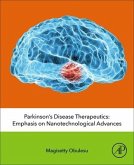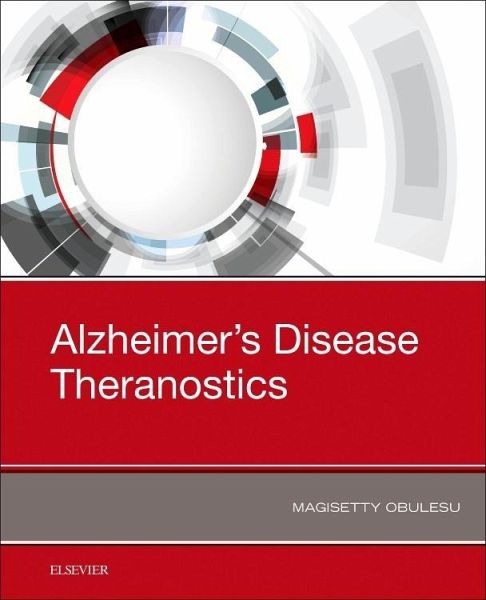
Alzheimer's Disease Theranostics discusses the latest information on recent theranostic avenues for both the diagnosis and treatment of Alzheimer's patients. It presents the pros and cons of the probable mechanistic role of nanoparticles in crossing the blood-brain barrier and improving disease symptoms. Finally, it highlights the merits of existing maneuvers and suggests perspectives to aid in future developments. Despite the difficulty of drug delivery to the brain, there are some nanoparticulate platforms demonstrating promise in treating neurodegenerative disorders such as Alzheimer's…mehr
Alzheimer's Disease Theranostics discusses the latest information on recent theranostic avenues for both the diagnosis and treatment of Alzheimer's patients. It presents the pros and cons of the probable mechanistic role of nanoparticles in crossing the blood-brain barrier and improving disease symptoms. Finally, it highlights the merits of existing maneuvers and suggests perspectives to aid in future developments. Despite the difficulty of drug delivery to the brain, there are some nanoparticulate platforms demonstrating promise in treating neurodegenerative disorders such as Alzheimer's disease. Manifold theranostic maneuvers include antioxidants, natural bioactive compounds, gene therapy, and nanotechnological approaches, all of which are discussed in this important work.
Magisetty Obulesu is a research associate at the Regional Agricultural Research Station, Acharya N.G. Ranga Agricultural University, Tirupati, India. He has 20 years of research and teaching experience. He is also an editorial board of nanotechnology journals including SciFed Nanotech Research Letters, SciFed Drug Delivery Research, Current Updates in Nanotechnology and Journal of Nanotechnology and Materials Science. His research areas include food science, pathology of neurodegenerative diseases such as Alzheimer's disease, designing polymer-based biomaterials such as hydrogels, and development of metal chelators to overcome metal induced toxicity. He has researched Alzheimer's disease and developed an aluminium-induced neurotoxicity rabbit model. Mr. Obulesu's present research focuses on development of redox-active injectable hydrogels of polyion complex. He has written three books and edited two more; he is also the first and corresponding author for majority of his articles.
Inhaltsangabe
1. Introduction: Alzheimer's Disease Pathology and Therapeutics2. Early Diagnosis of Alzheimer's Disease: Pros and Cons3. Antioxidants in Alzheimer's Therapy4. Natural Compounds in the Treatment of Alzheimer's Disease5. Blood Brain Barrier6. Gene Therapy: The Cornerstone in the Development of Alzheimer's Disease Therapeutics7. Viral vector therapeutics against Alzheimer's Disease8. Mitochondria-Targeted Nanoparticles: A Milestone or a Mirage in the Treatment of Alzheimer's Disease9. Nanoparticles: The Double-Edged Swords10. Alzheimer Therapeutics: Pros and Cons
Es gelten unsere Allgemeinen Geschäftsbedingungen: www.buecher.de/agb
Impressum
www.buecher.de ist ein Internetauftritt der buecher.de internetstores GmbH
Geschäftsführung: Monica Sawhney | Roland Kölbl | Günter Hilger
Sitz der Gesellschaft: Batheyer Straße 115 - 117, 58099 Hagen
Postanschrift: Bürgermeister-Wegele-Str. 12, 86167 Augsburg
Amtsgericht Hagen HRB 13257
Steuernummer: 321/5800/1497
USt-IdNr: DE450055826