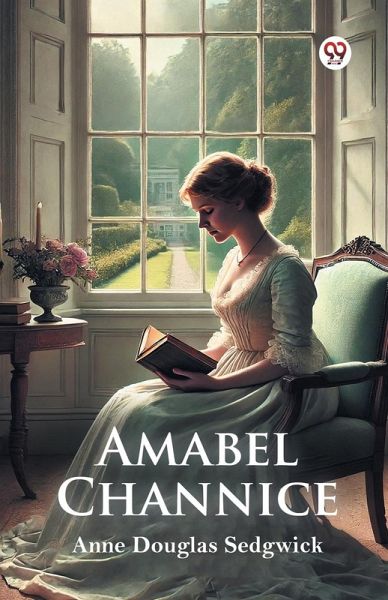
Amabel Channice is a novel that delves into the complexities of personal choices, emotional weight, and family dynamics. The protagonist, a woman navigating the aftermath of a troubled marriage, seeks peace in her rural surroundings, but the shadows of her past continue to linger. The story explores the tensions within her relationship with her son, reflecting on the emotional struggles they both face due to their family history. The narrative touches on loneliness, societal expectations, and the challenge of finding personal fulfillment in the face of societal constraints. As the protagonist…mehr
Amabel Channice is a novel that delves into the complexities of personal choices, emotional weight, and family dynamics. The protagonist, a woman navigating the aftermath of a troubled marriage, seeks peace in her rural surroundings, but the shadows of her past continue to linger. The story explores the tensions within her relationship with her son, reflecting on the emotional struggles they both face due to their family history. The narrative touches on loneliness, societal expectations, and the challenge of finding personal fulfillment in the face of societal constraints. As the protagonist reflects on her life and her home, the calm surroundings contrast with the deeper emotional turmoil she and her son experience. Their interactions hint at unresolved issues, showing how the past influences their present relationships and their quest for peace and understanding. Through this exploration of family, memory, and the search for meaning, the novel paints a poignant picture of human struggle and resilience.
Anne Douglas Sedgwick was an American-born British novelist. She was born in Englewood, New Jersey, to George Stanley Sedgwick, a businessman, and Mary (Douglas) Sedgwick. Her family relocated to London when she was nine years old. She spent the rest of her life in England, although returning to the United States on several occasions. In 1908, she married Basil de Selincourt, a British essayist and journalist. During World War I, she and her husband worked as volunteers in French hospitals and orphanages. Her works examined the differences in values between Americans and Europeans. Her best-selling novel Tante was adapted into a 1919 film, The Impossible Woman, and The Little French Girl into a 1925 film with the same title. She was elected to the National Institute of Arts and Letters in the United States in 1931. The New York Times ranked four of her books as the best-selling novels in the United States in 1912, 1924, 1927, and 1929, respectively. Sedgwick died in Hampstead, England, in 1935. The next year, her husband released Anne Douglas Sedgwick: A Portrait in Letters.
Es gelten unsere Allgemeinen Geschäftsbedingungen: www.buecher.de/agb
Impressum
www.buecher.de ist ein Internetauftritt der buecher.de internetstores GmbH
Geschäftsführung: Monica Sawhney | Roland Kölbl | Günter Hilger
Sitz der Gesellschaft: Batheyer Straße 115 - 117, 58099 Hagen
Postanschrift: Bürgermeister-Wegele-Str. 12, 86167 Augsburg
Amtsgericht Hagen HRB 13257
Steuernummer: 321/5800/1497
USt-IdNr: DE450055826