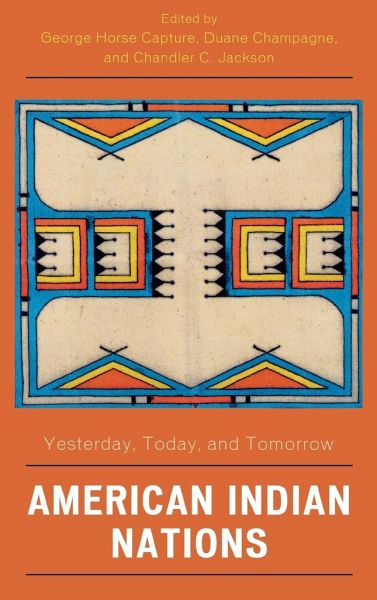
A virtual Who's Who of Native American scholars, activists, and community leaders reflect on the problems and achievements of Native American peoples over the last several decades.
A virtual Who's Who of Native American scholars, activists, and community leaders reflect on the problems and achievements of Native American peoples over the last several decades.
George Horse Capture has taught American Indian studies at Montana State University and served as curator of the Plains Indian Museum in Cody, Wyoming.Chandler Jackson is director of the John F. Reed Library at Fort Lewis College in Durango, Colorado.Duane Champagne is professor of sociology at UCLA and has authored over 75 publications. He is also the editor of AltaMira's series, Contemporary Native American Communities.
Inhaltsangabe
1 Introduction Chapter 2 Opening Keynote: Activating Indians into National Politics Part 3 American Indian Identity Chapter 4 Activism: Time to Change: Native American References in Sports Chapter 5 What's in a Label? Native American Identity and the Rise of a Tradition of Racism Chapter 6 Tribal Nationalism: The Concept of a Governmental Recognition of Tribes and the Little Shell Chippewa Tribe Chapter 7 The Chinook Nation and Its Struggle for Federal Recognition Chapter 8 An Overview of Indian Populations Part 9 Art and Expression Chapter 10 Native Art Chapter 11 Challenges in Managing Culturally Sensitive Collections at the National Museum of the American Indian Chapter 12 Repatriation in the 21st Century: Art We Still Fighting the Skull Wars? Chapter 13 Today's American Indian Tribes and Their Museums Part 14 Education Chapter 15 Indian Education: State and Federal Chapter 16 What Can Universities Contribute to Indigenous Language Immersion Programs? :A Case Study from Southern California Chapter 17 Language Immersion: The American View Chapter 18 Since Lewis and Clark: Are Tribal Colleges Meeting the Challenges of the 21st Century Chapter 19 American Indian Issues for the Next Fifty Years Chapter 20 The Rise and Fall of Native American Studies in the United States Part 21 Media Chapter 22 Getting Coverage in the Mainstream Press Chapter 23 Indian Country Today: Your Newspaper Part 24 Politics and Law Chapter 25 Voting Rights in Indian Country Chapter 26 Federal Indian Policy in the 21st Century Chapter 27 An Overview and Patterns in Federal Indian Law Part 28 The Environment and Land Chapter 29 As Long as the Water Flows: A Century of Blackfeet Water Lost from the St. Mary Canal and the Milk River Drainage Chapter 30 How the Land Was Taken: The Legacy of the Lewis and Clark Expedition for Native Nations Chapter 31 Concluding Keynote: From Battlefields to Boardrooms: A Rich Complexity of Enduring Pride and New Achievements
1 Introduction Chapter 2 Opening Keynote: Activating Indians into National Politics Part 3 American Indian Identity Chapter 4 Activism: Time to Change: Native American References in Sports Chapter 5 What's in a Label? Native American Identity and the Rise of a Tradition of Racism Chapter 6 Tribal Nationalism: The Concept of a Governmental Recognition of Tribes and the Little Shell Chippewa Tribe Chapter 7 The Chinook Nation and Its Struggle for Federal Recognition Chapter 8 An Overview of Indian Populations Part 9 Art and Expression Chapter 10 Native Art Chapter 11 Challenges in Managing Culturally Sensitive Collections at the National Museum of the American Indian Chapter 12 Repatriation in the 21st Century: Art We Still Fighting the Skull Wars? Chapter 13 Today's American Indian Tribes and Their Museums Part 14 Education Chapter 15 Indian Education: State and Federal Chapter 16 What Can Universities Contribute to Indigenous Language Immersion Programs? :A Case Study from Southern California Chapter 17 Language Immersion: The American View Chapter 18 Since Lewis and Clark: Are Tribal Colleges Meeting the Challenges of the 21st Century Chapter 19 American Indian Issues for the Next Fifty Years Chapter 20 The Rise and Fall of Native American Studies in the United States Part 21 Media Chapter 22 Getting Coverage in the Mainstream Press Chapter 23 Indian Country Today: Your Newspaper Part 24 Politics and Law Chapter 25 Voting Rights in Indian Country Chapter 26 Federal Indian Policy in the 21st Century Chapter 27 An Overview and Patterns in Federal Indian Law Part 28 The Environment and Land Chapter 29 As Long as the Water Flows: A Century of Blackfeet Water Lost from the St. Mary Canal and the Milk River Drainage Chapter 30 How the Land Was Taken: The Legacy of the Lewis and Clark Expedition for Native Nations Chapter 31 Concluding Keynote: From Battlefields to Boardrooms: A Rich Complexity of Enduring Pride and New Achievements
Es gelten unsere Allgemeinen Geschäftsbedingungen: www.buecher.de/agb
Impressum
www.buecher.de ist ein Internetauftritt der buecher.de internetstores GmbH
Geschäftsführung: Monica Sawhney | Roland Kölbl | Günter Hilger
Sitz der Gesellschaft: Batheyer Straße 115 - 117, 58099 Hagen
Postanschrift: Bürgermeister-Wegele-Str. 12, 86167 Augsburg
Amtsgericht Hagen HRB 13257
Steuernummer: 321/5800/1497
USt-IdNr: DE450055826