Stephen M. Engel
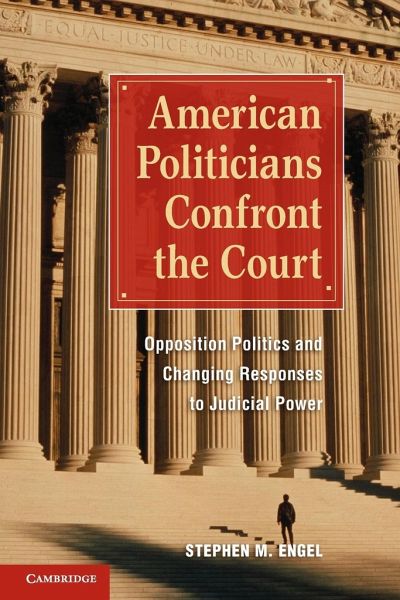
American Politicians Confront the Court
Stephen M. Engel
American Politicians Confront the Court
- Broschiertes Buch
- Merkliste
- Auf die Merkliste
- Bewerten Bewerten
- Teilen
- Produkt teilen
- Produkterinnerung
- Produkterinnerung
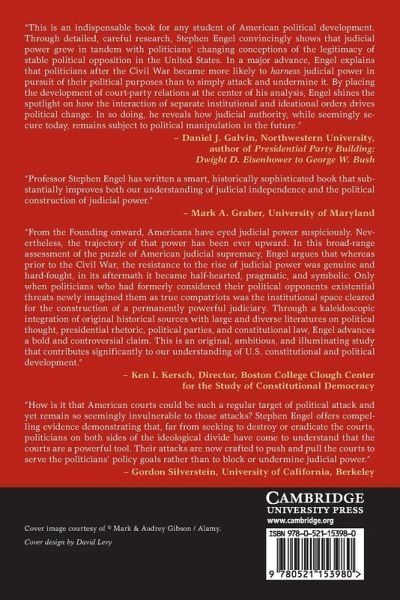
Engel examines changing politicians' perceptions of the threat posed by opposition and how it influenced manipulations of judicial authority.
Andere Kunden interessierten sich auch für
Political Question Doctrine and the Supreme Court of the United States57,99 €
Saul BrennerStrategy on the United States Supreme Court30,99 €
Robert WilliamsFrench Politicians and Elections 1951 196943,99 €
Rachel A. CichowskiThe European Court & Civil Society40,99 €
Matthew E. K. HallThe Nature of Supreme Court Power42,99 €
Rufus Wilmot GriswoldThe Republican Court Or, American Society In The Days Of Washington26,99 €
Anna O. LawThe Immigration Battle in American Courts42,99 €-
-
-
Engel examines changing politicians' perceptions of the threat posed by opposition and how it influenced manipulations of judicial authority.
Produktdetails
- Produktdetails
- Verlag: Cambridge University Press
- Seitenzahl: 406
- Erscheinungstermin: 11. August 2011
- Englisch
- Abmessung: 234mm x 156mm x 22mm
- Gewicht: 614g
- ISBN-13: 9780521153980
- ISBN-10: 0521153980
- Artikelnr.: 33214559
- Herstellerkennzeichnung
- Libri GmbH
- Europaallee 1
- 36244 Bad Hersfeld
- gpsr@libri.de
- Verlag: Cambridge University Press
- Seitenzahl: 406
- Erscheinungstermin: 11. August 2011
- Englisch
- Abmessung: 234mm x 156mm x 22mm
- Gewicht: 614g
- ISBN-13: 9780521153980
- ISBN-10: 0521153980
- Artikelnr.: 33214559
- Herstellerkennzeichnung
- Libri GmbH
- Europaallee 1
- 36244 Bad Hersfeld
- gpsr@libri.de
Stephen M. Engel is an Assistant Professor of Politics at Bates College in Lewiston, Maine. He holds a PhD in political science from Yale University as well as an MA in social thought from New York University and a BA in interdisciplinary social science from Wesleyan University. In 2007-08, he held a research fellowship at the American Bar Foundation where he conducted research on anti-Court activism in the United States. He is the author of The Unfinished Revolution: Social Movement Theory and the Gay and Lesbian Movement (Cambridge University Press, 2001). He has also published in Studies in American Political Development and Law and Social Inquiry.
1. Introduction: had Americans 'stopped understanding about the three
branches'?; Part I. Political Development and Elected-Branch Relations with
the Judiciary: 2. Beyond the countermajoritarian difficulty; 3. A
developmental theory of political manipulation of judicial power; Part II.
Hostility to Judicial Authority and the Political Idiom of Civic
Republicanism: 4. In the cause of unified governance: undermining the court
in an anti-party age; 5. Party against partisanship: single-party
constitutionalism and the quest for regime unity; 6. 'As party exigencies
require': republicanism, loyal opposition, and the emerging legitimacy of
multiple constitutional visions; Part III. Harnessing Judicial Power and
the Political Idiom of Liberal Pluralism: 7. Clashing progressive solutions
to the problem of judicial authority; 8. In a polity fully-developed for
harnessing (I): living constitutionalism and the policization of judicial
appointment; 9. In a polity fully-developed for harnessing (II): a
conservative insurgency and a self-styled majoritarian court responds; 10.
Conclusion: on the 'return' of opposition illegitimacy and the prospects
for new development.
branches'?; Part I. Political Development and Elected-Branch Relations with
the Judiciary: 2. Beyond the countermajoritarian difficulty; 3. A
developmental theory of political manipulation of judicial power; Part II.
Hostility to Judicial Authority and the Political Idiom of Civic
Republicanism: 4. In the cause of unified governance: undermining the court
in an anti-party age; 5. Party against partisanship: single-party
constitutionalism and the quest for regime unity; 6. 'As party exigencies
require': republicanism, loyal opposition, and the emerging legitimacy of
multiple constitutional visions; Part III. Harnessing Judicial Power and
the Political Idiom of Liberal Pluralism: 7. Clashing progressive solutions
to the problem of judicial authority; 8. In a polity fully-developed for
harnessing (I): living constitutionalism and the policization of judicial
appointment; 9. In a polity fully-developed for harnessing (II): a
conservative insurgency and a self-styled majoritarian court responds; 10.
Conclusion: on the 'return' of opposition illegitimacy and the prospects
for new development.
1. Introduction: had Americans 'stopped understanding about the three
branches'?; Part I. Political Development and Elected-Branch Relations with
the Judiciary: 2. Beyond the countermajoritarian difficulty; 3. A
developmental theory of political manipulation of judicial power; Part II.
Hostility to Judicial Authority and the Political Idiom of Civic
Republicanism: 4. In the cause of unified governance: undermining the court
in an anti-party age; 5. Party against partisanship: single-party
constitutionalism and the quest for regime unity; 6. 'As party exigencies
require': republicanism, loyal opposition, and the emerging legitimacy of
multiple constitutional visions; Part III. Harnessing Judicial Power and
the Political Idiom of Liberal Pluralism: 7. Clashing progressive solutions
to the problem of judicial authority; 8. In a polity fully-developed for
harnessing (I): living constitutionalism and the policization of judicial
appointment; 9. In a polity fully-developed for harnessing (II): a
conservative insurgency and a self-styled majoritarian court responds; 10.
Conclusion: on the 'return' of opposition illegitimacy and the prospects
for new development.
branches'?; Part I. Political Development and Elected-Branch Relations with
the Judiciary: 2. Beyond the countermajoritarian difficulty; 3. A
developmental theory of political manipulation of judicial power; Part II.
Hostility to Judicial Authority and the Political Idiom of Civic
Republicanism: 4. In the cause of unified governance: undermining the court
in an anti-party age; 5. Party against partisanship: single-party
constitutionalism and the quest for regime unity; 6. 'As party exigencies
require': republicanism, loyal opposition, and the emerging legitimacy of
multiple constitutional visions; Part III. Harnessing Judicial Power and
the Political Idiom of Liberal Pluralism: 7. Clashing progressive solutions
to the problem of judicial authority; 8. In a polity fully-developed for
harnessing (I): living constitutionalism and the policization of judicial
appointment; 9. In a polity fully-developed for harnessing (II): a
conservative insurgency and a self-styled majoritarian court responds; 10.
Conclusion: on the 'return' of opposition illegitimacy and the prospects
for new development.