For more than a century the American farm, factory and frontier provided opportunities for physical workers to display their skill, win a bet, brag or perhaps just have some fun. Competitions that emphasized useful skills, like plowing, corn-husking, rock drilling, typesetting, and tree cutting, were common in the antebellum and post-Civil War periods, often drawing large crowds and the attention of sporting journals. For many years conventional American sports occurred in the workplace. This may help explain why the nicknames of so many prominent collegiate or professional sporting…mehr
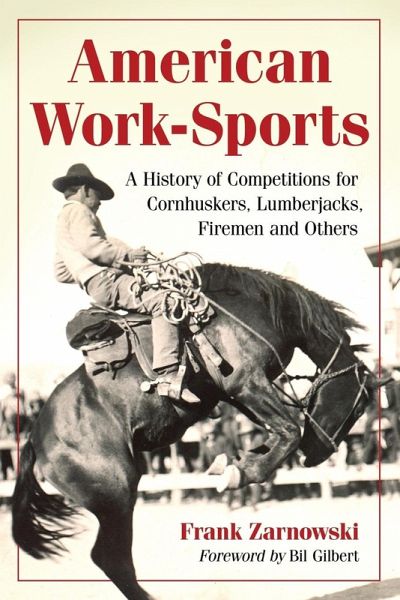
For more than a century the American farm, factory and frontier provided opportunities for physical workers to display their skill, win a bet, brag or perhaps just have some fun. Competitions that emphasized useful skills, like plowing, corn-husking, rock drilling, typesetting, and tree cutting, were common in the antebellum and post-Civil War periods, often drawing large crowds and the attention of sporting journals. For many years conventional American sports occurred in the workplace. This may help explain why the nicknames of so many prominent collegiate or professional sporting teams--Cornhuskers, Lumberjacks, Miners, Cowboys, Packers and Boilermakers--are also the occupations of 19th century worker-athletes. By examining the American experience with competitions among workers, this book provides a new understanding of the interrelated nature of occupation and leisure.
Frank Zarnowski is a visiting professor of economics at Dartmouth College and was previously dean of the Graduate Program of Business at Mount St. Mary's College, Maryland. He has been a television sports commentator since 1983 and was an NBC analyst for both the 1992 and 2004 Olympic Games.
Inhaltsangabe
Table of Contents Foreword by Bil Gilbert Preface Introduction: The Emergence of American WorkSports Part One: Worker Competitions in the 19th Century, 1840-1900 1. Rock Breaking and Other Early WorkSports 2. "Put Out That Fire"-Firemen's Musters 3. Worker Games for Slaves 4. Setting Type, the Story of the Swifts 5. Circus Leapers 6. Ten Miles of Track in a Day Part Two: Worker Competitions in the 20th Century, 1900-1940 7. Rodeo 8. Lumberjacks 9. Rock Drilling and Steel Drivin' Men 10. Of ce Games 11. Corn Husking and Other Agricultural Contests Part Three: What Happened to Worker Competitions, 1940 to the Present 12. Obsolete Work-Sports 13. Modern WorkSports 14. WorkSports in Popular Culture 15. Why WorkSports? Appendices 1-U.S. Workers in Common WorkSports Occupations, 1900 2-Sample Muster News Account 3-Numbers of U.S. WorkSports Athletes, 2010 4-U.S. Occupational Sports, 2010 5-Wall Street Journal Front Page WorkSports Stories, 1995-2005 Chapter Notes Bibliography Index
Es gelten unsere Allgemeinen Geschäftsbedingungen: www.buecher.de/agb
Impressum
www.buecher.de ist ein Internetauftritt der buecher.de internetstores GmbH
Geschäftsführung: Monica Sawhney | Roland Kölbl | Günter Hilger
Sitz der Gesellschaft: Batheyer Straße 115 - 117, 58099 Hagen
Postanschrift: Bürgermeister-Wegele-Str. 12, 86167 Augsburg
Amtsgericht Hagen HRB 13257
Steuernummer: 321/5800/1497
USt-IdNr: DE450055826