
Andere Kunden interessierten sich auch für
 The English Novel And The Principle Of Its Development20,99 €
 Population and Social Statistics.") Census of the Commonwealth of Massachusetts, 1895 (Volume I) Population and Social Statistics.37,99 €
Census of the Commonwealth of Massachusetts, 1895 (Volume I) Population and Social Statistics.37,99 € Abstract of the answers and returns made pursuant to an act, passed in the first year of the reign of His Majesty King George IV, intituled, ''An act for taking an account of the population of Great Britain, and of the increase or diminution thereof.59,99 €
 The essential elements of practical mechanics, based on the principle of work23,99 €
 Census of prairie provinces. Population and agriculture. Manitoba, Saskatchewan, Alberta. 191643,99 €
 The Principle Of Protestantism As Related To The Present State Of The Church15,99 €
 and Arranged on the Liturgical Principle") Family Prayers, Compiled from Various Sourses; (Chiefly from the Manuals of Bishop Hamilton and J.H. Swainson) and Arranged on the Liturgical Principle18,99 €
Family Prayers, Compiled from Various Sourses; (Chiefly from the Manuals of Bishop Hamilton and J.H. Swainson) and Arranged on the Liturgical Principle18,99 €


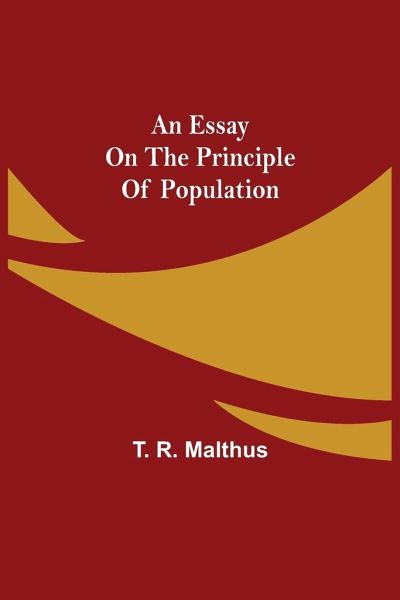
A sharp, humane brace against complacency, this bold reissue invites readers to engage with a foundational conversation about scarcity, growth, and human possibility. An Essay On The Principle Of Population unfolds as a clear, searching economic treatise and philosophical political essay, a polemic on population that still reverberates in classrooms and boardrooms alike. T. R. Malthus presents a lucid inquiry into the dynamics of resources and famine, offering a theory of population growth that challenges assumptions about abundance and progress. The book's form-precise argument, rigorous inference, and contextual critique-speaks to undergraduates and thoughtful readers seeking a rigorous, accessible entry point into eighteenth century europe and late eighteenth century europe thought. Its themes echo through debates about Adam Smith's influence and the Ricardian view, inviting a measured comparison that remains instructive for a modern academic reading list. This edition is more than a reprint; it is a restored artefact, carefully prepared for today's readers and future generations. Out of print for decades and now republished by Alpha Editions, it stands as a collector's item and a cultural treasure, poised to enrich casual readers and classic-literature collectors alike. Aimed at scholars and curious minds, it offers a lucid doorway into a pivotal moment in intellectual history, where the questions of resources, population, and policy still matter-and still spark debate.