
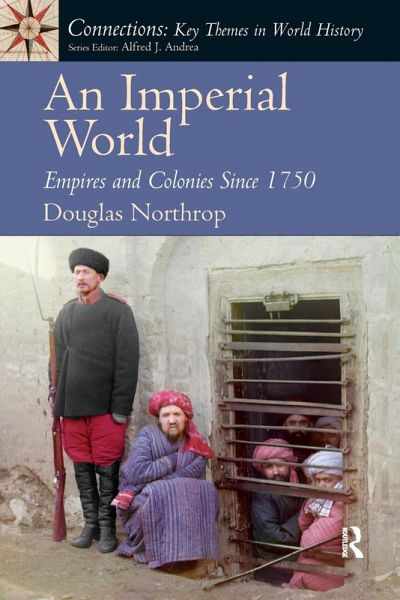
An Imperial World: Empires and Colonies Since 1750 offers a broad overview of global imperialism during the last three centuries. Using a combination of historical narrative, primary documents, and synthetic analysis, it examines the historical development of colonial systems and shows their enormous role in shaping the modern world order.
Product Description
An overview of global imperialism during the last three centuries.
Part of the Connections: Key Themes in World History series, this text helps students understand world history by focusing on an issue that has profoundly shaped the modern world order: the establishment and collapse of global empires since 1750.
An Imperial World uses a combination of primary documents and analytical essays, both tightly focused around four case studies: India, Africa, Asia, and the Americas.Itexamines the historical development of colonial systems and shows their enormous role in shaping the modern world order. It is meant to be thematic and suggestive, offering arguments and information to serve as a starting point for discussion and exploration.
Learning Goals
Upon completing this book readers will be able to:
Understand how large empires grew
Describe the structures of imperial power
Understand the hard side of modern empires:
Their ideological underpinnings
The practical techniques used by colonial authorities and their military
Their economic and political goals
Explore the enormous cultural and social impact of colonial systems on the everyday lives of people in today's world
Features + Benefits
An analytical essay opens the book to introduce students to the themes to be covered and spark short discussion.
Every chapter opens with an accessible vignette, or individual story that encapsulates the themes of the chapter, to engage students in the material to be covered.
Visual sources have been included to add additional raw material for analysis and discussion.
Key terms are boldfaced and defined throughout the text.
An annotated bibliography points students to further readings on specific regions, colonies, empires, and themes.
An epilogue connects all of the case studies by presenting documents from a case study that is under debate today.
Create a Custom Text: For enrollments of at least 25, create your own textbook by combining chapters from best-selling Pearson textbooks and/or reading selections in the sequence you want. To begin building your custom text, visit www.pearsoncustomlibrary.com. You may also work with a dedicated Pearson Custom editor to create your ideal text-publishing your own original content or mixing and matching Pearson content. Contact your Pearson Publisher's Representative to get started.
Found in this Section:
1. Brief Table of Contents
2. Full Table of Contents
1. BRIEF TABLE OF CONTENTS
Introduction: Encountering Empires
Chapter One: The Raj: British Empire in India and South Asia, 1757-1947
Chapter Two: The Scramble for Africa: European Colonialism and African Resistance, 1806-1945
Chapter Three: Hidden Empire: Dependency, Domination, and Neo-Colonialism in the Americas, 1783-1933
Chapter Four: Empires of Freedom: The Modern Imperial and Social State in Asia, 1731-1946
Epilogue: Making Connections: An Imperial World, Then and Now
2. FULL TABLE OF CONTENTS
Introduction: Encountering Empires
Definitions and Contexts
A World of Empires, 1500-1750
Connections and Colonies since 1750
Chapter One: The Raj: British Empire in India and South Asia, 1757-1947
Definitions and Contexts
Rebellion and Repression Under the Raj: British Empire in India (1857-1947)
SOURCES
Remaking an Empire: Culture, Reform, and the East India Company
Anti-Imperial Critique: Victorian Empire through Indian Eyes
Colonial Subjects Look Back: Indian Memories of the Raj
Chapter Two: The Scramble for Africa: European Colonialism and African Resistance, 1806-1945
Dividing Africa: European Diplomats and the Legalities of Colonial Conquest
Contingent Conquest: Windows of African Vulnerability and European Opportunity
Empires of Extraction: Administering Africa in the New Colonial Order
The Colonies Strike Back: Hybrid Cultures and Shades of Resistance
Double-Edged Swords: The Unintended Consequences of Global Colonialism
SOURCES
Mentalities of Rule: Administering French West Africa (1908)
Empire and Its Discontents: Investigating the Belgian Congo (1905)
Race and the Imperial Economy: An African View of the Native Lands Act (1916)
Colonial Crossings I: Cultures of Health and Religion (1893)
Colonial Crossings II: Cultures of Religion and Health (1937)
Chapter Three: Hidden Empire: Dependency, Domination, and Neo-Colonialism in the Americas, 1783-1933
National Liberation as Elite Freedom: Cultural Mixing and Social Divides
Empires of Force and Freedom: Territorial Expansion and Indirect Influence
Rethinking the Hidden Empire: Colonial Rebellion and Its Costs
SOURCES
An Empire of Ideals: The United States as a Colonial Power (1899).
Ideals Against the Empire: The USA Should Not Be a Colonial Power (1898).
Economies of Exploitation: The Rubber Trade in Putumayo (1911).
Cash Colonies: Tracing Finance and Politics in a Neocolonial World (1922).
Chapter Four: Empires of Freedom: The Modern Imperial and Social State in Asia, 1731-1946
Paradoxes of Socialist Colonialism: New Visions for Central Asia
Benevolent Assimilation: American Colonial Power Across the Pacific
Emulating Empire While Assisting Asia: Paradoxes of Japanese Imperialism
SOURCES
&n
This text helps students understand world history by focusing on an issue that has profoundly shaped the modern world order: the establishment and collapse of global empires since 1750. An Imperial World uses a combination of primary documents and analytical essays, both tightly focused around four case studies: India, Africa, Asia, and the Americas. It examines the historical development of colonial systems and shows their enormous role in shaping the modern world order. It is meant to be thematic and suggestive, offering arguments and information to serve as a starting point for discussion and exploration.
Product Description
An overview of global imperialism during the last three centuries.
Part of the Connections: Key Themes in World History series, this text helps students understand world history by focusing on an issue that has profoundly shaped the modern world order: the establishment and collapse of global empires since 1750.
An Imperial World uses a combination of primary documents and analytical essays, both tightly focused around four case studies: India, Africa, Asia, and the Americas.Itexamines the historical development of colonial systems and shows their enormous role in shaping the modern world order. It is meant to be thematic and suggestive, offering arguments and information to serve as a starting point for discussion and exploration.
Learning Goals
Upon completing this book readers will be able to:
Understand how large empires grew
Describe the structures of imperial power
Understand the hard side of modern empires:
Their ideological underpinnings
The practical techniques used by colonial authorities and their military
Their economic and political goals
Explore the enormous cultural and social impact of colonial systems on the everyday lives of people in today's world
Features + Benefits
An analytical essay opens the book to introduce students to the themes to be covered and spark short discussion.
Every chapter opens with an accessible vignette, or individual story that encapsulates the themes of the chapter, to engage students in the material to be covered.
Visual sources have been included to add additional raw material for analysis and discussion.
Key terms are boldfaced and defined throughout the text.
An annotated bibliography points students to further readings on specific regions, colonies, empires, and themes.
An epilogue connects all of the case studies by presenting documents from a case study that is under debate today.
Create a Custom Text: For enrollments of at least 25, create your own textbook by combining chapters from best-selling Pearson textbooks and/or reading selections in the sequence you want. To begin building your custom text, visit www.pearsoncustomlibrary.com. You may also work with a dedicated Pearson Custom editor to create your ideal text-publishing your own original content or mixing and matching Pearson content. Contact your Pearson Publisher's Representative to get started.
Found in this Section:
1. Brief Table of Contents
2. Full Table of Contents
1. BRIEF TABLE OF CONTENTS
Introduction: Encountering Empires
Chapter One: The Raj: British Empire in India and South Asia, 1757-1947
Chapter Two: The Scramble for Africa: European Colonialism and African Resistance, 1806-1945
Chapter Three: Hidden Empire: Dependency, Domination, and Neo-Colonialism in the Americas, 1783-1933
Chapter Four: Empires of Freedom: The Modern Imperial and Social State in Asia, 1731-1946
Epilogue: Making Connections: An Imperial World, Then and Now
2. FULL TABLE OF CONTENTS
Introduction: Encountering Empires
Definitions and Contexts
A World of Empires, 1500-1750
Connections and Colonies since 1750
Chapter One: The Raj: British Empire in India and South Asia, 1757-1947
Definitions and Contexts
Rebellion and Repression Under the Raj: British Empire in India (1857-1947)
SOURCES
Remaking an Empire: Culture, Reform, and the East India Company
Anti-Imperial Critique: Victorian Empire through Indian Eyes
Colonial Subjects Look Back: Indian Memories of the Raj
Chapter Two: The Scramble for Africa: European Colonialism and African Resistance, 1806-1945
Dividing Africa: European Diplomats and the Legalities of Colonial Conquest
Contingent Conquest: Windows of African Vulnerability and European Opportunity
Empires of Extraction: Administering Africa in the New Colonial Order
The Colonies Strike Back: Hybrid Cultures and Shades of Resistance
Double-Edged Swords: The Unintended Consequences of Global Colonialism
SOURCES
Mentalities of Rule: Administering French West Africa (1908)
Empire and Its Discontents: Investigating the Belgian Congo (1905)
Race and the Imperial Economy: An African View of the Native Lands Act (1916)
Colonial Crossings I: Cultures of Health and Religion (1893)
Colonial Crossings II: Cultures of Religion and Health (1937)
Chapter Three: Hidden Empire: Dependency, Domination, and Neo-Colonialism in the Americas, 1783-1933
National Liberation as Elite Freedom: Cultural Mixing and Social Divides
Empires of Force and Freedom: Territorial Expansion and Indirect Influence
Rethinking the Hidden Empire: Colonial Rebellion and Its Costs
SOURCES
An Empire of Ideals: The United States as a Colonial Power (1899).
Ideals Against the Empire: The USA Should Not Be a Colonial Power (1898).
Economies of Exploitation: The Rubber Trade in Putumayo (1911).
Cash Colonies: Tracing Finance and Politics in a Neocolonial World (1922).
Chapter Four: Empires of Freedom: The Modern Imperial and Social State in Asia, 1731-1946
Paradoxes of Socialist Colonialism: New Visions for Central Asia
Benevolent Assimilation: American Colonial Power Across the Pacific
Emulating Empire While Assisting Asia: Paradoxes of Japanese Imperialism
SOURCES
&n
This text helps students understand world history by focusing on an issue that has profoundly shaped the modern world order: the establishment and collapse of global empires since 1750. An Imperial World uses a combination of primary documents and analytical essays, both tightly focused around four case studies: India, Africa, Asia, and the Americas. It examines the historical development of colonial systems and shows their enormous role in shaping the modern world order. It is meant to be thematic and suggestive, offering arguments and information to serve as a starting point for discussion and exploration.