
Andere Kunden interessierten sich auch für
 The Earth Is All That Lasts16,99 €
 Race and Nation178,99 €
 Empire, Education, and Indigenous Childhoods69,99 €
 Colonial Slavery37,99 €
 The Transformation of the International Order of Asia186,99 €
 Blackness in Britain195,99 €
 The Map of Europe by Treaty: Showing the Various Political and Territorial Changes Which Have Taken Place Since the General Peace of 1814; Volume 253,99 €



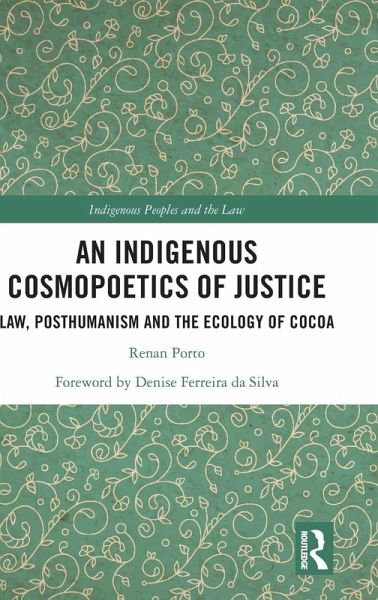
This book examines cocoa farming in northeast Brazil to explore a fundamental question: can ecological relationships create their own form of law? Through the study of indigenous people and landless workers who use sustainable farming practices to restore damaged lands, the book analyses how humans and nature together create social and ecological systems that function as a kind of "viscous law," with flexible rules emerging from relationships with the land and its diverse lifeforms. Unlike rigid modern legal systems, this "viscous law" adapts to the realities of cocoa ecology and how it connects people, plants, and animals within global environmental systems. It addresses the practical needs of land rights struggles while recognising relationships that Western legal systems often ignore. An Indigenous Cosmopoetics of Justice is of interest to legal theorists, as well as those with interests in the areas of indigenous studies, postcolonial studies and ecology.