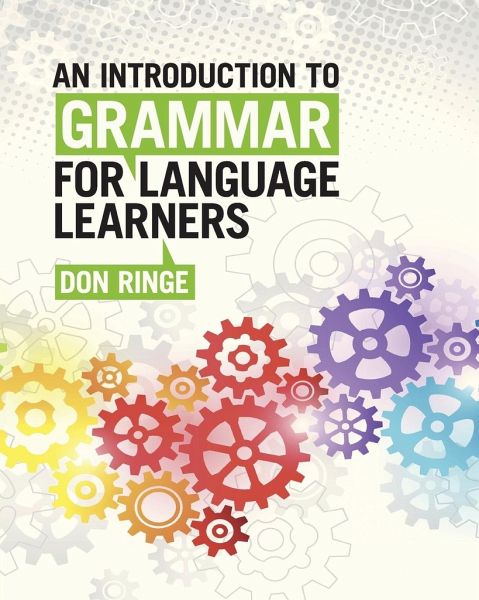
This book offers a simple introduction to the principles of grammar to help students preparing to study a foreign language. It uses examples from several widely-studied languages, including English, to show how the same principles apply across very different languages.
This book offers a simple introduction to the principles of grammar to help students preparing to study a foreign language. It uses examples from several widely-studied languages, including English, to show how the same principles apply across very different languages.
Don Ringe has been teaching undergraduate and postgraduate students for more than thirty years. In addition to historical linguistics and comparative Indo-European linguistics, he has taught a wide range of ancient and mediaeval languages. In 2012 he won the Ira Abrams Award for Distinguished Teaching at the University of Pennsylvania. He is the author or co-author of half a dozen linguistics books.
Inhaltsangabe
How to use this book 1. Introduction 2. Sentences, clauses, and their verbs 3. Subjects 4. Noun phrases 5. Pronouns and subject-verb agreement 6. Direct objects 7. Double-object verbs 8. 'Linking' verbs 9. Personal pronoun systems 10. Reflexives and passives 11. Possession 12. Gender, concord, and noun classifications 13. Case systems and adpositions: the Latin system 14. Tense, aspect, and auxiliary verbs: the English verb system 15. Tense, aspect, and mood: the Spanish verb system 16. The Latin verb system 17. The Hebrew verb system 18. The Navajo verb system 19. The Mandarin verb system 20. Negation 21. Questions 22. Adjectives and relative clauses 23. Articles, demonstratives, and quantifiers 24. Subordinate clauses, infinitives, and verbal nouns 25. Participles 26. Comparative constructions 27. The segmental sounds of human languages 28. Prosody 29. Writing systems 30. The lexicon Epilogue: 'bad grammar' Answers to the exercises Glossary of technical terms Languages used as examples in the exercises References Index.
How to use this book 1. Introduction 2. Sentences, clauses, and their verbs 3. Subjects 4. Noun phrases 5. Pronouns and subject-verb agreement 6. Direct objects 7. Double-object verbs 8. 'Linking' verbs 9. Personal pronoun systems 10. Reflexives and passives 11. Possession 12. Gender, concord, and noun classifications 13. Case systems and adpositions: the Latin system 14. Tense, aspect, and auxiliary verbs: the English verb system 15. Tense, aspect, and mood: the Spanish verb system 16. The Latin verb system 17. The Hebrew verb system 18. The Navajo verb system 19. The Mandarin verb system 20. Negation 21. Questions 22. Adjectives and relative clauses 23. Articles, demonstratives, and quantifiers 24. Subordinate clauses, infinitives, and verbal nouns 25. Participles 26. Comparative constructions 27. The segmental sounds of human languages 28. Prosody 29. Writing systems 30. The lexicon Epilogue: 'bad grammar' Answers to the exercises Glossary of technical terms Languages used as examples in the exercises References Index.
Es gelten unsere Allgemeinen Geschäftsbedingungen: www.buecher.de/agb
Impressum
www.buecher.de ist ein Internetauftritt der buecher.de internetstores GmbH
Geschäftsführung: Monica Sawhney | Roland Kölbl | Günter Hilger
Sitz der Gesellschaft: Batheyer Straße 115 - 117, 58099 Hagen
Postanschrift: Bürgermeister-Wegele-Str. 12, 86167 Augsburg
Amtsgericht Hagen HRB 13257
Steuernummer: 321/5800/1497
USt-IdNr: DE450055826