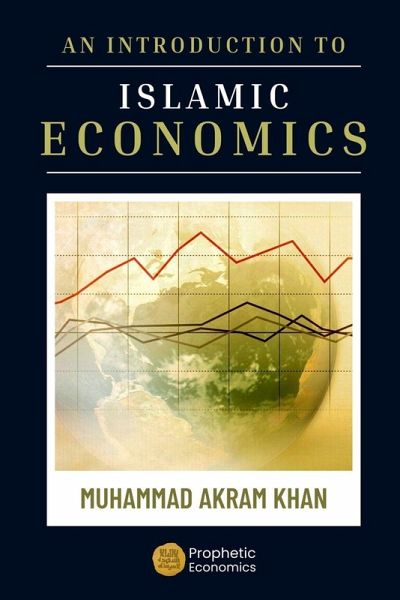
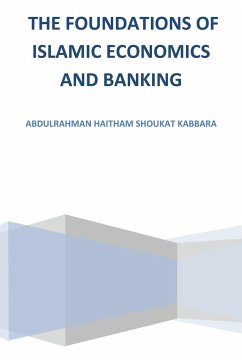
In a world where economic systems continue to fail the majority, this work offers a structured, ethical, and spiritually grounded alternative. Written by an economist with deep roots in both classical scholarship and modern finance, it shows how Islamic teachings address real-world issues like poverty, inequality, financial injustice, and the moral crises of consumerism. The book lays out the principles of Islamic economics in plain terms, introducing readers to concepts like Zakat, riba-free finance, waqf, and the role of the state-not as abstract ideals but as workable mechanisms for a just…mehr
In a world where economic systems continue to fail the majority, this work offers a structured, ethical, and spiritually grounded alternative. Written by an economist with deep roots in both classical scholarship and modern finance, it shows how Islamic teachings address real-world issues like poverty, inequality, financial injustice, and the moral crises of consumerism. The book lays out the principles of Islamic economics in plain terms, introducing readers to concepts like Zakat, riba-free finance, waqf, and the role of the state-not as abstract ideals but as workable mechanisms for a just society. Without resorting to jargon, it connects Qur'anic values to themes like fiscal policy, environmental ethics, and wealth distribution, making it meaningful for both students and everyday readers. With chapters that balance theory and application, this is a practical guide for those seeking answers that go beyond spreadsheets and statistics. Whether you're exploring alternatives to capitalism or searching for a model where ethics meet economics, this book provides a measured and hopeful starting point. Written by a seasoned expert in the field, it draws from years of research and teaching, offering not just critique but clear direction. If you're looking for a financial framework rooted in accountability, compassion, and divine guidance, this book is worth your time.
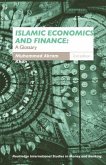
Dr. Muhammad Akram Khan stands among the pioneering scholars who have dedicated their intellectual energies to articulating Islamic economics as a coherent academic discipline capable of addressing contemporary economic challenges. His scholarly trajectory reflects both deep immersion in Islamic textual traditions and sophisticated engagement with modern economic theory and practice.
Dr. Khan's academic contributions span theoretical formulation and practical application. His extensively annotated bibliography on Islamic economics represents a landmark achievement in organizing the burgeoning literature of this nascent field, providing researchers with an indispensable navigational tool through diverse writings on Islamic economic thought. This meticulous bibliographic work demonstrates his comprehensive grasp of scholarship produced across linguistic, geographic, and methodological boundaries.
His substantive research focuses particularly on banking, performance audit, and rural financeareas where Islamic principles intersect directly with institutional design and operational implementation. This practical orientation distinguishes his work from purely theoretical treatments, grounding Islamic economic concepts in the realities of financial systems, accountability frameworks, and development challenges facing Muslim societies.
The present volume, An Introduction to Islamic Economics, exemplifies Dr. Khan's distinctive scholarly approach. Professor Khurshid Ahmad, in his foreword to this work, praises the book's simplicity, directness of style, unapologetic approach, and reliance on original sources to develop Islamic perspectives on a number of economic concepts, issues and problems. These qualities reflect Dr. Khan's conviction that Islamic economics need not be defensive or apologetic; rather, it should confidently articulate its principles as rational, humane alternatives to failed conventional paradigms.
Dr. Khan's methodology integrates classical Islamic scholarship with modern economic analysis. He draws extensively from the Qurʾan, Sunnah, and jurisprudential literature, demonstrating continuity with centuries of Muslim intellectual engagement with economic questions. Simultaneously, he engages critically with neoclassical economics, Keynesian theory, and development economics, showing where Islamic principles offer superior solutions to problems that have confounded conventional approaches.
His work addresses both Muslim and non-Muslim audiences. While rooted in Islamic revelation and tradition, his presentation emphasizes the universal applicability of Islamic economic principles to problems of exploitation, inequality, unemployment, and environmental degradation that afflict humanity regardless of religious affiliation. This universalist dimension reflects Islam's self-understanding as guidance for all humankind.
Beyond individual scholarship, Dr. Khan has been instrumental in the institutional development of Islamic economics. His collaboration with organizations such as the International Institute of Islamic Thought and the Institute of Policy Studies has helped create infrastructure for sustained research, publication, and policy advocacy. His work on interest-free banking frameworks and zakah administration has influenced practical implementations across Muslim-majority countries.
Dr. Khan's scholarly legacy lies in demonstrating that Islamic economics constitutes a coherent paradigm grounded in robust theological foundations, capable of generating practical solutions, and relevant to universal human concerns about justice, sustainability, and genuine welfare. His work continues to inspire subsequent generations of scholars and practitioners committed to realizing the vision of an economic order that serves human dignity rather than financial accumulation.
Es gelten unsere Allgemeinen Geschäftsbedingungen: www.buecher.de/agb
Impressum
www.buecher.de ist ein Internetauftritt der buecher.de internetstores GmbH
Geschäftsführung: Monica Sawhney | Roland Kölbl | Günter Hilger
Sitz der Gesellschaft: Batheyer Straße 115 - 117, 58099 Hagen
Postanschrift: Bürgermeister-Wegele-Str. 12, 86167 Augsburg
Amtsgericht Hagen HRB 13257
Steuernummer: 321/5800/1497
USt-IdNr: DE450055826