
Andere Kunden interessierten sich auch für
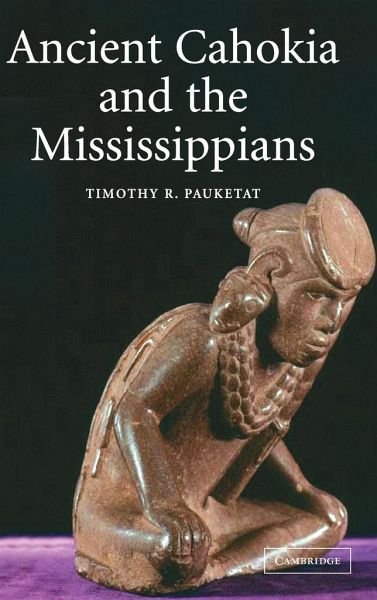
 Ancient Cahokia and the Mississippians29,99 €
 Real Mound Builders of North America110,99 €
 The Material World of Ancient Egypt28,99 €
 The Archaeology of Urbanism in Ancient Egypt90,99 €
 The Archaeology of Ancient Egypt31,99 €
 Maritime Networks in the Ancient Mediterranean World109,99 €
 Commerce and Colonization in the Ancient Near East123,99 €

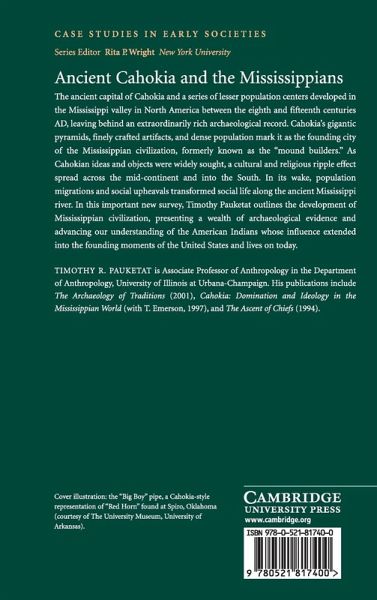
The ancient capital of Cahokia and a series of lesser population centers developed in the Mississippi valley in North America between the eighth and fifteenth centuries AD, leaving behind an extraordinarily rich archaeological record. Cahokia's gigantic pyramids, finely crafted artifacts, and dense population mark it as the founding city of the Mississippian civilization, formerly known as the 'mound' builders. As Cahokian ideas and objects were widely sought, a cultural and religious ripple effect spread across the mid-continent and into the South. In its wake, population migrations and social upheavals transformed social life along the ancient Mississippi River. In this important new survey, Timothy Pauketat outlines the development of Mississippian civilization, presenting a wealth of archaeological evidence and advancing our understanding of the American Indians whose influence extended into the founding moments of the United States and lives on today in American archaeology.