
Andere Kunden interessierten sich auch für
 The Classic Myths in English Literature: Based Chiefly On Bulfinch's "Age of Fable" (1855), Accompanied by an Interpretative and Illustrative Commenta29,99 €
") The Elder Brother (Esprios Classics)18,99 €
The Elder Brother (Esprios Classics)18,99 € The Classic Myths in English Literature28,99 €
 The Classic Myths in English Literature28,99 €
") Memoirs Of Elder Jesse Mercer (1844)26,99 €
Memoirs Of Elder Jesse Mercer (1844)26,99 €") Memoir Of Elder John Peak (1832)18,99 €
Memoir Of Elder John Peak (1832)18,99 €") The Life Of Elder Abel Thornton (1828)15,99 €
The Life Of Elder Abel Thornton (1828)15,99 €
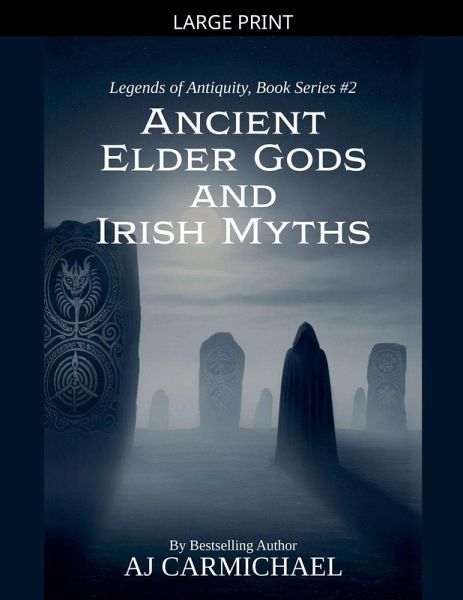
Celtic mythology is a rich and intricate diverse world, a captivating realm where deities and humans interact amidst mystical environments and celestial conflicts. Rooted predominantly in the ancient cultures of Ireland and Wales, this mythology serves as a compendium of stories, a cultural and spiritual mirror reflecting the Celtic people's values, traditions, and laws. By delving into the extensive range of Celtic myths, particularly the mythological, Ulster, and Fenian cycles in Ireland and the Mabinogion in Wales, we can uncover the profound influence these myths have had on European literary and cultural development. The primary method of transmitting these stories was oral, posing a significant challenge to studying Celtic myths. The religious perspectives of the scribes, particularly Christian monks, have left a significant imprint on these texts, but they remain crucial for our understanding. Irish literature draws from significant sources such as 'The Book of Invasions' and 'The Book of Leinster,' while Welsh literature relies on an important source known as 'Mabinogion.' Roman historians provide additional external narratives that contribute to understanding the Celts in a wider context of ancient European history. Unravelling these sources requires a nuanced approach to differentiate the authentic pagan elements from the Christian additions. The Celtic pantheon features diverse deities who govern various aspects of existence and the natural realm. In Irish mythology, the Dagda embodies paternal dominion and jurisdiction over the cycles of life and death, whereas Morrigan signifies the supremacy and inevitability of warfare. According to Welsh mythology, Arawn is the sovereign of the Otherworld, and Bran the Blessed is a colossal king with deep ties to the land and its well-being. The Celts' gods frequently engage with humans, often directly intervening in their destinies, highlighting the Celts' perception of the cosmos as a profoundly interconnected domain. The Mythological Cycle in Ireland narrates the tales of ancient deities and their conflicts, including the Tuatha Dé Danann, celestial beings who eventually assimilate into Irish civilisation as the forefathers of the contemporary Irish people after being conquered by the Milesians. The purpose of this cycle is twofold: to document Ireland's legendary history and to assert a divine entitlement to the land and its governance.