
Andere Kunden interessierten sich auch für
 The Rise and Fall of Ancient Carthage13,99 €
 The Rise and Fall of the Mayan Civilization14,99 €
 Ancient Egypt, Rise and Fall24,99 €
 The Rise and Fall of Ancient Egypt13,99 €
 A Day in the Life of Ancient Rome27,99 €
 The Rise and Fall of the Soviet Union13,99 €
 Ancient Mediterranean Civilizations107,99 €






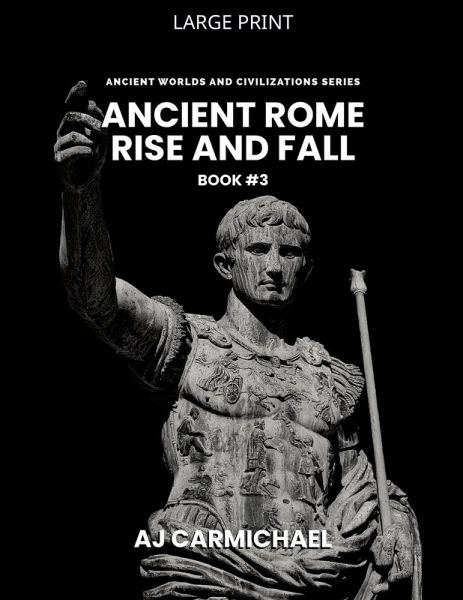
The Roman Empire was one of the most powerful empires in history. Its reach extended throughout Europe, into Africa, and as far as Asia. But how did Romans become such a dominant force? And what made them different from other civilizations in their day? In this book, we'll look at some of the critical moments that shaped Rome into what it was when it finally fell: how they rose to power and stayed there for so long. The Roman Empire began in the eighth century B.C. when a group of people known as Latins formed settlements and eventually turned into a city called Rome. The city was ruled by two kings, elected by the Senate (essentially a group of powerful men). The Romans conquered other peoples and became an empire that stretched from Spain to Turkey. Their armies were so strong that they could take on several enemies at once-and win! The Roman Empire was the most powerful political entity in Western Europe, and its rise to power has been attributed to several factors: Rome's location at the center of several major trade routes allowed it to expand economically and socially. Romans were farming people who valued labor over leisure and were able to build substantial wealth through agriculture and trade. When Rome overthrew their kings in 509 BC, they established a republic with two consuls (a type of official) who held equal power. The consuls had authority over military matters and foreign policy; they also led religious rituals related to warfare, such as sacrifices before battle or upon returning home victorious from war. Finally, this combination of factors led Romans into conflict with neighboring territories-invading other lands led by conquest or threat of force until surrounding peoples became vassals under their rule.