
Andere Kunden interessierten sich auch für
 War, the State and International Law in Seventeenth-Century Europe37,99 €
 Politics and Foreign Policy in the Age of George I, 1714-172738,99 €
 'And so began the Irish Nation'38,99 €
 The Gondi37,99 €
 Routledge Handbook of Ethics and International Relations45,99 €
 The Ethics of Political Dissent38,99 €
 Hegemony and the Politics of Labour137,99 €

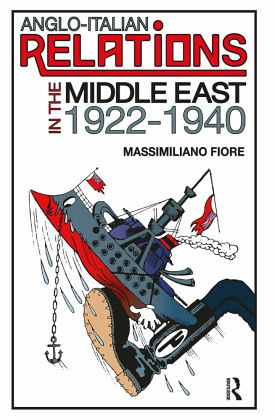
Between 1923 and 1934, Britain and Italy waged war by proxy in the Middle East. Behind the appearance of European collaboration, relations between London and Rome in the Red Sea were notably tense. Although realistically Mussolini could not establish or maintain colonies in the Arabian Peninsula in the face of British opposition, his regime undertook a number of initiatives in the region to enhance Italo-Arab relations and to pave the way for future expansion once the balance of power in Europe had shifted in Italy's favour. This book examines four key aspects of relations between Britain and Italy in the Middle East in the interwar period: the confrontation between London and Rome for political influence among Arab leaders and nationalists; the competition for commercial and trade advantages in the region; the Anglo-Italian propaganda war to win the hearts and minds of the Arab populations; and the secret world of British and Italian espionage and intelligence. An in depth analysis of these four key areas demonstrates how Anglo-Italian relations broke down over the interwar period and enhances our knowledge and understanding of the factors leading up to the widening of the Second World War in the Mediterranean. This book is essential reading for scholars concerned with Anglo-Italian relations, the activities of the Powers in the Middle East and the tensions between the colonial powers.
'Fiore's careful study, based on British and Italian archives, opens up a neglected area of Anglo-Italian imperial rivalry in the 1920s and 1930s.' Contemporary European History '... Fiore's book [...] includes a detailed and very useful review of the existing literature on the topic, both in Italian and English... there is no denying that it constitutes a thorough synthesis of the Anglo-Italian relationship in the Middle East in the 1920s and '30s.' Israel Journal of Foreign Affairs '... well written and engaging. Fiore is to be congratulated for an incisive, interesting and readable diplomatic history of a vital period in European and world history.' English Historical Review