
Andere Kunden interessierten sich auch für
 The Queer Greek Weird Wave19,99 €
 Swedish Children's Cinema113,99 €
 The Biopolitics of Gesture in the Cinema of Yorgos Lanthimos106,99 €
 Essay Cinema in the Digital Era98,99 €
 Animality and Horror Cinema106,99 €
 Experiencing National Culture Abroad31,99 €
 Italian Experimental Cinema and Moving-Image Art113,99 €

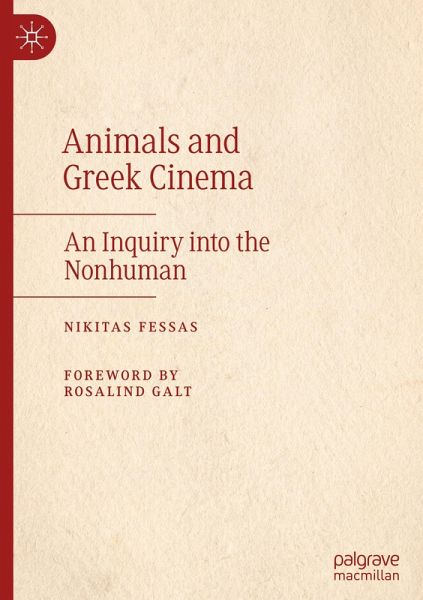
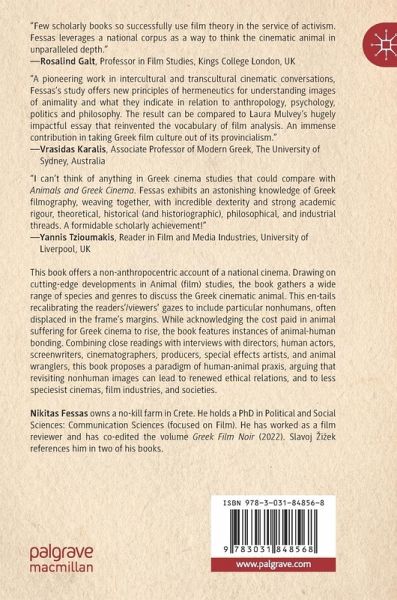
This book offers a non-anthropocentric account of a national cinema. Drawing on cutting-edge developments in Animal (film) studies, the book gathers a wide range of species and genres to discuss the Greek cinematic animal. This en-tails recalibrating the readers /viewers gazes to include particular nonhumans, often displaced in the frame s margins. While acknowledging the cost paid in animal suffering for Greek cinema to rise, the book features instances of animal-human bonding. Combining close readings with interviews with directors, human actors, screenwriters, cinematographers, producers, special effects artists, and animal wranglers, this book proposes a paradigm of human-animal praxis, arguing that revisiting nonhuman images can lead to renewed ethical relations, and to less speciesist cinemas, film industries, and societies..