
Andere Kunden interessierten sich auch für
 Theory, Practice, and Community Development190,99 €
 Theory, Practice, and Community Development67,99 €
 History, Evolution and the Concept of Culture42,99 €
 History, Memory, and Territorial Cults in the Highlands of Laos55,99 €
 Early Childhood Education, Postcolonial Theory, and Teaching Practices in India76,99 €
 History, Memory and Migration38,99 €
 Early Childhood Education, Postcolonial Theory, and Teaching Practices in India38,99 €



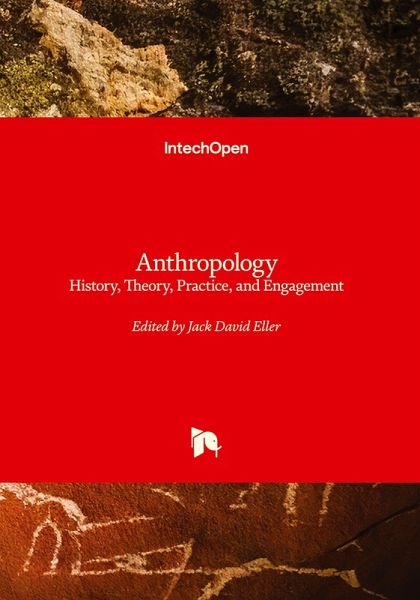
Modern anthropology dates its origin to roughly a century ago, in the work of Boas and Malinowski, although its roots are much older. Since its founding as a distinct modern discipline, it has typically been identified as a four-field enterprise (cultural or social anthropology, biological or physical anthropology, linguistic anthropology, and archaeology), with, of course, many local and historical variations. Moreover, it has traditionally been associated with the study of "traditional" or "tribal" societies; however, since the 1960s and 1970s, it has undergone intense self-criticism and reinvention, including an expansion into contemporary subjects and global processes. The chapters in this volume generously reflect the current status of anthropology, featuring contributions on refugees, migration, nationalism, Islam, and the survival of indigenous peoples, as well as the archaeology of pre-modern belief systems. It also confronts many of the field's present-day disciplinary controversies, such as knowledge production in non-Western societies, the nature and future of ethnography and fieldwork, and the challenge and value of doing anthropology in a time of crisis-especially since the modern world seems to be in a constant state of crisis, altering the mission of anthropology but making it intensely more important.