
Andere Kunden interessierten sich auch für
 Antibakterial'naq aktiwnost' i fitohimicheskoe issledowanie rastenij32,99 €
 Antibakterielle Aktivität und phytochemische Untersuchung von Pflanzen49,90 €
 Atividade antibacteriana e investigação fitoquímica de plantas32,99 €
 Activité antibactérienne et étude phytochimique des plantes32,99 €
 Attività antibatterica e indagine fitochimica delle piante32,99 €
: As antibacterial wound healing agent") Annona Squamosa (Custard apple): As antibacterial wound healing agent27,99 €
Annona Squamosa (Custard apple): As antibacterial wound healing agent27,99 € Phenotypic & Genotypic Detection of MRSA in Hunting Dogs & Owners37,99 €
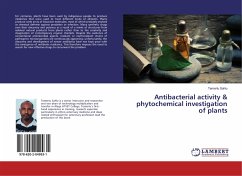
For centuries, plants have been used by indigenous people to produce medicines that were used to treat different kinds of ailments. Plants produce wide array of bioactive molecules, most of which probably evolved as chemical defense against predation or infection. Many synthetic drugs owe their discovery and potency as a result of a mimic of structures from isolated natural products from plants rather than to the creativity and imagination of contemporary organic chemists. Despite the existence of conventional antimicrobial agents, resistant or multi-resistant strains of pathogenic microorganisms are continuously appearing; unfortunately, the discovery and development of newer antibiotics have not kept pace with the emergence of antibiotic resistance. This therefore imposes the need to search for new effective drugs to circumvent the problem.