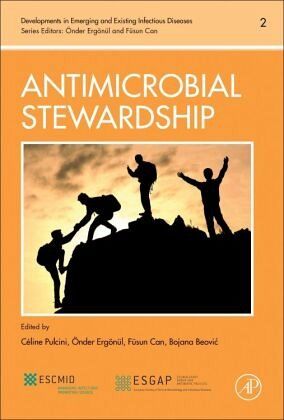
Antimicrobial Stewardship (AMS), Volume Two includes the experience of ESGAP workshops and courses on antibiotic stewardship since 2012. It combines clinical and laboratory information about AMS, with a focus on human medicine. The ESCMID study group on antibiotic policies (ESGAP) is one of the most productive groups in the field, organizing courses and workshops. This book is an ideal tool for the participants of these workshops. With short chapters (around 1500 words) written on different topics, the authors insisted on the following points: A 'hands on', practical approach, tips to…mehr
Antimicrobial Stewardship (AMS), Volume Two includes the experience of ESGAP workshops and courses on antibiotic stewardship since 2012. It combines clinical and laboratory information about AMS, with a focus on human medicine.
The ESCMID study group on antibiotic policies (ESGAP) is one of the most productive groups in the field, organizing courses and workshops. This book is an ideal tool for the participants of these workshops.
With short chapters (around 1500 words) written on different topics, the authors insisted on the following points: A 'hands on', practical approach, tips to increase success, a description of the most common mistakes, a global picture (out- and inpatient settings, all countries) and a short list of 10-20 landmark references.
Produktdetails
Produktdetails
Developments in Emerging and Existing Infectious Diseases Volume 2
Die Herstellerinformationen sind derzeit nicht verfügbar.
Autorenporträt
Fusun Can, MD Can is an associate professor of medical microbiology at the Koc University School of Medicine. She is specialized in the epidemiology of emerging bacterial pathogens, antibiotic resistance mechanisms and biofilm related infections. She graduated from Hacettepe University School of Medicine in 1989 and completed her residency in 1996 at Ankara University, Department of Microbiology and Clinical Microbiology in Ankara,Turkey. She worked as a research fellow in the Department of Microbiology at the University of Florida School of Medicine, USA. Before joining Koc University, she was the director of the Department of Medical Microbiology at Baskent University, in Ankara. She is responsible for the Microbiology and Biosafety Level III Laboratory at Koc University.
Inhaltsangabe
Section A: The Global Picture of Antimicrobial Use and Resistance 1. The Global Crisis of Antimicrobial Resistance 2. Antimicrobial Stewardship: Efficacy and Implementation of Strategies to Address Antimicrobial Overuse and Resistance 3. Quality Indicators and Quantity Metrics of Antibiotic Use
Section B: AMS Strategies 4. Improving Antimicrobial Prescribing: Input from Behavioral Strategies and Quality Improvement Methods 5. Education of Healthcare Professionals on Responsible Antimicrobial Prescribing 6. Rapid Diagnostics and Biomarkers for Antimicrobial Stewardship 7. Pharmacokinetic and Pharmacodynamic Tools to Increase Efficacy 8. The Use of Computerized Decision Support Systems to Support Antimicrobial Stewardship Programs 9. The Role of Microbiology Laboratory in Promoting Antimicrobial Stewardship 10. The Role of Pharmacists 11. The Roles of Nurses in Antimicrobial Stewardship 12. Antifungal Stewardship
Section C: AMS in Specific Clinical Settings 13. Optimising Prescribing for Acute Respiratory Tract Infections as an Example for Antimicrobial Stewardship in Primary Care 14. Antimicrobial Stewardship: What to Tell the Patients and the General Public 15. Antimicrobial Stewardship in Long-Term Care Facilities 16. Antimicrobial Stewardship in ICU 17. Antimicrobial Stewardship in Hematology Patients 18. AMS in an Era of Multidrug-Resistant Bacteria
Section D: AMS Experiences Around the World 19.1: AMS Initiatives and Policies: The International Picture 19.2: Missions and Objectives of EUCIC and ESGAP 19.3: Antimicrobial Stewardship in Latin America 19.4: Antimicrobial Stewardship in Australia 19.5: Antimicrobial Stewardship in Austria 19.6: Antimicrobial Stewardship in Belgium 19.7: Antimicrobial Stewardship in Bulgaria 19.8: Antimicrobial Stewardship in Croatia 19.9: Antimicrobial Stewardship in England 19.10: Antimicrobial Stewardship in France 19.11: Antimicrobial Stewardship in Germany 19.12: Antimicrobial Stewardship in Greece 19.13: Antimicrobial Stewardship in India 19.14: Antimicrobial Stewardship in Israel 19.15: Antimicrobial Stewardship in Italy 19.16: Antimicrobial Stewardship in Japan 19.17: Antibiotic Stewardship in the Netherlands 19.18: Antimicrobial Stewardship in Scotland 19.19: Antimicrobial Stewardship in Slovenia 19.20: Antimicrobial Stewardship in South Africa 19.21: Antimicrobial Stewardship in Argentina 19.22: Antimicrobial Stewardship in Spain 19.23: Antibiotic Stewardship in Sweden 19.24: Antimicrobial Stewardship in Switzerland 19.25: Antimicrobial Stewardship in Turkey 19.26: Antimicrobial Stewardship in the United States
Section E: Research and Perspectives 20. Methodological Challenges in Evaluating Antimicrobial Stewardship Programs: "Through Measuring to Knowledge"
Section A: The Global Picture of Antimicrobial Use and Resistance 1. The Global Crisis of Antimicrobial Resistance 2. Antimicrobial Stewardship: Efficacy and Implementation of Strategies to Address Antimicrobial Overuse and Resistance 3. Quality Indicators and Quantity Metrics of Antibiotic Use
Section B: AMS Strategies 4. Improving Antimicrobial Prescribing: Input from Behavioral Strategies and Quality Improvement Methods 5. Education of Healthcare Professionals on Responsible Antimicrobial Prescribing 6. Rapid Diagnostics and Biomarkers for Antimicrobial Stewardship 7. Pharmacokinetic and Pharmacodynamic Tools to Increase Efficacy 8. The Use of Computerized Decision Support Systems to Support Antimicrobial Stewardship Programs 9. The Role of Microbiology Laboratory in Promoting Antimicrobial Stewardship 10. The Role of Pharmacists 11. The Roles of Nurses in Antimicrobial Stewardship 12. Antifungal Stewardship
Section C: AMS in Specific Clinical Settings 13. Optimising Prescribing for Acute Respiratory Tract Infections as an Example for Antimicrobial Stewardship in Primary Care 14. Antimicrobial Stewardship: What to Tell the Patients and the General Public 15. Antimicrobial Stewardship in Long-Term Care Facilities 16. Antimicrobial Stewardship in ICU 17. Antimicrobial Stewardship in Hematology Patients 18. AMS in an Era of Multidrug-Resistant Bacteria
Section D: AMS Experiences Around the World 19.1: AMS Initiatives and Policies: The International Picture 19.2: Missions and Objectives of EUCIC and ESGAP 19.3: Antimicrobial Stewardship in Latin America 19.4: Antimicrobial Stewardship in Australia 19.5: Antimicrobial Stewardship in Austria 19.6: Antimicrobial Stewardship in Belgium 19.7: Antimicrobial Stewardship in Bulgaria 19.8: Antimicrobial Stewardship in Croatia 19.9: Antimicrobial Stewardship in England 19.10: Antimicrobial Stewardship in France 19.11: Antimicrobial Stewardship in Germany 19.12: Antimicrobial Stewardship in Greece 19.13: Antimicrobial Stewardship in India 19.14: Antimicrobial Stewardship in Israel 19.15: Antimicrobial Stewardship in Italy 19.16: Antimicrobial Stewardship in Japan 19.17: Antibiotic Stewardship in the Netherlands 19.18: Antimicrobial Stewardship in Scotland 19.19: Antimicrobial Stewardship in Slovenia 19.20: Antimicrobial Stewardship in South Africa 19.21: Antimicrobial Stewardship in Argentina 19.22: Antimicrobial Stewardship in Spain 19.23: Antibiotic Stewardship in Sweden 19.24: Antimicrobial Stewardship in Switzerland 19.25: Antimicrobial Stewardship in Turkey 19.26: Antimicrobial Stewardship in the United States
Section E: Research and Perspectives 20. Methodological Challenges in Evaluating Antimicrobial Stewardship Programs: "Through Measuring to Knowledge"
Es gelten unsere Allgemeinen Geschäftsbedingungen: www.buecher.de/agb
Impressum
www.buecher.de ist ein Internetauftritt der buecher.de internetstores GmbH
Geschäftsführung: Monica Sawhney | Roland Kölbl | Günter Hilger
Sitz der Gesellschaft: Batheyer Straße 115 - 117, 58099 Hagen
Postanschrift: Bürgermeister-Wegele-Str. 12, 86167 Augsburg
Amtsgericht Hagen HRB 13257
Steuernummer: 321/5800/1497
USt-IdNr: DE450055826