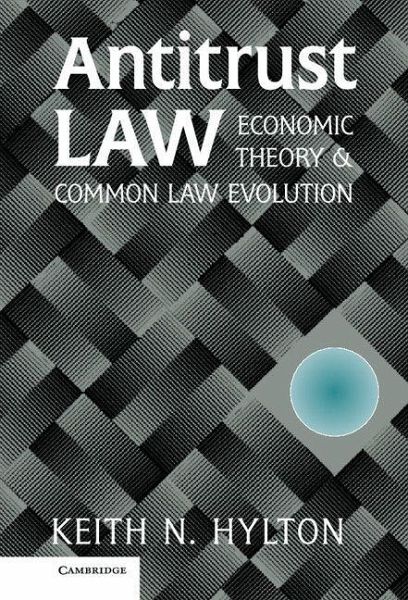
This book is an effort to consolidate several different perspectives on antitrust law. First, Professor Hylton presents a detailed description of the law as it has developed through numerous judicial opinions. Second, the author presents detailed economic critiques of the judicial opinions, drawing heavily on the literature in law and economics journals. Third, Professor Hylton integrates a jurisprudential perspective into the analysis that looks at antitrust as a vibrant field of common law. This last perspective leads the author to address issues of certainty, stability, and predictability…mehr
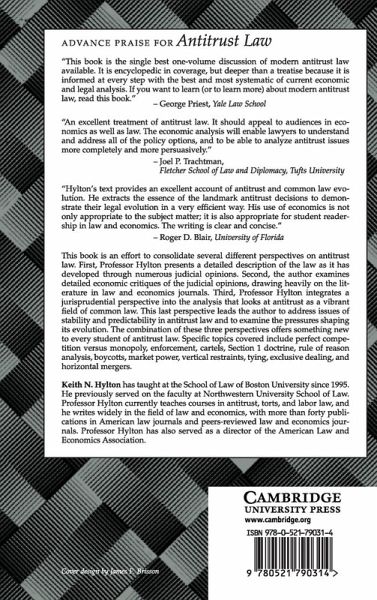
This book is an effort to consolidate several different perspectives on antitrust law. First, Professor Hylton presents a detailed description of the law as it has developed through numerous judicial opinions. Second, the author presents detailed economic critiques of the judicial opinions, drawing heavily on the literature in law and economics journals. Third, Professor Hylton integrates a jurisprudential perspective into the analysis that looks at antitrust as a vibrant field of common law. This last perspective leads the author to address issues of certainty, stability, and predictability in antitrust law, and to examine the pressures shaping its evolution. The combination of these three perspectives offers something new to every student of antitrust law. Specific topics covered include perfect competition versus monopoly, enforcement, cartels, section 1 doctrine, rule of reason, agreement, boycott, power, vertical restraints, tying and exclusive dealing, horizontal mergers, and conglomerates.
Keith N. Hylton has taught at the School of Law of Boston University since 1995. He previously served on the faculty and was tenured at Northwestern University School of Law. Professor Hylton currently teaches courses in antitrust, torts, and labor law, and writes widely in the field of law and economics, with more than forty publications in American law journals and peer-reviewed law and economics journals. He has served as a Director of the American Law and Economics Association.
Inhaltsangabe
Part I. Economics: 1. Definitions 2. Perfect competition versus monopoly 3. Further topics Part II. Law and Policy: 4. Some interpretations issues 5. Enacting the antitrust law 6. What should antitrust law aim to do? Part III. Enforcement: 7. Optimal enforcement theory 8. Enforcement provision of the antitrust laws Appendix Part IV. Cartels: 9. Cartels 10. Conscious parallelism 11. Conclusion Part V. Development of Section 1 Doctrine: 12. The Sherman act versus the common law 13. Rule of reason and per se rule 14. Conclusion Part VI. Rule of Reason and Per Se Rule: 14. The case for price-fixing 15. Per se and rule of reason analysis: further developments 16. Per se versus rule of reason tests: understanding the Supreme Court's justification for the per se rule Part VII. Agreement: 17. The development of inference doctrine 18. Rejection of unilateral contract theory Part VIII. Facilitating Mechanisms: 19. Data dissemination cases 20. Basing point pricing and related practices 21. Basing point pricing: economics Part IV. Boycotts: 22. Pre-Socony 23. Post-Socony 24. Post-BMI/Sylvania 25. Conclusion Part X. Monopolization: 26. Development of section 2 doctrine 27. Leveraging and essential facility cases 28. Predatory pricing 29. Conclusion Part XI. Power: 30. Measuring market power 31. Determinants of market power 32. Substitutability and the relevant market: cellophane 33. Multi-market monopoly and the relevant market: Alcoa 34. Measuring power: guidelines Part XII. Attempts: 35. The Swift formula and modern doctrine 36. Dangerous probability requirement Part XIII. Vertical Restraints: 37. Resale price maintenance 38. Vertical non-price restraints 39. Manufacturer retains title 40. Agreement Part XIV. Tying and Exclusive Dealing: 41. Introduction 42. Early cases 43. Development of the per se rule 44. Tension between rule of reason arguments and per se rule 45. Technological tying 46. Exclusive dealing Appendix 47. Horizontal Mergers: 48. Reasons for merging and implications for law 49. Horizontal merger law 50. Conclusion Appendix Part XV. Mergers, Vertical and Conglomerate: 51. Vertical mergers 52. Conglomerate mergers 53. Concluding remarks Part XVI. Antitrust and the state: 54. Noerr-Pennington doctrine 55. Parker doctrine.
Part I. Economics: 1. Definitions 2. Perfect competition versus monopoly 3. Further topics Part II. Law and Policy: 4. Some interpretations issues 5. Enacting the antitrust law 6. What should antitrust law aim to do? Part III. Enforcement: 7. Optimal enforcement theory 8. Enforcement provision of the antitrust laws Appendix Part IV. Cartels: 9. Cartels 10. Conscious parallelism 11. Conclusion Part V. Development of Section 1 Doctrine: 12. The Sherman act versus the common law 13. Rule of reason and per se rule 14. Conclusion Part VI. Rule of Reason and Per Se Rule: 14. The case for price-fixing 15. Per se and rule of reason analysis: further developments 16. Per se versus rule of reason tests: understanding the Supreme Court's justification for the per se rule Part VII. Agreement: 17. The development of inference doctrine 18. Rejection of unilateral contract theory Part VIII. Facilitating Mechanisms: 19. Data dissemination cases 20. Basing point pricing and related practices 21. Basing point pricing: economics Part IV. Boycotts: 22. Pre-Socony 23. Post-Socony 24. Post-BMI/Sylvania 25. Conclusion Part X. Monopolization: 26. Development of section 2 doctrine 27. Leveraging and essential facility cases 28. Predatory pricing 29. Conclusion Part XI. Power: 30. Measuring market power 31. Determinants of market power 32. Substitutability and the relevant market: cellophane 33. Multi-market monopoly and the relevant market: Alcoa 34. Measuring power: guidelines Part XII. Attempts: 35. The Swift formula and modern doctrine 36. Dangerous probability requirement Part XIII. Vertical Restraints: 37. Resale price maintenance 38. Vertical non-price restraints 39. Manufacturer retains title 40. Agreement Part XIV. Tying and Exclusive Dealing: 41. Introduction 42. Early cases 43. Development of the per se rule 44. Tension between rule of reason arguments and per se rule 45. Technological tying 46. Exclusive dealing Appendix 47. Horizontal Mergers: 48. Reasons for merging and implications for law 49. Horizontal merger law 50. Conclusion Appendix Part XV. Mergers, Vertical and Conglomerate: 51. Vertical mergers 52. Conglomerate mergers 53. Concluding remarks Part XVI. Antitrust and the state: 54. Noerr-Pennington doctrine 55. Parker doctrine.
Es gelten unsere Allgemeinen Geschäftsbedingungen: www.buecher.de/agb
Impressum
www.buecher.de ist ein Internetauftritt der buecher.de internetstores GmbH
Geschäftsführung: Monica Sawhney | Roland Kölbl | Günter Hilger
Sitz der Gesellschaft: Batheyer Straße 115 - 117, 58099 Hagen
Postanschrift: Bürgermeister-Wegele-Str. 12, 86167 Augsburg
Amtsgericht Hagen HRB 13257
Steuernummer: 321/5800/1497
USt-IdNr: DE450055826