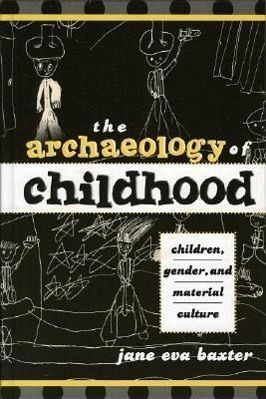
The study of children and childhood in historical and prehistoric life is an overlooked area of study that Jane Baxter addresses in this brief book. Her timely contribution stresses the importance of studying children as active participants in past cultures, instead of regarding them mainly for their effect on adult life. Using the critical concepts of gender and socialization, she develops new theoretical and methodological approaches for the archaeological study of this large but invisible population.
The study of children and childhood in historical and prehistoric life is an overlooked area of study that Jane Baxter addresses in this brief book. Her timely contribution stresses the importance of studying children as active participants in past cultures, instead of regarding them mainly for their effect on adult life. Using the critical concepts of gender and socialization, she develops new theoretical and methodological approaches for the archaeological study of this large but invisible population.
Jane Eva Baxter is an associate professor in the Department of Anthropology and a member of the American Studies Program Committee at DePaul University in Chicago.
Inhaltsangabe
1.The Archaeology of Childhood in Context Childhood in Anthropology Childhood in Archaeology The Importance of an Archaeology of Childhood Chapter Organization 2. Theorizing Childhood in Archaeology Introducing the Child's World Children and Gender: Cultural Categories in Archaeology Children as Active Participants in the Past Moving forward: Socialization and the Study of Childhood 3. The Cultural Creation of Childhood: The Idea of Socialization The Concept of Socialization: An Intergenerational Discourse Agents of Socialization and the Imparting of Cultural Knowledge Socialization in the Past Socialization Across Cultures 4. Socialization and the Material Culture of Childhood Multiple Meanings and Material Culture Socialization in the Use of Material Culture: Toys and Playthings Identifying Toys in Archaeological Contexts Socialization in the Making of Material Culture: Apprenticeship and Situated Learning Studying Apprenticeship and Learning in the Archaeological Record 5. Socialization, Behavior, and the Spaces and Places of Childhood Children as a "Distorting Factor" in the Archaeological Record Socialization and the Use of Space Children at Play Children at Work Children and Space across Cultures Children and Space in the Archaeological Record Socialization, Space and Archaeology of Childhood 6. Socialization, Symbols, and Artistic Representations of Children Depicting Childhood, Depicting Gender Children at Work and at Play Child Rearing and Parenting Children as Cultural Symbols 7. Socialization, Childhood, and Mortuary Remains What are we studying when we analyze mortuary remains? Children as a Category in Mortuary Archaeology Identifying Age Based Categories through Mortuary Remains Childhood Health, Nutrition, and Mortality Children and the Elucidation of Horizontal Social Categories Children as Indicators of Vertical Social Status Mortuary Monuments and Representations of Children 8. Themes and Lessons from the Archaeology of Childhood Socialization, Gender, and the Cultural Construction of Childhood Casting Children as Actors Child, Family, Community, Society All Archaeology is the Archaeology of Childhood Bibliography Index
1.The Archaeology of Childhood in Context Childhood in Anthropology Childhood in Archaeology The Importance of an Archaeology of Childhood Chapter Organization 2. Theorizing Childhood in Archaeology Introducing the Child's World Children and Gender: Cultural Categories in Archaeology Children as Active Participants in the Past Moving forward: Socialization and the Study of Childhood 3. The Cultural Creation of Childhood: The Idea of Socialization The Concept of Socialization: An Intergenerational Discourse Agents of Socialization and the Imparting of Cultural Knowledge Socialization in the Past Socialization Across Cultures 4. Socialization and the Material Culture of Childhood Multiple Meanings and Material Culture Socialization in the Use of Material Culture: Toys and Playthings Identifying Toys in Archaeological Contexts Socialization in the Making of Material Culture: Apprenticeship and Situated Learning Studying Apprenticeship and Learning in the Archaeological Record 5. Socialization, Behavior, and the Spaces and Places of Childhood Children as a "Distorting Factor" in the Archaeological Record Socialization and the Use of Space Children at Play Children at Work Children and Space across Cultures Children and Space in the Archaeological Record Socialization, Space and Archaeology of Childhood 6. Socialization, Symbols, and Artistic Representations of Children Depicting Childhood, Depicting Gender Children at Work and at Play Child Rearing and Parenting Children as Cultural Symbols 7. Socialization, Childhood, and Mortuary Remains What are we studying when we analyze mortuary remains? Children as a Category in Mortuary Archaeology Identifying Age Based Categories through Mortuary Remains Childhood Health, Nutrition, and Mortality Children and the Elucidation of Horizontal Social Categories Children as Indicators of Vertical Social Status Mortuary Monuments and Representations of Children 8. Themes and Lessons from the Archaeology of Childhood Socialization, Gender, and the Cultural Construction of Childhood Casting Children as Actors Child, Family, Community, Society All Archaeology is the Archaeology of Childhood Bibliography Index
Es gelten unsere Allgemeinen Geschäftsbedingungen: www.buecher.de/agb
Impressum
www.buecher.de ist ein Internetauftritt der buecher.de internetstores GmbH
Geschäftsführung: Monica Sawhney | Roland Kölbl | Günter Hilger
Sitz der Gesellschaft: Batheyer Straße 115 - 117, 58099 Hagen
Postanschrift: Bürgermeister-Wegele-Str. 12, 86167 Augsburg
Amtsgericht Hagen HRB 13257
Steuernummer: 321/5800/1497
USt-IdNr: DE450055826