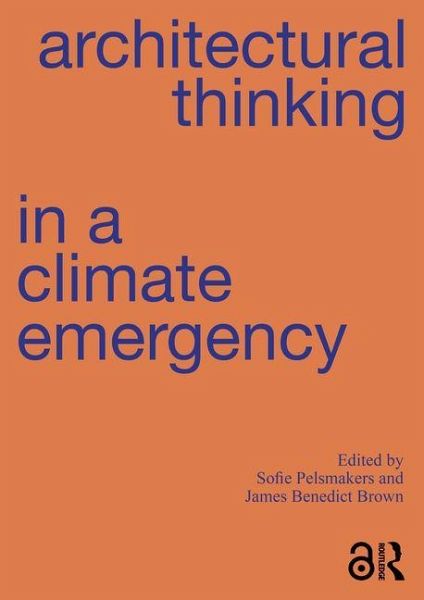
The design and construction of most buildings and urban environments today are rooted in an economic model that pursues infinite growth. This book aims to provide the tools and knowledge to undertake the transformations that are urgently needed, through 15 chapters illustrating how we can act collectively to make a difference.
The design and construction of most buildings and urban environments today are rooted in an economic model that pursues infinite growth. This book aims to provide the tools and knowledge to undertake the transformations that are urgently needed, through 15 chapters illustrating how we can act collectively to make a difference.
Sofie Pelsmakers (she/her) is Professor of Sustainable Housing Design at Tampere University, Finland. She is a chartered architect (UK), author of several books and has dedicated the past two decades to teaching, designing and researching sustainable architecture. She brings experience from Denmark (the Aarhus School of Architecture) and the UK (Sheffield School of Architecture, The Bartlett, University of East London). Her collaborative work connects research, teaching and practice for the training of the architects of the future. James Benedict Brown is an Associate Professor of Architecture at Umea University in Sweden. He teaches architectural history and theory and researches the relationship between architectural education, practice, values and materials.
Inhaltsangabe
1. Setting the scene: architectural thinking in a time of climate emergency PART 1: Architectural philosophies to address the climate emergency: injustice, circularity, radical inclusivity, spatial insurgence 2. Architects and climate justice 3. The new aesthetics of circular architecture 4. Who do we create architecture for, and why? 5. Enacted utopias: learning from insurgent spatial practices PART 2: Architectural pedagogies to address the climate emergency: creaturely pedagogy, collaboration and communities of equity, empathy and interdisciplinarity 6. Everyday, equity and ease 7. Responding to embodied injustices: introducing critical thinking and empathy in architectural education 8. Changing cultures: sustainability in architectural education and design teaching 9. Preparing architects to serve as change agents 10. Changing paradigms: educating for the climate emergency PART 3: Architectural practices to address the climate emergency: justice, interdisciplinarity, co-design, decolonisation 11. Planning for climate justice: digital mapping as an interdisciplinary tool for alleviating inequalities 12. Decolonising resilient architecture 13. Situating the concept of sustainable design in Africa 14. Boundaries and bonds in a boundless world: the relationship of place and community to landscape 15. An architecture of paying attention: scenarios for rehearsing climate futures otherwise
1. Setting the scene: architectural thinking in a time of climate emergency PART 1: Architectural philosophies to address the climate emergency: injustice, circularity, radical inclusivity, spatial insurgence 2. Architects and climate justice 3. The new aesthetics of circular architecture 4. Who do we create architecture for, and why? 5. Enacted utopias: learning from insurgent spatial practices PART 2: Architectural pedagogies to address the climate emergency: creaturely pedagogy, collaboration and communities of equity, empathy and interdisciplinarity 6. Everyday, equity and ease 7. Responding to embodied injustices: introducing critical thinking and empathy in architectural education 8. Changing cultures: sustainability in architectural education and design teaching 9. Preparing architects to serve as change agents 10. Changing paradigms: educating for the climate emergency PART 3: Architectural practices to address the climate emergency: justice, interdisciplinarity, co-design, decolonisation 11. Planning for climate justice: digital mapping as an interdisciplinary tool for alleviating inequalities 12. Decolonising resilient architecture 13. Situating the concept of sustainable design in Africa 14. Boundaries and bonds in a boundless world: the relationship of place and community to landscape 15. An architecture of paying attention: scenarios for rehearsing climate futures otherwise
Es gelten unsere Allgemeinen Geschäftsbedingungen: www.buecher.de/agb
Impressum
www.buecher.de ist ein Internetauftritt der buecher.de internetstores GmbH
Geschäftsführung: Monica Sawhney | Roland Kölbl | Günter Hilger
Sitz der Gesellschaft: Batheyer Straße 115 - 117, 58099 Hagen
Postanschrift: Bürgermeister-Wegele-Str. 12, 86167 Augsburg
Amtsgericht Hagen HRB 13257
Steuernummer: 321/5800/1497
USt-IdNr: DE450055826