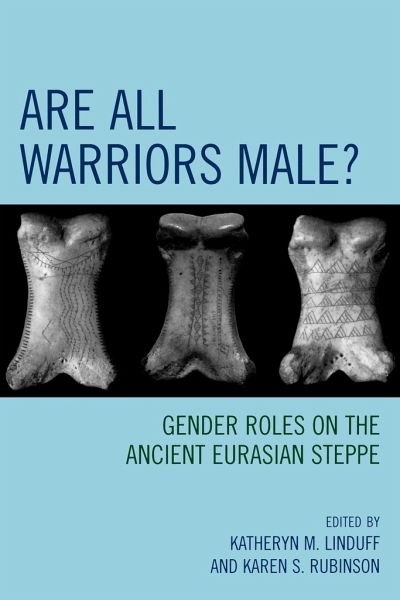
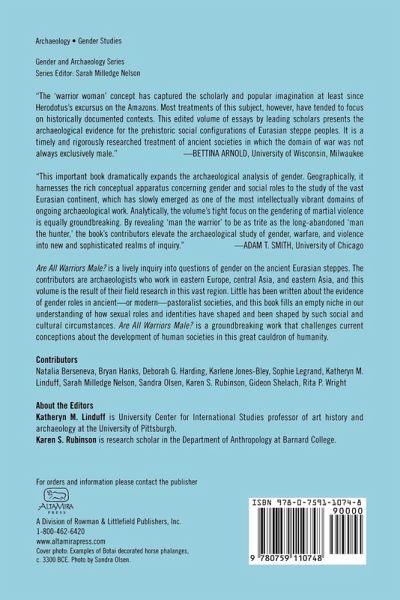
This collection of original essays presents an in-depth look at the archaeology of the Eurasian steppe-from China to Europe-and the evidence of gender roles in ancient nomadic societies.
This collection of original essays presents an in-depth look at the archaeology of the Eurasian steppe-from China to Europe-and the evidence of gender roles in ancient nomadic societies.
Katheryn M. Linduff is University Center for International Studies Professor of art history and archaeology at the University of Pittsburgh, specializing in the study of early China and Inner Asia. Karen S. Rubinson is a research scholar in the Department of Anthropology at Barnard College.
Inhaltsangabe
Chapter 1 Foreword Chapter 2 Introduction: The Nature of Nomads, Cultural Variation, and Gender Roles Past and Present Part 3 Part I: The Warrior Culture: Myth and Identity Chapter 4 1. Reconsidering Warfare, Status, and Gender in the Eurasian Steppe Iron Age Chapter 5 2. Arma Feminamque Cano: Warrior Women in the Indo-European World Chapter 6 3. Tillya Tepe: Aspects of Gender and Cultural Identity Part 7 Part II: Horses and the Gendering of Identity on the Steppe and Beyond Chapter 8 4. Women's Attire and Possible Sacred Role in 4th Millennium Northern Kazakhstan Chapter 9 5. He Who Eats the Horse, She Who Rides It? Symbols of Gender Identity on the Eastern Edges of the Eurasian Steppe Chapter 10 6. Horses and Gender in Korea: The Legacy of the Steppe on the Edge of Asia Part 11 Part III: Marriage, Families, and Death on the Steppe Chapter 12 7. Women and Children in the Sargat Culture Chapter 13 8. Sorting Out Men and Women in the Karasuk Culture Chapter 14 9. The Gender of Luxury and Power among the Xiongnu in Eastern Eurasia
Chapter 1 Foreword Chapter 2 Introduction: The Nature of Nomads, Cultural Variation, and Gender Roles Past and Present Part 3 Part I: The Warrior Culture: Myth and Identity Chapter 4 1. Reconsidering Warfare, Status, and Gender in the Eurasian Steppe Iron Age Chapter 5 2. Arma Feminamque Cano: Warrior Women in the Indo-European World Chapter 6 3. Tillya Tepe: Aspects of Gender and Cultural Identity Part 7 Part II: Horses and the Gendering of Identity on the Steppe and Beyond Chapter 8 4. Women's Attire and Possible Sacred Role in 4th Millennium Northern Kazakhstan Chapter 9 5. He Who Eats the Horse, She Who Rides It? Symbols of Gender Identity on the Eastern Edges of the Eurasian Steppe Chapter 10 6. Horses and Gender in Korea: The Legacy of the Steppe on the Edge of Asia Part 11 Part III: Marriage, Families, and Death on the Steppe Chapter 12 7. Women and Children in the Sargat Culture Chapter 13 8. Sorting Out Men and Women in the Karasuk Culture Chapter 14 9. The Gender of Luxury and Power among the Xiongnu in Eastern Eurasia
Es gelten unsere Allgemeinen Geschäftsbedingungen: www.buecher.de/agb
Impressum
www.buecher.de ist ein Internetauftritt der buecher.de internetstores GmbH
Geschäftsführung: Monica Sawhney | Roland Kölbl | Günter Hilger
Sitz der Gesellschaft: Batheyer Straße 115 - 117, 58099 Hagen
Postanschrift: Bürgermeister-Wegele-Str. 12, 86167 Augsburg
Amtsgericht Hagen HRB 13257
Steuernummer: 321/5800/1497
USt-IdNr: DE450055826