
Andere Kunden interessierten sich auch für
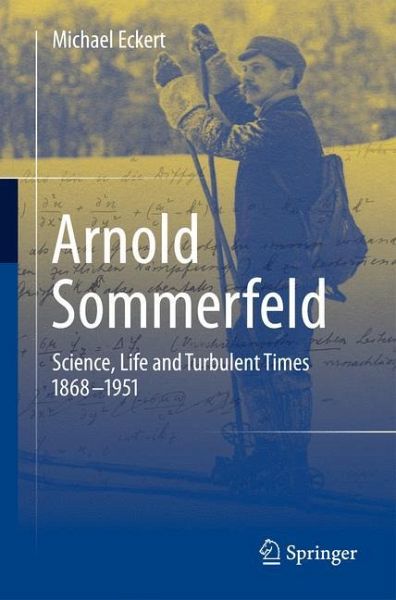
 Arnold Sommerfeld39,90 €
 Recent Advances in General Relativity77,99 €
 Quantum Systems under Gravitational Time Dilation76,99 €
 Time: Towards a Consistent Theory115,99 €
 Relativistic Quantum Mechanics83,99 €
 Quantum Field Theory II49,99 €
 Foundations of Quantum Theory39,99 €
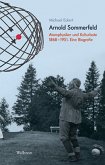
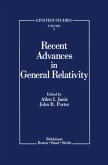


The subject of the book is a biography of the theoretical physicist Arnold Sommerfeld (1868-1951). Although Sommerfeld is famous as a quantum theorist for the elaboration of the semi-classical atomic theory (Bohr-Sommerfeld model, Sommerfeld's fine-structure constant), his role in the history of modern physics is not confined to atoms and quanta.
Sommerfeld left his mark in the history of mathematics, fluid mechanics, a number of physical subdisciplines and, in particular, as founder of a most productive "school" (Peter Debye, Wolfgang Pauli, Werner Heisenberg, Linus Pauling and Hans Bethe were his pupils, to name only the Nobel laureates among them). This biography is to a large extent based on primary source material (correspondence, diaries, unpublished manuscripts). It should be of particular interest to students who are keen to know more about the historical roots of modern science.
Sommerfeld lived through turbulent times of German history (Wilhelmian Empire, Weimar Republic, Nazi period). His life, therefore, illustrates how science and scientists perform in changing social environments. From this perspective, the biography should also attract readers with a general interest in the history of science and technology.
Sommerfeld left his mark in the history of mathematics, fluid mechanics, a number of physical subdisciplines and, in particular, as founder of a most productive "school" (Peter Debye, Wolfgang Pauli, Werner Heisenberg, Linus Pauling and Hans Bethe were his pupils, to name only the Nobel laureates among them). This biography is to a large extent based on primary source material (correspondence, diaries, unpublished manuscripts). It should be of particular interest to students who are keen to know more about the historical roots of modern science.
Sommerfeld lived through turbulent times of German history (Wilhelmian Empire, Weimar Republic, Nazi period). His life, therefore, illustrates how science and scientists perform in changing social environments. From this perspective, the biography should also attract readers with a general interest in the history of science and technology.