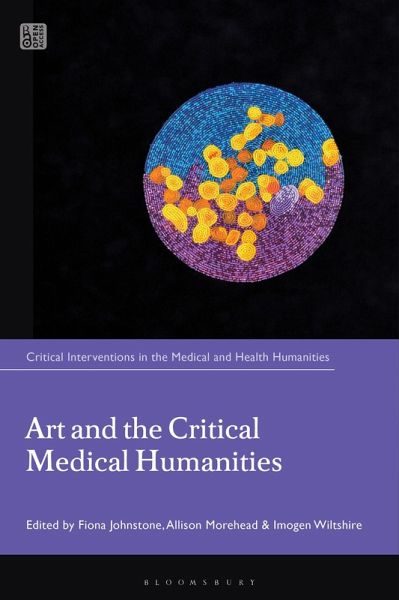
This agenda-setting edited volume makes a forceful case for the contribution that art - its practices and its histories - can make to debates and developments in critical medical humanities today. Whilst medical humanities previously emphasised an instrumental attitude towards art and art-making, recent work has opened up a dynamic space in which art can critically and imaginatively operate. With urgent attention paid to constructions of race, gender, class, sexuality and disability, the artists, art historians, and scholars in related fields represented within this volume address new and…mehr
This agenda-setting edited volume makes a forceful case for the contribution that art - its practices and its histories - can make to debates and developments in critical medical humanities today. Whilst medical humanities previously emphasised an instrumental attitude towards art and art-making, recent work has opened up a dynamic space in which art can critically and imaginatively operate. With urgent attention paid to constructions of race, gender, class, sexuality and disability, the artists, art historians, and scholars in related fields represented within this volume address new and pressing questions about structures and experiences of health, medical knowledge, care, therapy, and clinical research and education. With more than 40 contributors from a range of countries including the UK, Canada, the United States, Australia, Norway, Spain, and Germany, this landmark and multi-format collection addresses artworks from the sixteenth century to the present day, serving as a key reference point for researchers, practitioners, and educators working in medical humanities and art-aligned fields alike. The ebook editions of this book are available open access under a CC BY-NC-ND 4.0 licence on bloomsburycollections.com. Open access was funded by the Social Sciences and Humanities Research Council of Canada and the Wellcome Trust.
Fiona Johnstone is Assistant Professor in the Institute for Medical Humanities at Durham University, UK. Allison Morehead is Professor of Art History and in the Graduate Program in Cultural Studies at Queen's University, Canada. Imogen Wiltshire is Senior Lecturer in Art History and Visual Culture at the University of Lincoln, UK.
Inhaltsangabe
Foreword Angela Woods (University of Durham, UK) Introduction Confabulations: art practices, art histories, critical medical humanities Fiona Johnstone (University of Durham, UK), Allison Morehead (Queen's University, Canada), and Imogen Wiltshire (University of Lincoln UK). Part 1: Lived Experience 1. Curating beyond science communication towards embodied expertise: creative collaborations with guts. Vanessa Bartlett (University of Melbourne, Australia). 2. After images: technologies of the body and the archive. Silvia Casini (University of Aberdeen, UK), and Ilona Sagar (Goldsmiths University London, UK) 3. 'How close is too close?' the practice and politics of lived experience in contemporary art, academic history and the medical humanities. Daniel Regan (Independent artist, UK; executive director of the Arts & Health Hub) and Chris Millard (University of Sheffield, UK) 4. Cripistemology of the cabinet: Jesse Darling's Epistemologies (shamed cabinet). Amanda Cachia (University of Houston, USA) 5. Beads, breath and memory: Ruth Cuthand's Surviving Covid-19. Skye Haggerty (University of Alberta, Canada) Part 2: Visualising Knowledge & Power 6. Looking well: art historical interventions for a more equitable medicine. Kathleen Pierce (Smith College Northampton, USA) 7. Punchlines and power: visual humour as a disruptive tool for the critical medical humanities. Katie Snow (University College Dublin), Christine Slobogin (University of Rochester Medical Center, USA) Laura Cowley 8. Two faces of the same object: borderline bodies in art & visual culture. Natasha Ruiz-Gómez (University of Essex, UK), Keren Hammerschlag (Australian National University, Canberra), Tania Cleaves (née Woloshyn) (University of Nottingham, UK) 9. Between Mania and Melancholy: Thomas Lawrence's Mad Girl (1786). Anna Jamieson (University of Birmingham, UK) Part 3: Making & Remaking Medicalized Bodies 10. Dissecting 'mental images': revisiting twentieth-century surgical illustration. Ashley Lazevnick (University of New Mexico, USA) 11. Being an image: photography, ownership, language & power in the clinical encounter Fiona Johnstone (University of Durham, UK) and Liz Orton (Independent artist, UK) 12. Engraving the fetal subject: William Smellie, A Set of Anatomical Tables (1754). Rebecca Whiteley (University of Birmingham, UK) 13. Re-mythologizing the (Re)Productive Body: Wangechi Mutu's Cervical Hypertrophy (2004-5). Arya Thampuran (Durham University, UK) Part 4: Reproducing Reproduction 14. In living colour: realism and abstraction in anatomical models of the female reproductive body 1880-1900. Jessica M. Dandona (Minneapolis College of Art and Design, USA) 15. Making meanings from medicine: visual histories of medicine, race and reproductive health Anna Arabindan-Kesson (Princeton University, USA) and Gabriella Nelson ( Maternity Care Coalition, Philadelphia, USA) 16. Reproductive resistance: Charmaine Watkis, The Return of the Seed Keeper (2021). Jessica Womack (Independent Scholar, USA) 17. Marian Maternity and the Medieval Modern: engagements with contemporary un-reproductivity Isabel Davis (Natural History Museum, UK) and Anna Burel (Independent artist, UK) 18. Birth knowledge and institutional experiences: Lyndsay Mann's As You Were (2023). Camilla Mørk Røstvik (University of Agder, Norway) Part 5: Rethinking Art & Therapy 19. Perpetual Custody. Suzanne Hudson (University of California, USA) 20. Is There Room for Critical Studies in Art Therapy? Leah Gipson (School of the Art Institute of Chicago, USA) and Katharine Houpt (Psychotherapist, USA) 21. Beyond Therapy: Lula and Rogério's estrutura viva. Kaira M. Cabañas (National Gallery of Art, Washington, DC, USA) Part 6: Caring, Collaborating, Curating 22. Healthcare intimacies: Vanessa Bell and Dr Marie Moralt. Alison Syme (University of Toronto, Canada) 23. Flight as method: a Sick Woman exchange in material encounters, and the time it takes to care. Gemma Blackshaw (Royal College of Art, UK) and Alice Butler (Royal College of Art, UK) 24. Manual: broken bodies for broken landscapes. Cripxcess (Lorenzo Galgo and Maria Morata) (independent artists, Spain) 25. Lying in: a conversation from the bedside. Monika Ankele (Charité - Universitätsmedizin Berlin, Germany), Céline Kaiser (Hochschule für Künste im Sozialen, Ottersberg, Germany), Angela Alves (University of Arts Berlin, Germany) 26. Simone Leigh's sociality of self-care. Cera Smith (University of Oregon, USA) 27. Kintsugi and the art of self-repair. Suzannah Biernoff (Birkbeck, University of London, UK) 28. Being horizontal: a visual essay. Nora Heidorn (Independent artist, Germany) 29. Lifeblood - Edvard Munch: Towards a Curatorial Medical Humanities. Allison Morehead (Queen's University, Canada) Afterword Tanya Sheehan (Colby College, USA)
Foreword Angela Woods (University of Durham, UK) Introduction Confabulations: art practices, art histories, critical medical humanities Fiona Johnstone (University of Durham, UK), Allison Morehead (Queen's University, Canada), and Imogen Wiltshire (University of Lincoln UK). Part 1: Lived Experience 1. Curating beyond science communication towards embodied expertise: creative collaborations with guts. Vanessa Bartlett (University of Melbourne, Australia). 2. After images: technologies of the body and the archive. Silvia Casini (University of Aberdeen, UK), and Ilona Sagar (Goldsmiths University London, UK) 3. 'How close is too close?' the practice and politics of lived experience in contemporary art, academic history and the medical humanities. Daniel Regan (Independent artist, UK; executive director of the Arts & Health Hub) and Chris Millard (University of Sheffield, UK) 4. Cripistemology of the cabinet: Jesse Darling's Epistemologies (shamed cabinet). Amanda Cachia (University of Houston, USA) 5. Beads, breath and memory: Ruth Cuthand's Surviving Covid-19. Skye Haggerty (University of Alberta, Canada) Part 2: Visualising Knowledge & Power 6. Looking well: art historical interventions for a more equitable medicine. Kathleen Pierce (Smith College Northampton, USA) 7. Punchlines and power: visual humour as a disruptive tool for the critical medical humanities. Katie Snow (University College Dublin), Christine Slobogin (University of Rochester Medical Center, USA) Laura Cowley 8. Two faces of the same object: borderline bodies in art & visual culture. Natasha Ruiz-Gómez (University of Essex, UK), Keren Hammerschlag (Australian National University, Canberra), Tania Cleaves (née Woloshyn) (University of Nottingham, UK) 9. Between Mania and Melancholy: Thomas Lawrence's Mad Girl (1786). Anna Jamieson (University of Birmingham, UK) Part 3: Making & Remaking Medicalized Bodies 10. Dissecting 'mental images': revisiting twentieth-century surgical illustration. Ashley Lazevnick (University of New Mexico, USA) 11. Being an image: photography, ownership, language & power in the clinical encounter Fiona Johnstone (University of Durham, UK) and Liz Orton (Independent artist, UK) 12. Engraving the fetal subject: William Smellie, A Set of Anatomical Tables (1754). Rebecca Whiteley (University of Birmingham, UK) 13. Re-mythologizing the (Re)Productive Body: Wangechi Mutu's Cervical Hypertrophy (2004-5). Arya Thampuran (Durham University, UK) Part 4: Reproducing Reproduction 14. In living colour: realism and abstraction in anatomical models of the female reproductive body 1880-1900. Jessica M. Dandona (Minneapolis College of Art and Design, USA) 15. Making meanings from medicine: visual histories of medicine, race and reproductive health Anna Arabindan-Kesson (Princeton University, USA) and Gabriella Nelson ( Maternity Care Coalition, Philadelphia, USA) 16. Reproductive resistance: Charmaine Watkis, The Return of the Seed Keeper (2021). Jessica Womack (Independent Scholar, USA) 17. Marian Maternity and the Medieval Modern: engagements with contemporary un-reproductivity Isabel Davis (Natural History Museum, UK) and Anna Burel (Independent artist, UK) 18. Birth knowledge and institutional experiences: Lyndsay Mann's As You Were (2023). Camilla Mørk Røstvik (University of Agder, Norway) Part 5: Rethinking Art & Therapy 19. Perpetual Custody. Suzanne Hudson (University of California, USA) 20. Is There Room for Critical Studies in Art Therapy? Leah Gipson (School of the Art Institute of Chicago, USA) and Katharine Houpt (Psychotherapist, USA) 21. Beyond Therapy: Lula and Rogério's estrutura viva. Kaira M. Cabañas (National Gallery of Art, Washington, DC, USA) Part 6: Caring, Collaborating, Curating 22. Healthcare intimacies: Vanessa Bell and Dr Marie Moralt. Alison Syme (University of Toronto, Canada) 23. Flight as method: a Sick Woman exchange in material encounters, and the time it takes to care. Gemma Blackshaw (Royal College of Art, UK) and Alice Butler (Royal College of Art, UK) 24. Manual: broken bodies for broken landscapes. Cripxcess (Lorenzo Galgo and Maria Morata) (independent artists, Spain) 25. Lying in: a conversation from the bedside. Monika Ankele (Charité - Universitätsmedizin Berlin, Germany), Céline Kaiser (Hochschule für Künste im Sozialen, Ottersberg, Germany), Angela Alves (University of Arts Berlin, Germany) 26. Simone Leigh's sociality of self-care. Cera Smith (University of Oregon, USA) 27. Kintsugi and the art of self-repair. Suzannah Biernoff (Birkbeck, University of London, UK) 28. Being horizontal: a visual essay. Nora Heidorn (Independent artist, Germany) 29. Lifeblood - Edvard Munch: Towards a Curatorial Medical Humanities. Allison Morehead (Queen's University, Canada) Afterword Tanya Sheehan (Colby College, USA)
Es gelten unsere Allgemeinen Geschäftsbedingungen: www.buecher.de/agb
Impressum
www.buecher.de ist ein Internetauftritt der buecher.de internetstores GmbH
Geschäftsführung: Monica Sawhney | Roland Kölbl | Günter Hilger
Sitz der Gesellschaft: Batheyer Straße 115 - 117, 58099 Hagen
Postanschrift: Bürgermeister-Wegele-Str. 12, 86167 Augsburg
Amtsgericht Hagen HRB 13257
Steuernummer: 321/5800/1497
USt-IdNr: DE450055826