

Andere Kunden interessierten sich auch für
 Artificial Neural Networks76,99 €
 Mind, Body, and Digital Brains138,99 €
 Breast Cancer Pathophysiology: An Interdisciplinary Approach151,99 €
 AI for the Healthy Brain and Neurological Disorders98,99 €
 Artificial Intelligence in Healthcare and Biomedical Visualization129,99 €
 Artificial Intelligence in Medical Imaging98,99 €
 A Brief History of Intelligence9,99 €


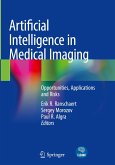
This book provides a comprehensive introduction to the role of artificial intelligence (AI) in medical diagnostics, specifically targeting medical professionals who are unfamiliar with digital health and AI. It also aims to bridge the gap for AI developers who wish to deepen their understanding of clinical medicine. By examining how AI can improve diagnostic accuracy, reduce human error, and facilitate personalized medicine, this book is an indispensable resource for those seeking to harness the power of AI in healthcare.
The chapters cover a range of critical topics, including the historical evolution of diagnostic techniques, ethical and legal considerations in AI diagnostics, and the potential of AI to transform clinical decision support systems. Readers will gain insights into core AI concepts such as machine learning, overfitting, and quantification, which are essential for refining diagnostic processes. The book also explores into the limitations and risks associated with AI, such as data bias and transparency issues, ensuring a well-rounded understanding of the challenges and opportunities in this field.
Designed for medical professionals and AI experts, this book fosters interdisciplinary collaboration, paving the way for a future where hybrid intelligence combining human and artificial intelligence leads to more accurate, efficient, and patient-centered diagnostics. Through case studies and expert contributions, readers will discover practical solutions for AI deployment and training in healthcare settings. Whether you're a clinician looking to integrate AI into your practice or an AI developer seeking to understand clinical applications, this book equips you with the knowledge and tools to navigate the evolving landscape of medical diagnostics.
The chapters cover a range of critical topics, including the historical evolution of diagnostic techniques, ethical and legal considerations in AI diagnostics, and the potential of AI to transform clinical decision support systems. Readers will gain insights into core AI concepts such as machine learning, overfitting, and quantification, which are essential for refining diagnostic processes. The book also explores into the limitations and risks associated with AI, such as data bias and transparency issues, ensuring a well-rounded understanding of the challenges and opportunities in this field.
Designed for medical professionals and AI experts, this book fosters interdisciplinary collaboration, paving the way for a future where hybrid intelligence combining human and artificial intelligence leads to more accurate, efficient, and patient-centered diagnostics. Through case studies and expert contributions, readers will discover practical solutions for AI deployment and training in healthcare settings. Whether you're a clinician looking to integrate AI into your practice or an AI developer seeking to understand clinical applications, this book equips you with the knowledge and tools to navigate the evolving landscape of medical diagnostics.