
Andere Kunden interessierten sich auch für
 Lean Supply Chain Management Essentials68,99 €
 Handbook of Systems Engineering and Analysis of Electro-Optical and Infrared Systems124,99 €
 Handbook of Systems Engineering and Analysis of Electro-Optical and Infrared Systems124,99 €
 Smart and Sustainable Operations and Supply Chain Management in Industry 4.059,99 €
 Managing the Digital Transformation19,99 €
 Advances in Manufacturing345,99 €
 Supply Chain Integration Challenges in Commercial Aerospace65,99 €



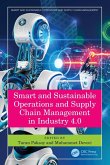



Artificial Intelligence Tools: Decision Support Systems in Condition Monitoring and Diagnosis discusses various white- and black-box approaches to fault diagnosis in condition monitoring (CM). This indispensable resource:
Addresses nearest-neighbor-based, clustering-based, statistical, and information theory-based techniques
Considers the merits of each technique as well as the issues associated with real-life application
Covers classification methods, from neural networks to Bayesian and support vector machines
Proposes fuzzy logic to explain the uncertainties associated with diagnostic processes
Provides data sets, sample signals, and MATLAB® code for algorithm testing
Artificial Intelligence Tools: Decision Support Systems in Condition Monitoring and Diagnosis delivers a thorough evaluation of the latest AI tools for CM, describing the most common fault diagnosis techniques used and the data acquired when these techniques are applied.
Addresses nearest-neighbor-based, clustering-based, statistical, and information theory-based techniques
Considers the merits of each technique as well as the issues associated with real-life application
Covers classification methods, from neural networks to Bayesian and support vector machines
Proposes fuzzy logic to explain the uncertainties associated with diagnostic processes
Provides data sets, sample signals, and MATLAB® code for algorithm testing
Artificial Intelligence Tools: Decision Support Systems in Condition Monitoring and Diagnosis delivers a thorough evaluation of the latest AI tools for CM, describing the most common fault diagnosis techniques used and the data acquired when these techniques are applied.