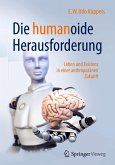
Everybody knows them. Smartphones that talk to us, wristwatches that record our health data, workflows that organize themselves automatically, cars, airplanes and drones that control themselves, traffic and energy systems with autonomous logistics or robots that explore distant planets are technical examples of a networked world of intelligent systems. Machine learning is dramatically changing our civilization. We rely more and more on efficient algorithms, because otherwise we will not be able to cope with the complexity of our civilizing infrastructure. But how secure are AI algorithms? This…mehr
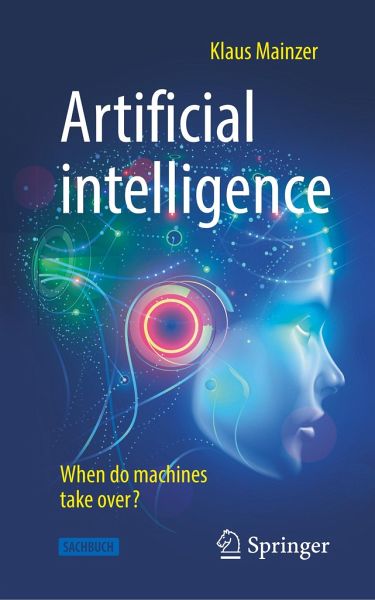
Everybody knows them. Smartphones that talk to us, wristwatches that record our health data, workflows that organize themselves automatically, cars, airplanes and drones that control themselves, traffic and energy systems with autonomous logistics or robots that explore distant planets are technical examples of a networked world of intelligent systems. Machine learning is dramatically changing our civilization. We rely more and more on efficient algorithms, because otherwise we will not be able to cope with the complexity of our civilizing infrastructure. But how secure are AI algorithms? This challenge is taken up in the 2nd edition: Complex neural networks are fed and trained with huge amounts of data (big data). The number of necessary parameters explodes exponentially. Nobody knows exactly what is going on in these "black boxes". In machine learning we need more explainability and accountability of causes and effects in order to be able to decide ethicaland legal questions of responsibility (e.g. in autonomous driving or medicine)! Besides causal learning, we also analyze procedures of tests and verification to get certified AI-programs. Since its inception, AI research has been associated with great visions of the future of mankind. It is already a key technology that will decide the global competition of social systems. "Artificial Intelligence and Responsibility" is another central supplement to the 2nd edition: How should we secure our individual liberty rights in the AI world? This book is a plea for technology design: AI must prove itself as a service in society.
Leon Chuas awards include: IEEE Gustav Robert Kirchhoff Award, 2005" Top 15 most cited Author in Engineering Award, 2002 (This award was chosen from the Current Contents (ISI) data base of all cited papers in the Engineering discipline (all branches of engineering) indexed from 1991 to October 31, 2001.) IEEE Neural Networks Pioneer Award, 2000 IEEE Third Millenium Medal, 2000 IEEE Circuits and Systems Society Golden Jubilee Medal, 2000 Mac Van Valkenburg Award (1995 and 1998) IEEE Centennial Medal, 1985 Alexander von Humboldt Senior US Scientist Award, 1982 Frederick Emmons Award, 1974 IEEE W. R. G. Baker Prize Award, 1973 IEEE Browder J. Thompson Memorial Prize Award, 1973 and he holds several honoris cause doctorates.
Inhaltsangabe
Introduction: What is AI?.- A brief history of AI.- Logical thinking becomes automatic.- Systems become experts.- Computers learn to speak.- Algorithms simulate evolution.- Neural networks simulate brains.- Robots become social.- Automobiles become autonomous.- Factories become intelligent.- From natural to artificial to super intelligence?.
Introduction: What is AI?.- A brief history of AI.- Logical thinking becomes automatic.- Systems become experts.- Computers learn to speak.- Algorithms simulate evolution.- Neural networks simulate brains.- Robots become social.- Automobiles become autonomous.- Factories become intelligent.- From natural to artificial to super intelligence?.
Es gelten unsere Allgemeinen Geschäftsbedingungen: www.buecher.de/agb
Impressum
www.buecher.de ist ein Internetauftritt der buecher.de internetstores GmbH
Geschäftsführung: Monica Sawhney | Roland Kölbl | Günter Hilger
Sitz der Gesellschaft: Batheyer Straße 115 - 117, 58099 Hagen
Postanschrift: Bürgermeister-Wegele-Str. 12, 86167 Augsburg
Amtsgericht Hagen HRB 13257
Steuernummer: 321/5800/1497
USt-IdNr: DE450055826