Stu Silberman, Gay Burden
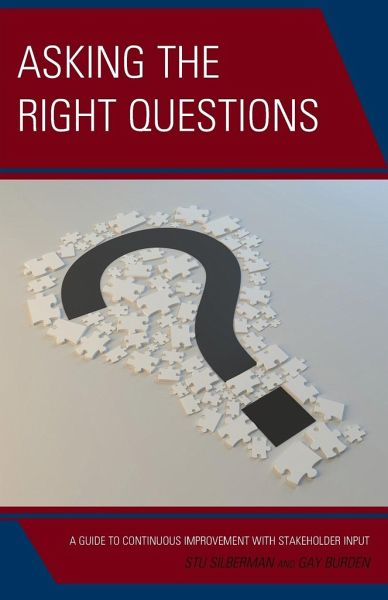
Asking the Right Questions
A Guide to Continuous Improvement with Stakeholder Input
Stu Silberman, Gay Burden
Asking the Right Questions
A Guide to Continuous Improvement with Stakeholder Input
- Broschiertes Buch
- Merkliste
- Auf die Merkliste
- Bewerten Bewerten
- Teilen
- Produkt teilen
- Produkterinnerung
- Produkterinnerung
This four-question model is an inquiry-based approach to leadership that gets to the heart of an organization’s DNA.
Andere Kunden interessierten sich auch für
Stu SilbermanAsking the Right Questions48,99 €
Jane C. FlinnFun Facts to Engage Students28,99 €
Gerard GiordanoCommon Sense Questions about School Administration38,99 €
Gerard GiordanoCommon Sense Questions About Learners41,99 €
Gerard GiordanoCommon Sense Questions About Learners77,99 €
Gerard GiordanoCommon Sense Questions about Tests50,99 €
Gerard GiordanoCommon Sense Questions about Tests92,99 €-
-
-
This four-question model is an inquiry-based approach to leadership that gets to the heart of an organization’s DNA.
Produktdetails
- Produktdetails
- Verlag: Rowman & Littlefield Publishers
- Seitenzahl: 96
- Erscheinungstermin: 31. Dezember 2019
- Englisch
- Abmessung: 216mm x 140mm x 6mm
- Gewicht: 133g
- ISBN-13: 9781475852585
- ISBN-10: 1475852584
- Artikelnr.: 56741429
- Herstellerkennzeichnung
- Libri GmbH
- Europaallee 1
- 36244 Bad Hersfeld
- gpsr@libri.de
- Verlag: Rowman & Littlefield Publishers
- Seitenzahl: 96
- Erscheinungstermin: 31. Dezember 2019
- Englisch
- Abmessung: 216mm x 140mm x 6mm
- Gewicht: 133g
- ISBN-13: 9781475852585
- ISBN-10: 1475852584
- Artikelnr.: 56741429
- Herstellerkennzeichnung
- Libri GmbH
- Europaallee 1
- 36244 Bad Hersfeld
- gpsr@libri.de
Stu Silberman has been a teacher, principal, superintendent and the executive director of the Prichard Committee for Academic Excellence. Stu was Kentucky's superintendent of the year three times and a final four national superintendent of the year. Gay Burden has worked at school, district, and state educational levels. Currently, Gay works as an educational consultant to support district and school improvement efforts across the country.
Table of Contents
Foreward
Preface and Acknowledgments
Introduction
Chapter 1: Four-Question Model Overview
Modeling Connected Leadership
About the Authors
Determining Your Schools DNA
The Four-Question Model
Collective Efficacy
Stakeholder Focus Group Meetings
Sample Groups
Analyzing and Sharing the Results
To Sum Up
Reflective Questions/Activities
Chapter 2: What is working--things you do not want to change?
What's Working and How do we Know it's Working?
District Leadership Modeling
What's Your Leadership Style?
To Sum Up
Reflective Questions/Activities
Chapter 3: What needs to be changed to make this a better place for kids?
Christmas Trees and Kitchen Sinks
Student Voice
Weeding the Garden
College and Career Readiness
Creating Buy-in on the Front-end
To Sum Up
Reflective Questions/Activities
Chapter 4: What needs to be changed to make this a better place for adults?
Human Side of Change
Top-Down and Grassroots Effort
Symbolism
Recognizing the Super Stars
Dealing with Naysayers
The Abilene Paradox
To Sum Up
Reflective Questions/Activities
Chapter 5: What can I do, as your leader, to do a better job?
A Learning Leader is Vulnerable
Visioning and Establishing Purpose
A Clear Communication Plan
Celebrate Victories
Collective Capacity
A Practitioner's Story
Clearly Document the Process
To Sum Up
Reflective Questions/Activities
Appendix A: Debriefing Strategy: Think-a-Thon
References
About the Author
Foreward
Preface and Acknowledgments
Introduction
Chapter 1: Four-Question Model Overview
Modeling Connected Leadership
About the Authors
Determining Your Schools DNA
The Four-Question Model
Collective Efficacy
Stakeholder Focus Group Meetings
Sample Groups
Analyzing and Sharing the Results
To Sum Up
Reflective Questions/Activities
Chapter 2: What is working--things you do not want to change?
What's Working and How do we Know it's Working?
District Leadership Modeling
What's Your Leadership Style?
To Sum Up
Reflective Questions/Activities
Chapter 3: What needs to be changed to make this a better place for kids?
Christmas Trees and Kitchen Sinks
Student Voice
Weeding the Garden
College and Career Readiness
Creating Buy-in on the Front-end
To Sum Up
Reflective Questions/Activities
Chapter 4: What needs to be changed to make this a better place for adults?
Human Side of Change
Top-Down and Grassroots Effort
Symbolism
Recognizing the Super Stars
Dealing with Naysayers
The Abilene Paradox
To Sum Up
Reflective Questions/Activities
Chapter 5: What can I do, as your leader, to do a better job?
A Learning Leader is Vulnerable
Visioning and Establishing Purpose
A Clear Communication Plan
Celebrate Victories
Collective Capacity
A Practitioner's Story
Clearly Document the Process
To Sum Up
Reflective Questions/Activities
Appendix A: Debriefing Strategy: Think-a-Thon
References
About the Author
Table of Contents
Foreward
Preface and Acknowledgments
Introduction
Chapter 1: Four-Question Model Overview
Modeling Connected Leadership
About the Authors
Determining Your Schools DNA
The Four-Question Model
Collective Efficacy
Stakeholder Focus Group Meetings
Sample Groups
Analyzing and Sharing the Results
To Sum Up
Reflective Questions/Activities
Chapter 2: What is working--things you do not want to change?
What's Working and How do we Know it's Working?
District Leadership Modeling
What's Your Leadership Style?
To Sum Up
Reflective Questions/Activities
Chapter 3: What needs to be changed to make this a better place for kids?
Christmas Trees and Kitchen Sinks
Student Voice
Weeding the Garden
College and Career Readiness
Creating Buy-in on the Front-end
To Sum Up
Reflective Questions/Activities
Chapter 4: What needs to be changed to make this a better place for adults?
Human Side of Change
Top-Down and Grassroots Effort
Symbolism
Recognizing the Super Stars
Dealing with Naysayers
The Abilene Paradox
To Sum Up
Reflective Questions/Activities
Chapter 5: What can I do, as your leader, to do a better job?
A Learning Leader is Vulnerable
Visioning and Establishing Purpose
A Clear Communication Plan
Celebrate Victories
Collective Capacity
A Practitioner's Story
Clearly Document the Process
To Sum Up
Reflective Questions/Activities
Appendix A: Debriefing Strategy: Think-a-Thon
References
About the Author
Foreward
Preface and Acknowledgments
Introduction
Chapter 1: Four-Question Model Overview
Modeling Connected Leadership
About the Authors
Determining Your Schools DNA
The Four-Question Model
Collective Efficacy
Stakeholder Focus Group Meetings
Sample Groups
Analyzing and Sharing the Results
To Sum Up
Reflective Questions/Activities
Chapter 2: What is working--things you do not want to change?
What's Working and How do we Know it's Working?
District Leadership Modeling
What's Your Leadership Style?
To Sum Up
Reflective Questions/Activities
Chapter 3: What needs to be changed to make this a better place for kids?
Christmas Trees and Kitchen Sinks
Student Voice
Weeding the Garden
College and Career Readiness
Creating Buy-in on the Front-end
To Sum Up
Reflective Questions/Activities
Chapter 4: What needs to be changed to make this a better place for adults?
Human Side of Change
Top-Down and Grassroots Effort
Symbolism
Recognizing the Super Stars
Dealing with Naysayers
The Abilene Paradox
To Sum Up
Reflective Questions/Activities
Chapter 5: What can I do, as your leader, to do a better job?
A Learning Leader is Vulnerable
Visioning and Establishing Purpose
A Clear Communication Plan
Celebrate Victories
Collective Capacity
A Practitioner's Story
Clearly Document the Process
To Sum Up
Reflective Questions/Activities
Appendix A: Debriefing Strategy: Think-a-Thon
References
About the Author