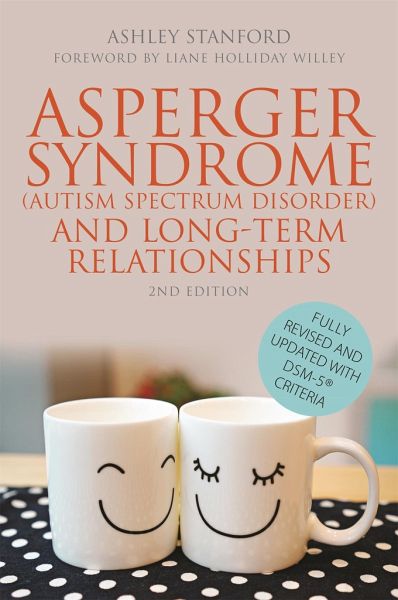
Fully updated for DSM-5, the new edition of Ashley Stanford's bestselling book continues to offer invaluable relationship guidance to couples where one or both partners are on the autism spectrum. By exploring Asperger/ASD traits step-by-step, the book emphasizes the value of understanding and offers solutions that have worked for other couples.
Fully updated for DSM-5, the new edition of Ashley Stanford's bestselling book continues to offer invaluable relationship guidance to couples where one or both partners are on the autism spectrum. By exploring Asperger/ASD traits step-by-step, the book emphasizes the value of understanding and offers solutions that have worked for other couples.
Ashley Stanford has worked as a technical writer for 17 years and is the CEO of a successful computer software company. She is the author of Troubleshooting Relationships on the Autism Spectrum and Business for Aspies, also published by Jessica Kingsley Publishers. She and her husband live in California with their four children.
Inhaltsangabe
Acknowledgments. Foreword by Liane Holliday Willey. Preface. 1. One Day I Woke Up. 2. What Does Asperger Syndrome (Autism Spectrum Disorder) Look Like in an Adult? 3. The Full Realization. 4. Diagnostic Criteria A - Persistent Deficits in Social Communication and Interaction. What it May Look Like: Social Reciprocity. What it May Look Like: Emotional Reciprocity. What it May Look Like: Sharing Interests. What it May Look Like: Failure to Initiate or Respond to Social Interactions. What it May Look Like: Eye Contact. What it May Look Like: Body Language. What it May Look Like: Gestures. What it May Look Like: Facial Expression. What it May Look Like: Relationships. What it May Look Like: Sharing Enjoyment. 5. Diagnostic Criteria B - Restricted, Repetitive Patterns of Behavior. What it May Look Like: Repetitive Movements. What it May Look Like: Routines. What it May Look Like: Fixated Interest. What it May Look Like: Sensory Dysfunction. 6. Diagnostic Criteria C - Symptoms Must Be Present in Early Development. What it May Look Like: Language through the Lifespan. 7. Diagnostic Criteria D - Clinically Significant Impairment in Social, Occupational, or Other Functioning. What it May Look Like: Social. What it May Look Like: Occupational. 8. Diagnostic Criteria E - Not Better Explained by Intellectual Disability. What it May Look Like: Cognitive Development. What it May Look Like: Self-Help Skills/Adaptive Behavior. 9. The ASD-Linked Long-Term Relationship. 10. Help! Where to Look. Epilogue. Glossary. References. Index.
Acknowledgments. Foreword by Liane Holliday Willey. Preface. 1. One Day I Woke Up. 2. What Does Asperger Syndrome (Autism Spectrum Disorder) Look Like in an Adult? 3. The Full Realization. 4. Diagnostic Criteria A - Persistent Deficits in Social Communication and Interaction. What it May Look Like: Social Reciprocity. What it May Look Like: Emotional Reciprocity. What it May Look Like: Sharing Interests. What it May Look Like: Failure to Initiate or Respond to Social Interactions. What it May Look Like: Eye Contact. What it May Look Like: Body Language. What it May Look Like: Gestures. What it May Look Like: Facial Expression. What it May Look Like: Relationships. What it May Look Like: Sharing Enjoyment. 5. Diagnostic Criteria B - Restricted, Repetitive Patterns of Behavior. What it May Look Like: Repetitive Movements. What it May Look Like: Routines. What it May Look Like: Fixated Interest. What it May Look Like: Sensory Dysfunction. 6. Diagnostic Criteria C - Symptoms Must Be Present in Early Development. What it May Look Like: Language through the Lifespan. 7. Diagnostic Criteria D - Clinically Significant Impairment in Social, Occupational, or Other Functioning. What it May Look Like: Social. What it May Look Like: Occupational. 8. Diagnostic Criteria E - Not Better Explained by Intellectual Disability. What it May Look Like: Cognitive Development. What it May Look Like: Self-Help Skills/Adaptive Behavior. 9. The ASD-Linked Long-Term Relationship. 10. Help! Where to Look. Epilogue. Glossary. References. Index.
Es gelten unsere Allgemeinen Geschäftsbedingungen: www.buecher.de/agb
Impressum
www.buecher.de ist ein Internetauftritt der buecher.de internetstores GmbH
Geschäftsführung: Monica Sawhney | Roland Kölbl | Günter Hilger
Sitz der Gesellschaft: Batheyer Straße 115 - 117, 58099 Hagen
Postanschrift: Bürgermeister-Wegele-Str. 12, 86167 Augsburg
Amtsgericht Hagen HRB 13257
Steuernummer: 321/5800/1497
USt-IdNr: DE450055826