
Andere Kunden interessierten sich auch für
 The Underworld9,99 €
") The Fauna Of The Phosphate Beds Of The Park City Formation In Idaho, Wyoming, And Utah (1910)12,99 €
The Fauna Of The Phosphate Beds Of The Park City Formation In Idaho, Wyoming, And Utah (1910)12,99 € Fauna Orcadensis22,99 €
 Observations on the Fauna of Norfolk, and More Particularly on the District of the Broads: And More22,99 €
 The Underworld25,99 €
") The Bear River Formation And Its Characteristic Fauna (1895)15,99 €
The Bear River Formation And Its Characteristic Fauna (1895)15,99 €") The Silurian Fauna Of The Rio Trombetas And The Devonian Mollusca Of The State Of Para (1900)15,99 €
The Silurian Fauna Of The Rio Trombetas And The Devonian Mollusca Of The State Of Para (1900)15,99 €



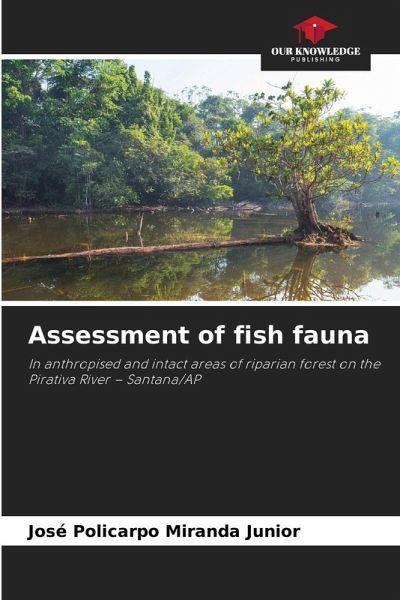
The study was based on the great need for subsistence of the riverside people, where the maintenance of their food is constant, from plant extraction, hunting and fishing, where fish is the rich source of protein easily accessible to the riverside people, where 03 (three) species most consumed by the community of São Raimundo do Pirativa were studied, which are: Hoplias malabaricus (Bloch, 1794) Traíra, Leporinus friderici (Bloch, 1794) Aracu and Callichthys callichthys (Hancock, 1828). The research is organized into four chapters: in the first chapter is the bibliographical review, in the second chapter a comparative study of the spatial behavior of three (03) species Hoplias malabaricus (Traíra), Leporinus friderici (Aracú) and Callichthys callichthys (tamuatá) from the ichthyofauna of the Pirativa-Santana-AP river.