15,99 €
inkl. MwSt.
Versandkostenfrei*
Versandfertig in 1-2 Wochen
payback
8 °P sammeln
  • Broschiertes Buch

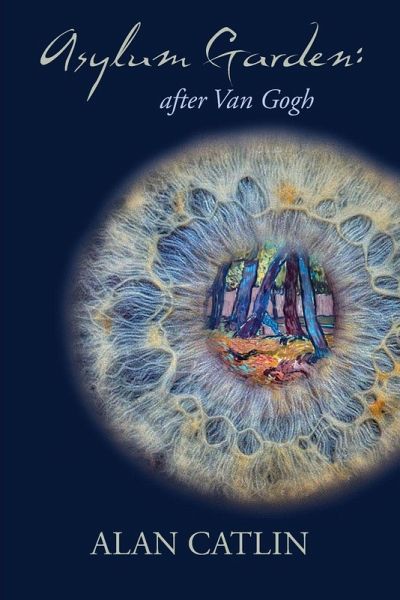
Asylum Garden - after Van Gogh is a book about seeing: what we see and how we see it. The collection begins with the artist, Van Gogh, during his rest cure at an asylum following a general emotional and physical collapse. He begins to paint landscapes, gardens, peaceful scenes, gradually internalizing what he sees. Upon his release, his vision incorporates a whole new way of seeing: slightly altered landscapes and nightscapes, everything off-center, self-portraits showing a more fraught, perhaps demented, personality. Everything he does, is emotionally charged and completely unique. As the…mehr

Produktbeschreibung
Asylum Garden - after Van Gogh is a book about seeing: what we see and how we see it. The collection begins with the artist, Van Gogh, during his rest cure at an asylum following a general emotional and physical collapse. He begins to paint landscapes, gardens, peaceful scenes, gradually internalizing what he sees. Upon his release, his vision incorporates a whole new way of seeing: slightly altered landscapes and nightscapes, everything off-center, self-portraits showing a more fraught, perhaps demented, personality. Everything he does, is emotionally charged and completely unique. As the word asylum implies, where the artist resides, is a place of refuge for the artist but it is also an institution. A mental institution, with all its particular sets of rules, regulations, and treatments may range from the well-meaning, but often unintentionally cruel, to a place of outright torture. The artist is at rest, the artist is tormented. Then the artist dies. A peaceful, elegiac scene, in an-inspired-by-Whistler poem, opens a door to another place. The artist undergoes a transmigration of the mind to where there is life in death, and death in life. The later poems become a broad visualization, a verbal journey through a perplexing world of the deep relationships between art and madness, life in death. A peaceful winter scene becomes an elegy, death is a direction, art is the tool of the imagination that takes you from familiar places to those places deep inside. The non-existent photographs direct the reader to see things that appear on the paper but exist only in the mind. Later, actual photographs key responses that take you to particular places: times of upheaval and strife. We move through time and space, a time of revolution, chaos, assassination and radical politics, to where we live now, on the edge, where art and madness, life and death, meet, in the imagination.
Autorenporträt
Alan Catlin has been publishing poetry, fiction, reviews and the odd collage in littles, independents, and university magazines since the 70's. He can say, with complete confidence, that he is the only poet in the world to have published in Random Weirdness, Tray Full of Lab Mice, Yammering Twits, The Seattle Review, Wisconsin Review, Descant, The Literary Review and Wordsworth's Socks. He has won several chapbook contests including the Slipstream one and been a finalist in several major university book contests. He lost count after thirty Pushcart nominations and has been nominated for Best of the Net, Rhysling and Bram Stoker awards. As a poet of many voices, he has published full-length collection reflecting his work as professional barman that included the recent triptych of Carpe Diem books: Bar Guide for the Seriously Deranged (Roadside Press), Another Saturday Night in Jukebox Hell (Roadside Press) and Last Call for Lazarus (Impspired). His American Odyssey and Wild Beauty from Future Cycle Press examined the American Experience. The third in this series of art and life was published by Dos Madres as Asylum Garden: after Van Gogh. His life and times of Diane Arbus was a labor of love brought to fruition by Kelsay Books as How Will the Heart Endure? An eleven-chapbook series of "movie poems" was recently completed with three volumes of three chapbooks each ,plus two others separate little books including the Slipstream Contest Winner, Blue Velvet. The working title of those was Hollyweird, and extended a year's long project of social commentary disguised as bar poems called Alien Nation. A covid project of numbered prose like snap shot poems was published by Dos Madres as Memories Too, and represents what happens when the narrative impulse dies in isolation. His fictional memoir, a retirement project that began and finished before Covid, Chaos Management, was published by Alien Buddha. He is currently culling his vast archives for the forgotten and the lost over decades of creation. A recent discovery assembled into book form is The Work Anxiety Poems which includes uncollected work experience poems, and actual anxiety dreams about that experience, all of which happened after he retired.