
Andere Kunden interessierten sich auch für
 The Tragedy of Lynching59,99 €
 Slavery's Metropolis26,99 €
 The King's Passengers to Maryland and Virginia31,99 €
 The Great Deluge17,99 €
 The Choctaw Before Removal39,99 €
![Brunswick County [Virginia] Road Orders, 1732-1746. Published With Permission from the Virginia Transportation Research Council (A Cooperative Organization Sponsored Jointly by the Virginia Department of Transportation and the University of Virginia]( "Brunswick County [Virginia] Road Orders, 1732-1746. Published With Permission from the Virginia Transportation Research Council (A Cooperative Organization Sponsored Jointly by the Virginia Department of Transportation and the University of Virginia") Brunswick County [Virginia] Road Orders, 1732-1746. Published With Permission from the Virginia Transportation Research Council (A Cooperative Organization Sponsored Jointly by the Virginia Department of Transportation and the University of Virginia19,99 €
Brunswick County [Virginia] Road Orders, 1732-1746. Published With Permission from the Virginia Transportation Research Council (A Cooperative Organization Sponsored Jointly by the Virginia Department of Transportation and the University of Virginia19,99 € Steamboats and the Cotton Economy24,99 €
![Brunswick County [Virginia] Road Orders, 1732-1746. Published With Permission from the Virginia Transportation Research Council (A Cooperative Organization Sponsored Jointly by the Virginia Department of Transportation and the University of Virginia](https://bilder.buecher.de/produkte/27/27195/27195455m.jpg "Brunswick County [Virginia] Road Orders, 1732-1746. Published With Permission from the Virginia Transportation Research Council (A Cooperative Organization Sponsored Jointly by the Virginia Department of Transportation and the University of Virginia")

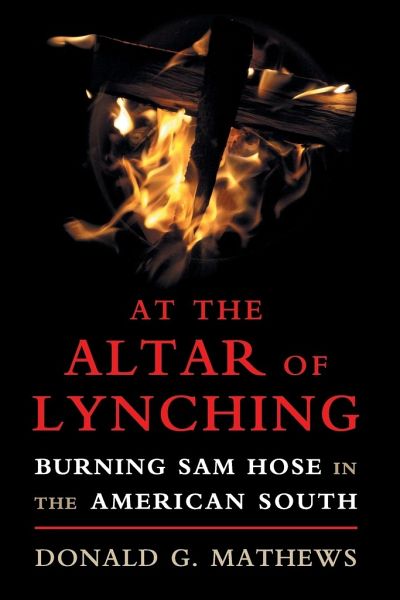
The story of a black day-laborer called Sam Hose killing his white employer in a workplace dispute ended in a lynching of enormous religious significance. For many deeply-religious communities in the Jim Crow South, killing those like Sam Hose restored balance to a moral cosmos upended by a heinous crime. A religious intensity in the mood and morality of segregation surpassed law, and in times of social crisis could justify illegal white violence - even to the extreme act of lynching. In At the Altar of Lynching, distinguished historian Donald G. Mathews offers a new interpretation of the murder of Sam Hose, which places the religious culture of the evangelical South at its center. He carefully considers how mainline Protestants, including women, not only in many instances came to support or accept lynching, but gave the act religious meaning and justification.