
Andere Kunden interessierten sich auch für
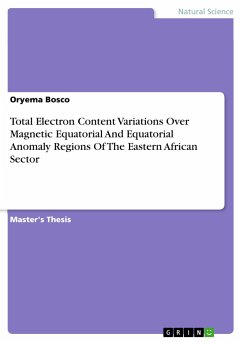
 Total Electron Content Variations Over Magnetic Equatorial And Equatorial Anomaly Regions Of The Eastern African Sector42,95 €
 TAPPING INTO THE TOTAL POWER OF THE UNIVERSE29,99 €
 TAPPING INTO THE TOTAL POWER OF THE UNIVERSE36,99 €
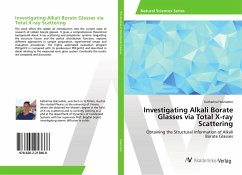
 Investigating Alkali Borate Glasses via Total X-ray Scattering36,99 €
 Atmospheric Physics152,99 €
 Interference of Light26,99 €
 Modelling of Heat and Mass Transfer in Bulk Single Crystal Growth34,99 €


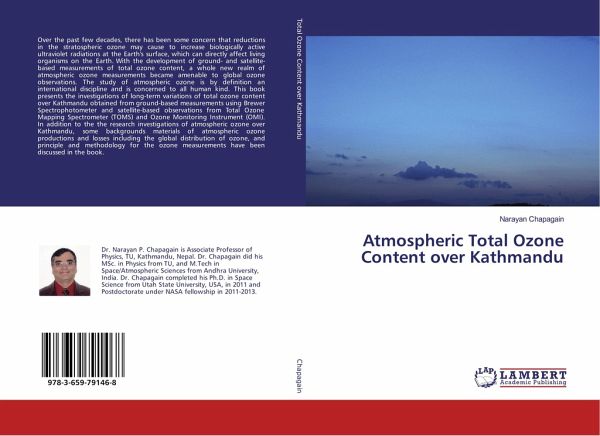
Over the past few decades, there has been some concern that reductions in the stratospheric ozone may cause to increase biologically active ultraviolet radiations at the Earth's surface, which can directly affect living organisms on the Earth. With the development of ground- and satellite-based measurements of total ozone content, a whole new realm of atmospheric ozone measurements became amenable to global ozone observations. The study of atmospheric ozone is by definition an international discipline and is concerned to all human kind. This book presents the investigations of long-term variations of total ozone content over Kathmandu obtained from ground-based measurements using Brewer Spectrophotometer and satellite-based observations from Total Ozone Mapping Spectrometer (TOMS) and Ozone Monitoring Instrument (OMI). In addition to the the research investigations of atmospheric ozone over Kathmandu, some backgrounds materials of atmospheric ozone productions and losses including the global distribution of ozone, and principle and methodology for the ozone measurements have been discussed in the book.