
Audio-Visual Roman Women
Gender, History and Screen Media
Herausgeber: Wyke, Maria; Lindner, Martin; Wozniak, Monika; Carlà-Uhink, Filippo
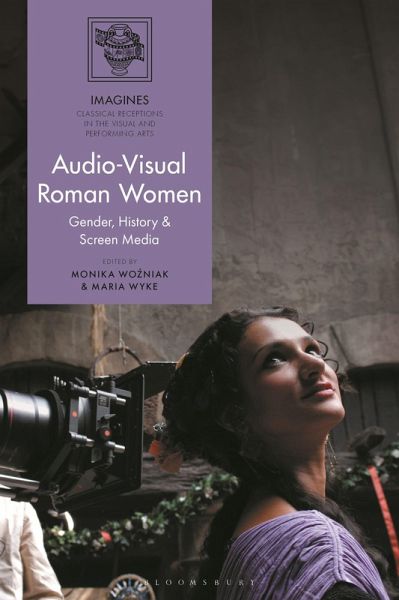
Audio-Visual Roman Women
Gender, History and Screen Media
Herausgeber: Wyke, Maria; Lindner, Martin; Wozniak, Monika; Carlà-Uhink, Filippo
- Gebundenes Buch
- Merkliste
- Auf die Merkliste
- Bewerten Bewerten
- Teilen
- Produkt teilen
- Produkterinnerung
- Produkterinnerung
A cohesive, interdisciplinary study of the imaginative power screen media has to reshape our perception of Roman women, covering over 100 years with examples from silent cinema through to computer games.
Andere Kunden interessierten sich auch für
 VariousDaughters of the Eternal City: The Women of Ancient Rome37,99 €
 The Roman Empresses39,99 €
 Guglielmo FerreroThe Women of the Caesars29,99 €
 Oliver TaplinGreek Tragedy in Action167,99 €
 Kara CooneyWhen Women Ruled the World21,99 €
 Emma SouthonA Rome of One's Own14,99 €
 Joseph MccabeThe Empresses of Rome31,99 €
-
-
-

A cohesive, interdisciplinary study of the imaginative power screen media has to reshape our perception of Roman women, covering over 100 years with examples from silent cinema through to computer games.
Produktdetails
- Produktdetails
- Verlag: Bloomsbury Academic
- Seitenzahl: 352
- Erscheinungstermin: 8. Januar 2026
- Englisch
- Abmessung: 234mm x 156mm x 25mm
- Gewicht: 454g
- ISBN-13: 9781350461833
- ISBN-10: 1350461830
- Artikelnr.: 73935037
- Herstellerkennzeichnung
- Libri GmbH
- Europaallee 1
- 36244 Bad Hersfeld
- gpsr@libri.de
- Verlag: Bloomsbury Academic
- Seitenzahl: 352
- Erscheinungstermin: 8. Januar 2026
- Englisch
- Abmessung: 234mm x 156mm x 25mm
- Gewicht: 454g
- ISBN-13: 9781350461833
- ISBN-10: 1350461830
- Artikelnr.: 73935037
- Herstellerkennzeichnung
- Libri GmbH
- Europaallee 1
- 36244 Bad Hersfeld
- gpsr@libri.de
Maria Wyke is Professor of Latin at University College London, UK. She is author of Caesar in the USA (2012), The Roman Mistress: Ancient and Modern Representations (2000), and Projecting the Past: Ancient Rome, Cinema and History (1997). Monika Wozniak is Associate Professor of Polish Language and Literature at Sapienza University of Rome, Italy. She is author of Ebbs and Flows: Quo Vadis by Henryk Sienkiewicz in the Italian Literary and Cultural Circuit (2024) and, with Maria Wyke, co-editor of The Novel of Neronian Rome and its Multimedial Transformations (2020).
List of Illustrations
List of Tables
Notes on Contributors
Acknowledgments
1. Introducing Audio-Visual Roman Women, Monika Wozniak (Sapienza
University of Rome, Italy) and Maria Wyke (UCL, UK)
Part One: Feminising Ancient Rome in Screen Media (1900s to 1960s)
2. Feminising Ancient Rome: Women at the Cinema from the 1890s to the
1930s, Maria Wyke (UCL, UK)
3. A Threefold Feminine Divinity: The Female Characters in Messalina
(1923), Stella Dagna (former archivist at the Turin National Cinema Museum,
Italy)
4. Spicing up Lygia in Quo Vadis (1951): The Development of Female
Characters from Script to Screen, Monika Wozniak (Sapienza University of
Rome, Italy)
5. Screening the Elite Roman Female's Gaze of Desire, Monica Silveira
Cyrino (University of New Mexico, USA)
6. Caesar's Daughter: Lucilla on Screen, Martin M. Winkler (George Mason
University, USA)
7. Poppaea's Eroticisation in Cinema, Nuno Simões Rodrigues (University of
Lisbon, Portugal)
Part Two: Screen Media in the Light of Feminism (1970s to 2020s)
8. Women Who Hit the Screen: Female Gladiators in Film and Television,
Patrycja Rojek (Adam Mickiewicz University, Poland)
9. Dramatic Persona: Livia Drusilla in A World of Television Antiquity,
Radoslaw Pietka (Adam Mickiewicz University, Poland)
10. British Women in a Roman World: Female Figures in Audiovisual Works
About the Ninth Legion, Panayiota Mini (University of Crete, Greece)
11. A Practitioner's Tale: History and the Performance of Roman Women in
HBO's Rome, Jonathan Stamp (television documentary maker and historical
consultant)
12. Mothers, Murderers and Mistresses: Empresses of Ancient Rome (2013): A
Feminist Turn?, Fiona Hobden (Open University, UK)
13. Between Myth, History and Popular Culture: The Character of Ilia in the
TV Series Romulus (2020-22), Konrad Dominas (University of Adam Mickiewicz,
Poland)
14. Powerless and Powerful Language in Domina, Luca Valleriani (Sapienza
University of Rome, Italy)
15. El corazón del imperio (The Heart of the Empire, 2021): Transgressions
of Gender Norms in a Docudrama on Roman Women, Oskar Aguado-Cantabrana
(University of the Basque Country, Spain) and Patricia González Gutiérrez
(independent researcher)
Part Three: New Media & Consumer Agency
16. An Expedition into Agency: The Portrayal of Roman Women in
Expeditions: Rome, Kate Cook (King's College London, UK)
17. Rewriting Televisual Monsters: Livia and Atia in Fanfiction, Amanda
Potter (Open University and University of Liverpool, UK)
Notes
Mediography
Bibliography
Index
List of Tables
Notes on Contributors
Acknowledgments
1. Introducing Audio-Visual Roman Women, Monika Wozniak (Sapienza
University of Rome, Italy) and Maria Wyke (UCL, UK)
Part One: Feminising Ancient Rome in Screen Media (1900s to 1960s)
2. Feminising Ancient Rome: Women at the Cinema from the 1890s to the
1930s, Maria Wyke (UCL, UK)
3. A Threefold Feminine Divinity: The Female Characters in Messalina
(1923), Stella Dagna (former archivist at the Turin National Cinema Museum,
Italy)
4. Spicing up Lygia in Quo Vadis (1951): The Development of Female
Characters from Script to Screen, Monika Wozniak (Sapienza University of
Rome, Italy)
5. Screening the Elite Roman Female's Gaze of Desire, Monica Silveira
Cyrino (University of New Mexico, USA)
6. Caesar's Daughter: Lucilla on Screen, Martin M. Winkler (George Mason
University, USA)
7. Poppaea's Eroticisation in Cinema, Nuno Simões Rodrigues (University of
Lisbon, Portugal)
Part Two: Screen Media in the Light of Feminism (1970s to 2020s)
8. Women Who Hit the Screen: Female Gladiators in Film and Television,
Patrycja Rojek (Adam Mickiewicz University, Poland)
9. Dramatic Persona: Livia Drusilla in A World of Television Antiquity,
Radoslaw Pietka (Adam Mickiewicz University, Poland)
10. British Women in a Roman World: Female Figures in Audiovisual Works
About the Ninth Legion, Panayiota Mini (University of Crete, Greece)
11. A Practitioner's Tale: History and the Performance of Roman Women in
HBO's Rome, Jonathan Stamp (television documentary maker and historical
consultant)
12. Mothers, Murderers and Mistresses: Empresses of Ancient Rome (2013): A
Feminist Turn?, Fiona Hobden (Open University, UK)
13. Between Myth, History and Popular Culture: The Character of Ilia in the
TV Series Romulus (2020-22), Konrad Dominas (University of Adam Mickiewicz,
Poland)
14. Powerless and Powerful Language in Domina, Luca Valleriani (Sapienza
University of Rome, Italy)
15. El corazón del imperio (The Heart of the Empire, 2021): Transgressions
of Gender Norms in a Docudrama on Roman Women, Oskar Aguado-Cantabrana
(University of the Basque Country, Spain) and Patricia González Gutiérrez
(independent researcher)
Part Three: New Media & Consumer Agency
16. An Expedition into Agency: The Portrayal of Roman Women in
Expeditions: Rome, Kate Cook (King's College London, UK)
17. Rewriting Televisual Monsters: Livia and Atia in Fanfiction, Amanda
Potter (Open University and University of Liverpool, UK)
Notes
Mediography
Bibliography
Index
List of Illustrations
List of Tables
Notes on Contributors
Acknowledgments
1. Introducing Audio-Visual Roman Women, Monika Wozniak (Sapienza
University of Rome, Italy) and Maria Wyke (UCL, UK)
Part One: Feminising Ancient Rome in Screen Media (1900s to 1960s)
2. Feminising Ancient Rome: Women at the Cinema from the 1890s to the
1930s, Maria Wyke (UCL, UK)
3. A Threefold Feminine Divinity: The Female Characters in Messalina
(1923), Stella Dagna (former archivist at the Turin National Cinema Museum,
Italy)
4. Spicing up Lygia in Quo Vadis (1951): The Development of Female
Characters from Script to Screen, Monika Wozniak (Sapienza University of
Rome, Italy)
5. Screening the Elite Roman Female's Gaze of Desire, Monica Silveira
Cyrino (University of New Mexico, USA)
6. Caesar's Daughter: Lucilla on Screen, Martin M. Winkler (George Mason
University, USA)
7. Poppaea's Eroticisation in Cinema, Nuno Simões Rodrigues (University of
Lisbon, Portugal)
Part Two: Screen Media in the Light of Feminism (1970s to 2020s)
8. Women Who Hit the Screen: Female Gladiators in Film and Television,
Patrycja Rojek (Adam Mickiewicz University, Poland)
9. Dramatic Persona: Livia Drusilla in A World of Television Antiquity,
Radoslaw Pietka (Adam Mickiewicz University, Poland)
10. British Women in a Roman World: Female Figures in Audiovisual Works
About the Ninth Legion, Panayiota Mini (University of Crete, Greece)
11. A Practitioner's Tale: History and the Performance of Roman Women in
HBO's Rome, Jonathan Stamp (television documentary maker and historical
consultant)
12. Mothers, Murderers and Mistresses: Empresses of Ancient Rome (2013): A
Feminist Turn?, Fiona Hobden (Open University, UK)
13. Between Myth, History and Popular Culture: The Character of Ilia in the
TV Series Romulus (2020-22), Konrad Dominas (University of Adam Mickiewicz,
Poland)
14. Powerless and Powerful Language in Domina, Luca Valleriani (Sapienza
University of Rome, Italy)
15. El corazón del imperio (The Heart of the Empire, 2021): Transgressions
of Gender Norms in a Docudrama on Roman Women, Oskar Aguado-Cantabrana
(University of the Basque Country, Spain) and Patricia González Gutiérrez
(independent researcher)
Part Three: New Media & Consumer Agency
16. An Expedition into Agency: The Portrayal of Roman Women in
Expeditions: Rome, Kate Cook (King's College London, UK)
17. Rewriting Televisual Monsters: Livia and Atia in Fanfiction, Amanda
Potter (Open University and University of Liverpool, UK)
Notes
Mediography
Bibliography
Index
List of Tables
Notes on Contributors
Acknowledgments
1. Introducing Audio-Visual Roman Women, Monika Wozniak (Sapienza
University of Rome, Italy) and Maria Wyke (UCL, UK)
Part One: Feminising Ancient Rome in Screen Media (1900s to 1960s)
2. Feminising Ancient Rome: Women at the Cinema from the 1890s to the
1930s, Maria Wyke (UCL, UK)
3. A Threefold Feminine Divinity: The Female Characters in Messalina
(1923), Stella Dagna (former archivist at the Turin National Cinema Museum,
Italy)
4. Spicing up Lygia in Quo Vadis (1951): The Development of Female
Characters from Script to Screen, Monika Wozniak (Sapienza University of
Rome, Italy)
5. Screening the Elite Roman Female's Gaze of Desire, Monica Silveira
Cyrino (University of New Mexico, USA)
6. Caesar's Daughter: Lucilla on Screen, Martin M. Winkler (George Mason
University, USA)
7. Poppaea's Eroticisation in Cinema, Nuno Simões Rodrigues (University of
Lisbon, Portugal)
Part Two: Screen Media in the Light of Feminism (1970s to 2020s)
8. Women Who Hit the Screen: Female Gladiators in Film and Television,
Patrycja Rojek (Adam Mickiewicz University, Poland)
9. Dramatic Persona: Livia Drusilla in A World of Television Antiquity,
Radoslaw Pietka (Adam Mickiewicz University, Poland)
10. British Women in a Roman World: Female Figures in Audiovisual Works
About the Ninth Legion, Panayiota Mini (University of Crete, Greece)
11. A Practitioner's Tale: History and the Performance of Roman Women in
HBO's Rome, Jonathan Stamp (television documentary maker and historical
consultant)
12. Mothers, Murderers and Mistresses: Empresses of Ancient Rome (2013): A
Feminist Turn?, Fiona Hobden (Open University, UK)
13. Between Myth, History and Popular Culture: The Character of Ilia in the
TV Series Romulus (2020-22), Konrad Dominas (University of Adam Mickiewicz,
Poland)
14. Powerless and Powerful Language in Domina, Luca Valleriani (Sapienza
University of Rome, Italy)
15. El corazón del imperio (The Heart of the Empire, 2021): Transgressions
of Gender Norms in a Docudrama on Roman Women, Oskar Aguado-Cantabrana
(University of the Basque Country, Spain) and Patricia González Gutiérrez
(independent researcher)
Part Three: New Media & Consumer Agency
16. An Expedition into Agency: The Portrayal of Roman Women in
Expeditions: Rome, Kate Cook (King's College London, UK)
17. Rewriting Televisual Monsters: Livia and Atia in Fanfiction, Amanda
Potter (Open University and University of Liverpool, UK)
Notes
Mediography
Bibliography
Index