
Andere Kunden interessierten sich auch für
 NATIONAL SECURITY FOR SALE22,99 €
 What Goes Up16,99 €
 The Last Man34,99 €
 Sustainable Family Farming and Yeoman Ideals55,99 €
 The City Of Auckland, New Zealand, 1840-192014,99 €
 When Migrants Fail to Stay40,99 €
 Prospector's Guide19,99 €


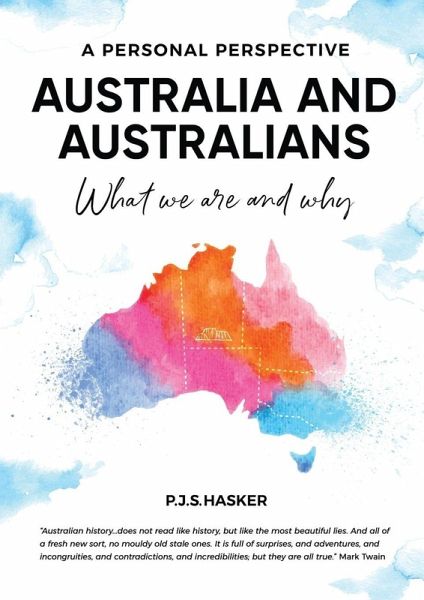
This work presents a tapestry of themes, facts, and reflections designed to provoke serious thought about what it means to be Australian-who we are, where we've come from, and where we might be going. The information responds to the kinds of questions often asked by international students curious about Australian life and culture. The book is divided into two sections. Section One, the more extensive of the two, explores the historical forces that shaped Australia up to the mid-20th century. It offers essential context for Section Two, which turns its focus to the present, considering the evolving complexities of national identity in contemporary Australia. Both sections invite the reader to reflect on the nature of our collective identity-a question still very much open to debate. The journey begins with Australia's natural landscape: its geology, climate, flora, and fauna-elements that contribute to its distinctiveness. It continues through the continent's early charting and discovery, moving on to the lives of Indigenous Australians, the era of convict transportation, the emergence of the first native-born settlers, and the experiences of major explorers. Other chapters delve into the gold rushes, bushrangers, Federation, land settlement, and the waves of immigration both before and after Federation. The narrative then shifts to Australia's role in the First and Second World Wars, the significance of ANZAC Day, and themes such as women's contributions, the challenge of isolation, and the national tendency toward innovation. Section One concludes with a summative chapter tying these historical threads together. Section Two turns toward the present, framed through the lens of French historian Ernest Renan's 1882 lecture What is a Nation?-a perspective that resonates with modern Australia's diversity. A central theme is the absence of a single, unifying thread binding Australia's varied population into a shared identity. The importance of storytelling in forging national consciousness is highlighted. This section also wrestles with the ongoing legacy of dispossession experienced by Indigenous Australians. Instead of the often-used term "reconciliation," the German concept of Vergangenheitsaufarbeitung-a process of coming to terms with the past-is proposed as a more fitting framework. Running through the work is a recurring idea: the possibility of personal and national transformation. Whether convict, free settler, migrant, or First Nations inhabitant, many sought to shed the burdens of the past to build a life anew. That desire-to cast off tradition and begin again-forms a quiet but persistent theme. Australia, this book suggests, is still a work in progress. While little attention is given here to the profound changes brought by post-1970s migration, the intention is to offer a foundation: a clearer understanding of the forces that shaped the country until recently, and the questions we now face as we look ahead.