Abigail Werner Werner JamesA Photocopiable Resource for Helping Children and Teens on the Autism Spectrum Understand the Complexities of Physical Interaction
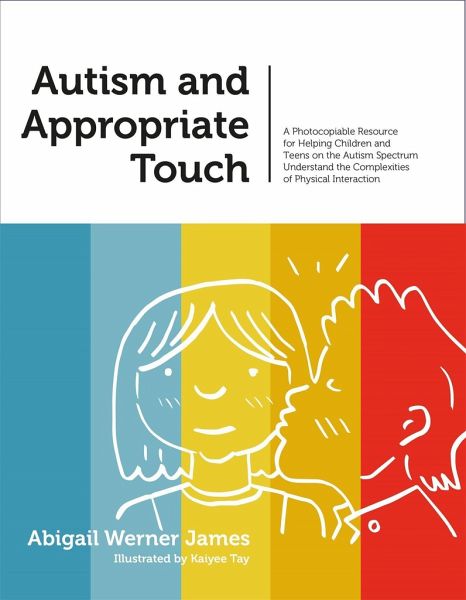
Autism and Appropriate Touch
A Photocopiable Resource for Helping Children and Teens on the Autism Spectrum Understand the Complexities of Physical Interaction
Illustrator: Tay, Kaiyee
Abigail Werner Werner JamesA Photocopiable Resource for Helping Children and Teens on the Autism Spectrum Understand the Complexities of Physical Interaction
Autism and Appropriate Touch
A Photocopiable Resource for Helping Children and Teens on the Autism Spectrum Understand the Complexities of Physical Interaction
Illustrator: Tay, Kaiyee
- Broschiertes Buch
- Merkliste
- Auf die Merkliste
- Bewerten Bewerten
- Teilen
- Produkt teilen
- Produkterinnerung
- Produkterinnerung
A practical resource to help teach the social rules of touch and personal space to children and teens with Autism Spectrum Disorder.
Andere Kunden interessierten sich auch für
Helen HughesBearing Untold Stories - Life on (and off) the Autism Spectrum16,99 €
Michael McManmonAutism and Learning Differences77,99 €
Jane Thierfeld BrownThe Parent's Guide to College for Students with Autism20,99 €
Jewel KatsThe Princess and the Ruby13,99 €
Emma GoodallUnderstanding and Facilitating the Achievement of Autistic Potential26,99 €
Jed BakerSocial Skills Training29,99 €
Diane AdreonSpecial Considerations for Students with Autism15,99 €-
-
-
A practical resource to help teach the social rules of touch and personal space to children and teens with Autism Spectrum Disorder.
Produktdetails
- Produktdetails
- Verlag: Jessica Kingsley Publishers
- Seitenzahl: 136
- Altersempfehlung: 7 bis 14 Jahre
- Erscheinungstermin: 21. Juli 2015
- Englisch
- Abmessung: 274mm x 213mm x 10mm
- Gewicht: 340g
- ISBN-13: 9781849057912
- ISBN-10: 1849057915
- Artikelnr.: 42397083
- Herstellerkennzeichnung
- Libri GmbH
- Europaallee 1
- 36244 Bad Hersfeld
- gpsr@libri.de
- Verlag: Jessica Kingsley Publishers
- Seitenzahl: 136
- Altersempfehlung: 7 bis 14 Jahre
- Erscheinungstermin: 21. Juli 2015
- Englisch
- Abmessung: 274mm x 213mm x 10mm
- Gewicht: 340g
- ISBN-13: 9781849057912
- ISBN-10: 1849057915
- Artikelnr.: 42397083
- Herstellerkennzeichnung
- Libri GmbH
- Europaallee 1
- 36244 Bad Hersfeld
- gpsr@libri.de
Abigail Werner James is a Licensed Behaviour Specialist with over 10 years' experience working with young people with Autism Spectrum Disorder for Youth Advocate Programs Inc. She has a BA in Human Development and Family Science and an MA in Human Sciences.
Acknowledgements. Introduction. How to Use This Book. Part I: Introductory
Lessons. Lesson 1: Understanding Traffic-Signal Colors to Represent Stop,
Slow Down, and Go. Lesson 2: Identifying and Listing People According to
Groups. Lesson 3: Introduction for the Learner to the Topic of Touch. Part
II: Learning about Touch with Different People-Groups. Lesson 4:
Physicians, Nurses, Medical Technicians, and Emergency-Helpers. Lesson 5:
Close Family Members or Adult Friends Who Are Like Family. Lesson 6:
Younger Children. Lesson 7: Peers. Lesson 8: Teachers. Lesson 9: More
Distant Family Members and Adult Family Friends. Lesson 10: Community
Members and Strangers. Part III: Follow-Up Discussions. A. Protection From
Abuse. B. Explanation of Urges to Touch Inappropriately. C. Touching
Oneself. D. Proximity When Not Touching. E. Accidental Touches. References.
Lessons. Lesson 1: Understanding Traffic-Signal Colors to Represent Stop,
Slow Down, and Go. Lesson 2: Identifying and Listing People According to
Groups. Lesson 3: Introduction for the Learner to the Topic of Touch. Part
II: Learning about Touch with Different People-Groups. Lesson 4:
Physicians, Nurses, Medical Technicians, and Emergency-Helpers. Lesson 5:
Close Family Members or Adult Friends Who Are Like Family. Lesson 6:
Younger Children. Lesson 7: Peers. Lesson 8: Teachers. Lesson 9: More
Distant Family Members and Adult Family Friends. Lesson 10: Community
Members and Strangers. Part III: Follow-Up Discussions. A. Protection From
Abuse. B. Explanation of Urges to Touch Inappropriately. C. Touching
Oneself. D. Proximity When Not Touching. E. Accidental Touches. References.
Acknowledgements. Introduction. How to Use This Book. Part I: Introductory
Lessons. Lesson 1: Understanding Traffic-Signal Colors to Represent Stop,
Slow Down, and Go. Lesson 2: Identifying and Listing People According to
Groups. Lesson 3: Introduction for the Learner to the Topic of Touch. Part
II: Learning about Touch with Different People-Groups. Lesson 4:
Physicians, Nurses, Medical Technicians, and Emergency-Helpers. Lesson 5:
Close Family Members or Adult Friends Who Are Like Family. Lesson 6:
Younger Children. Lesson 7: Peers. Lesson 8: Teachers. Lesson 9: More
Distant Family Members and Adult Family Friends. Lesson 10: Community
Members and Strangers. Part III: Follow-Up Discussions. A. Protection From
Abuse. B. Explanation of Urges to Touch Inappropriately. C. Touching
Oneself. D. Proximity When Not Touching. E. Accidental Touches. References.
Lessons. Lesson 1: Understanding Traffic-Signal Colors to Represent Stop,
Slow Down, and Go. Lesson 2: Identifying and Listing People According to
Groups. Lesson 3: Introduction for the Learner to the Topic of Touch. Part
II: Learning about Touch with Different People-Groups. Lesson 4:
Physicians, Nurses, Medical Technicians, and Emergency-Helpers. Lesson 5:
Close Family Members or Adult Friends Who Are Like Family. Lesson 6:
Younger Children. Lesson 7: Peers. Lesson 8: Teachers. Lesson 9: More
Distant Family Members and Adult Family Friends. Lesson 10: Community
Members and Strangers. Part III: Follow-Up Discussions. A. Protection From
Abuse. B. Explanation of Urges to Touch Inappropriately. C. Touching
Oneself. D. Proximity When Not Touching. E. Accidental Touches. References.