
Andere Kunden interessierten sich auch für
 Life Histories of North American Petrels and Pelicans and Their Allies; Order Tubinares and Order Steganopodes26,99 €
 The Life of Richard Owen; Volume 225,99 €
 The Philosophy of Zoology: Or, a General View of the Structure, Functions, and Classification of Animals; Volume 229,99 €
 The Life of Richard Owen; Volume 125,99 €
 Evenings at the Microscope; or Researches Among the Minuter Organs and Forms of Animal Life24,99 €
 The Biography Of A Silver-fox: Or Domino Reynard Of Goldur Town, With Over 100 Drawings By Ernest Thompson Seton20,99 €
 Wild Animals I Have Known17,99 €

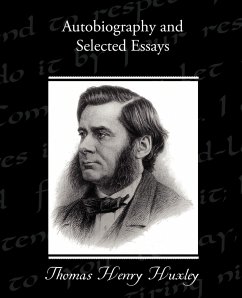
Thomas Henry Huxley was a 19th century British biologist known as Darwin¿s Bulldog. Huxley's famous 1860 debate with Samuel Wilberforce was a key moment in the wider acceptance of evolution. Huxley was instrumental in developing scientific education in Britain. He became perhaps the finest comparative anatomist of the second half of the nineteenth century even though he had very little schooling and was primarily self-taught. The Table of Contents includes The life of Huxley, Subject-matter, structure, and style of essays, Suggested studies, Autobiography On improving natural knowledge, A liberal education, On a piece of chalk, The principal subjects of education, The method of scientific investigation, On the physical basis of life, and On coral and coral reefs